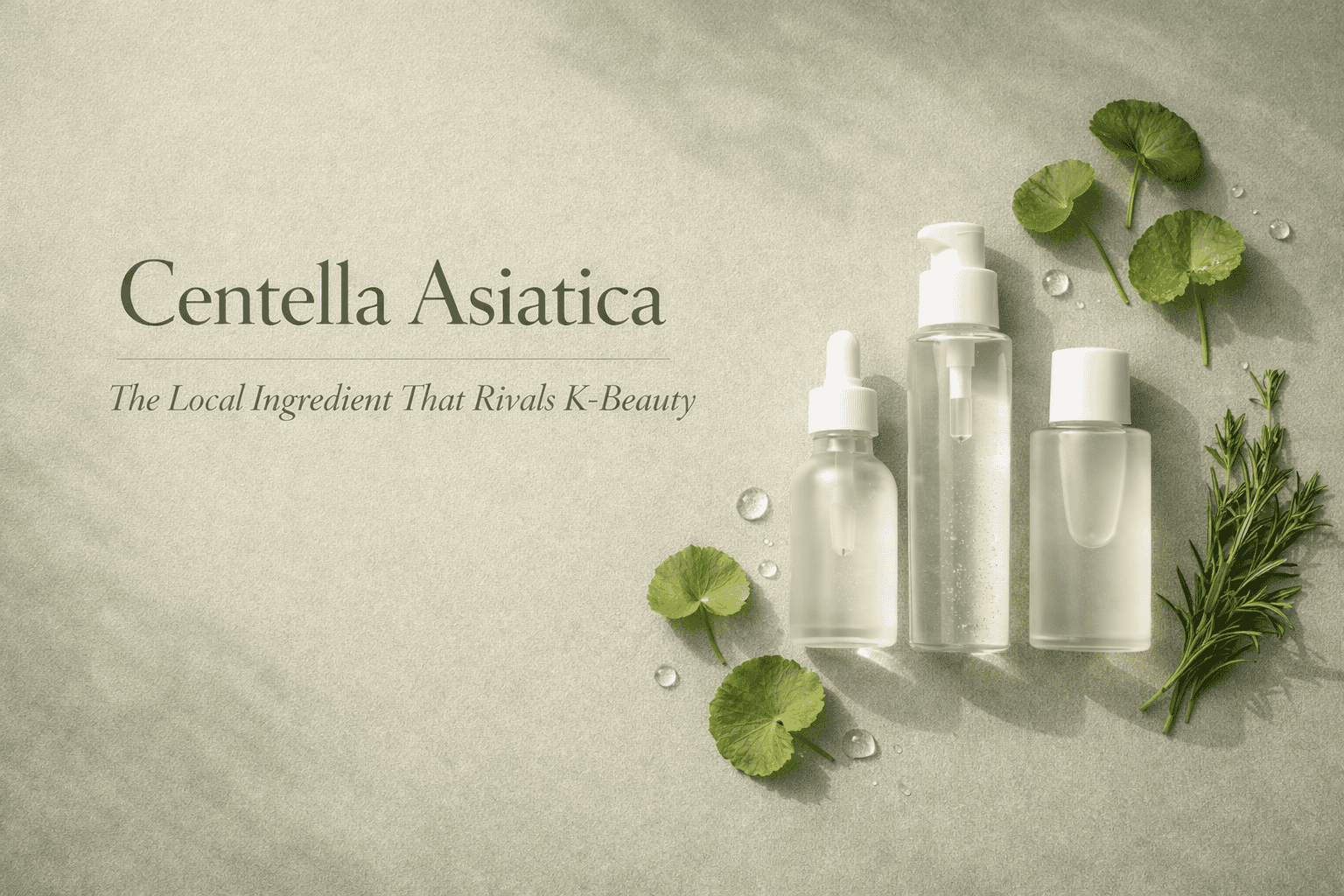
Centella asiatica Vietnamese skincare has a history that predates K-beauty by centuries — before it became a global buzzword, Vietnamese people were drinking it.
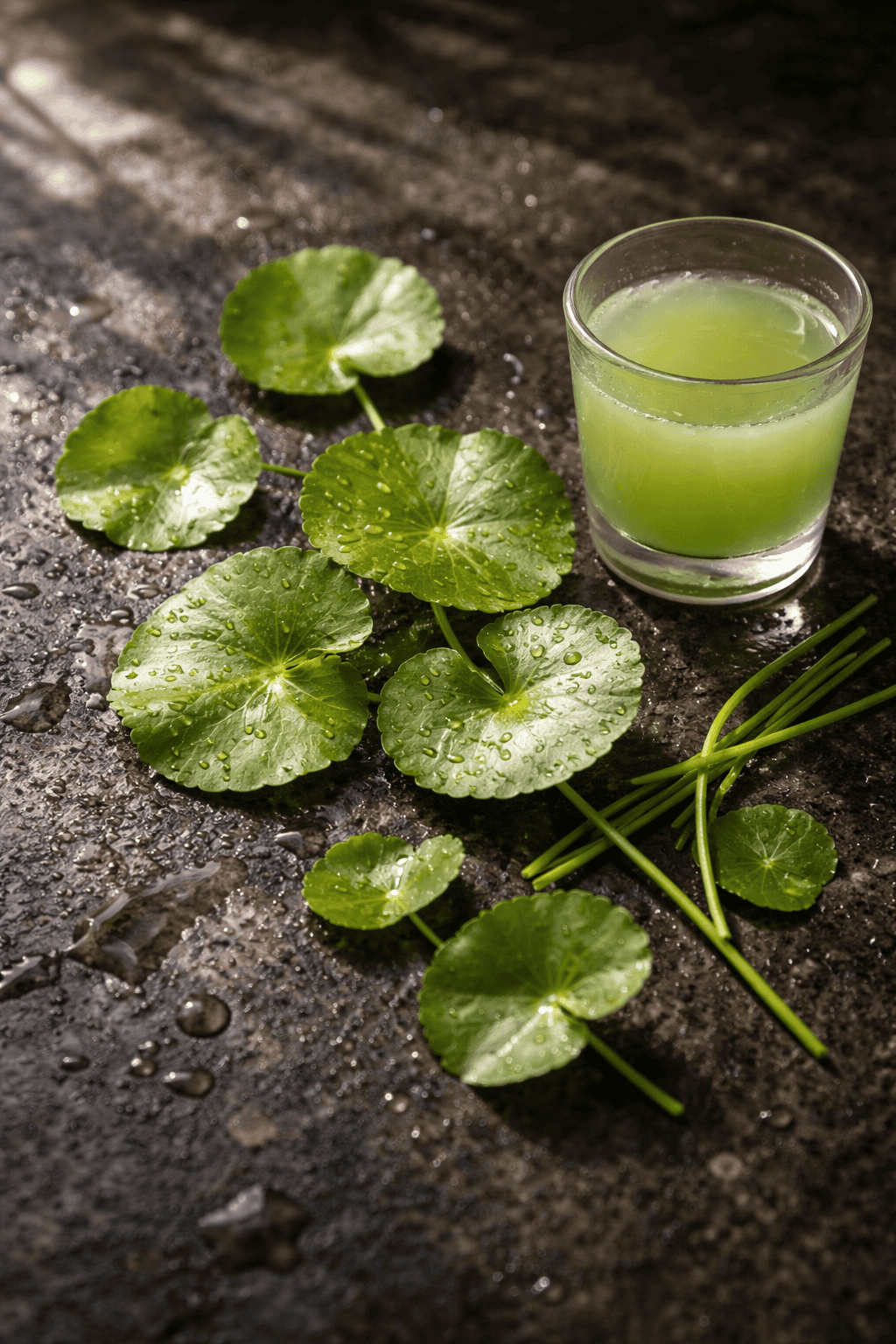
Rau má – the Vietnamese name for Centella asiatica – is sold fresh at markets across Vietnam, juiced and served cold as a daily health drink. It grows in paddy fields and roadsides throughout the country. Vietnamese traditional medicine has used it for wound healing and inflammation for centuries. When Korean beauty brands started putting centella into serums and creams and marketing it globally as “cica,” Vietnam had a head start that most people didn’t notice.
This article covers what centella actually does in skincare, how the evidence reads honestly, and how Vietnamese centella products compare to the Korean brands that put the ingredient on the global map.
Fast track:
- What centella does → The science, honestly
- Vietnamese vs. K-beauty centella → The comparison
- Which products to try → Product recommendations
- Full Vietnamese skincare context → Vietnamese Skincare: The Complete Guide
Rau Má: More Than a Skincare Ingredient
The cultural context matters here because it changes how you read the ingredient story.
Centella asiatica is not a novel botanical extract that Vietnamese brands discovered for marketing purposes. Rau má is genuinely embedded in Vietnamese daily life. Fresh leaves are blended into juice (nước rau má) – a green drink sold at street stalls and markets that most Vietnamese people consume regularly. It’s used in traditional herbal medicine to treat wounds, reduce body heat, and calm inflammation. The plant grows throughout Southeast Asia and is one of the few traditional botanical ingredients where the culinary and medicinal use predates the cosmetic industry by centuries.
This matters for two reasons. First, it means Vietnamese centella products are drawing on a genuine local tradition rather than importing a foreign ingredient story. Second, it’s useful context for why centella shows up across Vietnamese skincare brands in formats that feel more integrated than trendy – this isn’t ingredient tourism.
The word “rau má” appears in product names, on pharmacy shelves, and in Vietnamese skincare forums with the same matter-of-factness that “aloe vera” would in Western drugstores. It’s a staple, not a novelty.
What Centella Actually Does: The Science, Honestly
Centella asiatica’s skincare activity comes from four primary compounds – collectively known as centellosides: asiaticoside, madecassoside, asiatic acid, and madecassic acid. These are pentacyclic triterpene saponins found in the aerial parts of the plant.
Here’s what the evidence actually supports:
Barrier repair and hydration – well documented. Peer-reviewed studies have confirmed that centella asiatica formulations reduce transepidermal water loss (TEWL) and improve stratum corneum hydration. A clinical study published in PMC found that 5% centella extract in a cosmetic formulation produced measurable improvement in skin moisture and barrier function over four weeks of daily use. This is the most consistently supported benefit.
Anti-inflammatory activity – strong evidence. The triterpenes in centella inhibit inflammatory signaling pathways (including NF-κB). Multiple in vitro and in vivo studies confirm anti-inflammatory effects. This is why centella is used in wound care, burn treatment, and for conditions like eczema and acne-related redness – not just in cosmetics, but in licensed medical preparations.
Collagen synthesis – documented. Asiaticoside and madecassoside have been shown to stimulate fibroblast proliferation and increase collagen production. This is the mechanism behind centella’s use in scar treatment and its anti-aging positioning in cosmetics.
What the evidence doesn’t fully support yet: As one dermatologist quoted by NBC Select noted (Dr. Danilo C Del Campo), “a lot of the excitement is based on smaller studies, lab-based research, and strong anecdotal clinical experience, but not huge long-term trials.” Centella does not have the same weight of evidence behind it as retinoids or benzoyl peroxide. It’s a well-supported botanical active – not a clinically proven pharmaceutical-grade treatment.
The practical read: For barrier support, soothing, and gentle anti-inflammatory action, centella is a legitimate active ingredient with genuine evidence. For aggressive treatment of acne, deep wrinkles, or significant hyperpigmentation, centella is a supporting player, not the main event.
Centella Asiatica: Vietnamese Skincare vs. K-Beauty
K-beauty put centella on the global map. COSRX’s Centella Blemish Cream, Dr. Jart+’s Cicapair line, and Skin1004’s Madagascar Centella Ampoule collectively created the “cica” category that Western consumers now recognize. Understanding how Vietnamese centella products differ requires understanding what Korean brands are actually doing.
The Korean approach: Korean centella products typically use standardized centella extracts – often TECA (Titrated Extract of Centella Asiatica) or high-percentage centella water – in formulations engineered for specific clinical outcomes. Skin1004’s Madagascar Centella Ampoule, for instance, has a strikingly minimal formula: centella extract at high concentration, panthenol, hyaluronic acid, and a short preservative system. The formulation philosophy is clinical-first.
Dr. Jart+’s Cicapair positions centella as a “recovery” ingredient – packaging designed to signal medical skincare, tone-correcting pigment, and a wider formulation that includes multiple actives alongside centella. A different positioning: centella as brand anchor rather than sole active.
COSRX’s Centella Blemish Cream uses madecassoside specifically – one of the four active centellosides – at a concentration level intended to target post-acne inflammation. More targeted than a broad centella extract.
The Vietnamese approach: Vietnamese brands haven’t yet built a dedicated cica/centella line comparable to Skin1004 or Dr. Jart+ in terms of international positioning. The centella use in Vietnamese skincare is more diffuse – it appears as a supporting ingredient across multiple product types rather than as the hero of a dedicated brand pillar.
Cocoon’s Hau Giang Lotus Soothing Toner uses lotus extract as the primary ingredient, with centella as a complementary soothing agent – the formulation logic is multi-botanical rather than single-extract focused. Cỏ Mềm Homelab incorporates centella into fragrance-free formulations for sensitive skin, but without the marketing infrastructure to reach international buyers.
Where Vietnamese centella wins: The ingredient is genuinely local and genuinely traditional – the cultural authenticity is real, not constructed. For buyers inside Vietnam, Vietnamese centella products are significantly cheaper than Korean equivalents at local retail prices.
Where K-beauty centella wins: International availability, standardized extract concentrations, and more extensive English-language documentation of what’s in the product and why. If you’re buying centella specifically as a targeted treatment and want the most clinical approach, Skin1004’s ampoule – with its transparent, minimal formula – is currently a more reliable international buy than most Vietnamese alternatives.
The honest summary: This isn’t a competition with a winner. K-beauty industrialised the centella ingredient story and made it globally accessible. Vietnamese skincare uses the same ingredient with deeper cultural roots and better local pricing – but without equivalent international infrastructure. Both things can be true.
Product Recommendations
For Vietnamese Centella (International Buyers)
Cocoon Hau Giang Lotus Soothing Toner Centella appears as a supporting ingredient alongside lotus extract. The primary value here is the complete formulation – fragrance-free, fungal acne-safe, short ingredient list – rather than centella concentration specifically. This is the safest, most internationally accessible Vietnamese product with centella in the formula.
Best for: Sensitive and reactive skin needing a low-risk hydrating step. Not the right choice if you want centella as a high-concentration active treatment.
Available: cocoonoriginal.com (US storefront)
Full product details: Best Vietnamese Skincare Products by Skin Type
For Vietnamese Centella (Buyers in Vietnam)
Cỏ Mềm Homelab – centella-focused formulations: The Vietnamese brand most explicitly built around minimal, fragrance-free formulations for reactive skin. Centella features prominently in their barrier repair products. Pharmacy-priced locally, no international store.
Best for: Sensitive, reactive, or compromised skin. Especially relevant if you’ve reacted to other Vietnamese botanical brands with more complex formulations.
Local pharmacy centella products: Vietnam’s pharmacies carry multiple centella-based formulations at low price points – not all are high quality, but the category is well-represented. Verify ingredient lists and purchase from established pharmacy chains (Long Châu, Pharmacity) rather than market stalls for counterfeit risk management.
For K-Beauty Centella (International Buyers Who Want a Clinical Approach)
Skin1004 Madagascar Centella Ampoule: Minimal formula, high centella concentration, transparent INCI, widely available internationally. The benchmark for centella-as-treatment in the K-beauty category. Not a Vietnamese product – but if you want centella as an active ingredient with consistent concentration and international availability, this is the honest recommendation.
COSRX Centella Blemish Cream: Madecassoside-focused, targeted for post-inflammatory acne redness. More specific than a broad centella extract if blemish recovery is the primary concern.
How to Use Centella in a Vietnamese Skincare Routine
Centella is a cooperative ingredient – it plays well with almost everything and rarely causes reactions. The practical guidance:
Layer it early. Centella toners and essences go on after cleansing, before heavier serums and moisturizers. If you’re using it as a soothing step alongside actives like niacinamide or vitamin C, apply centella first.
Pair it with SPF. Centella won’t increase photosensitivity the way vitamin C or AHAs do, but its barrier-repair function is most effective when you’re not actively breaking down the barrier with UV exposure. Daily SPF is the prerequisite for any barrier-focused ingredient.
Don’t expect dramatic short-term results. Centella is a steadily accumulative ingredient. It reduces redness gradually, supports the barrier over weeks, and its collagen benefits are long-term. If you’re looking for immediately visible brightening or texture improvement, pair centella with a more targeted active.
Frequency: Daily use is appropriate for most centella products. Unlike AHAs or retinol, there’s no over-use ceiling for most people – it’s a soothing ingredient, not an exfoliant.
FAQ
Is centella asiatica the same as “cica”? Yes. “Cica” is the abbreviated marketing term for Centella asiatica, popularised by Korean beauty brands particularly Dr. Jart+. Tiger grass is another common name for the same plant. Rau má is the Vietnamese name. All refer to Centella asiatica (L.) Urban.
Does centella help with acne? Indirectly. Centella’s anti-inflammatory properties reduce redness and support healing around blemishes – it’s useful for post-inflammatory hyperpigmentation and soothing active breakouts. It’s not an antibacterial or a pore-clearing ingredient in the way that BHA or benzoyl peroxide are. Think of it as a recovery and calming tool, not an acne treatment.
Is Vietnamese centella the same plant as Korean centella? Yes – Centella asiatica is the same species regardless of origin. The difference is cultivation context, processing, and formulation. Skin1004’s “Madagascar Centella” is the same plant grown in Madagascar with a specific extraction process. Vietnamese rau má is the same plant grown locally. What varies is extraction quality, concentration, and the rest of the formula.
Can you use centella every day? Yes, for most people. Centella is a non-irritating soothing ingredient without the rotation requirements of retinoids or the exfoliation frequency limits of AHAs. Daily use is standard.