Cocoon coffee scrub is everywhere on Vietnamese beauty feeds. The Dak Lak origin story sounds compelling, the price is low enough to try on a whim, and the packaging photographs well. The question worth asking before you buy is simpler: does the product actually work, or is this a great story wrapped around a mediocre scrub?
This review covers the body polish and the lip scrub – what’s in them, what the coffee actually does, how they feel to use, and whether there’s a cheaper alternative that performs as well.
Fast track:
- Already know the brand? → Is the hype justified?
- Want the ingredient breakdown? → What’s in the Dak Lak Coffee Line
- Buying from outside Vietnam? → Where to Buy and What to Pay
- Full Cocoon brand overview → Cocoon Vietnam: Everything You Need to Know
What’s in the Dak Lak Coffee Line
The Coffee line has four products: Body Polish, Face Polish, Lip Scrub, and Body Butter. This review focuses on the Body Polish and the Lip Scrub – the two most internationally available and discussed.
Body Polish (200ml)
The full INCI, verified on Watsons Vietnam and cocoonoriginal.com:
Aqua, Coffea Arabica Seed Powder, Cetearyl Alcohol, Cocos Nucifera (Coconut) Oil, Cocamidopropyl Betaine, Glyceryl Stearate, C15-19 Alkane, Glycerin, Theobroma Cacao (Cocoa) Seed Butter, Butyrospermum Parkii (Shea) Butter, Glycine Soja (Soybean) Oil, Tocopheryl Acetate, Parfum (among others)
What each key ingredient actually does:
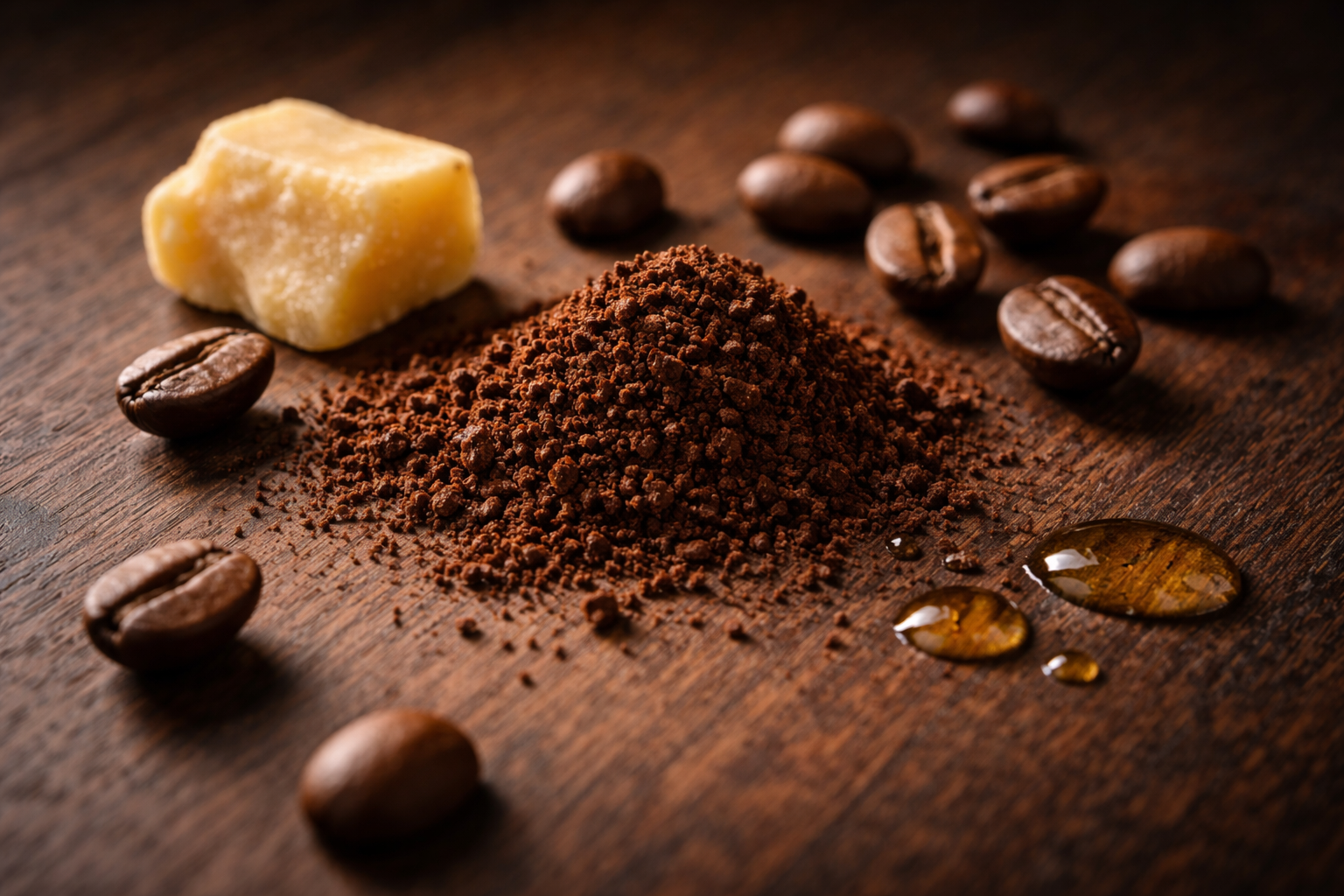
Coffea Arabica Seed Powder – ground coffee beans. This is the physical exfoliant and the functional core of the product. The caffeine and antioxidants come from the grounds themselves. One thing to note: this is not a dedicated coffee oil (cold-pressed Coffea Arabica Seed Oil is a different ingredient with a different profile). Some marketing language implies “coffee oil” – the INCI says seed powder.
Cocoa Seed Butter (from Tien Giang) – a regional ingredient that functions as an occlusive emollient. It softens skin, provides lipid content, and contributes to the creamy texture that prevents the scrub from feeling abrasive.
Coconut Oil – emollient and skin-conditioning agent. Mildly occlusive. Not everyone tolerates it well on the body if they’re breakout-prone in areas like the chest or back – worth noting.
Shea Butter – additional emollient, known for good skin feel and barrier support.
Tocopheryl Acetate – vitamin E, antioxidant.
Parfum – synthetic fragrance. The scent is described as intense roasted coffee with chocolate undertones from the cocoa butter. It’s one of the main reasons people buy this product. It’s also the main reason people with fragrance sensitivity should patch test first or look elsewhere.
Lip Scrub (5g)
The lip scrub has a much simpler, anhydrous (waterless) formula: Butyrospermum Parkii (Shea) Butter, Macadamia Integrifolia Seed Oil, Coffea Arabica Seed Powder, Carthamus Tinctorius (Safflower) Seed Oil, Synthetic Wax, Tocopheryl Acetate, and Menthyl Lactate.
No water means no preservatives needed and no emulsifiers. The base is a solid-to-soft balm with ground coffee as the exfoliant. The Menthyl Lactate gives a subtle cooling sensation. The formula is noticeably cleaner and shorter than the body polish – which matters given that anything you put on lips is partially ingested.
What About the Face Polish?
The Face Polish (150ml, available at Watsons Vietnam) is a separate product with a different formula – Safflower Oil replaces Coconut Oil and Shea Butter, and the particle size is finer for facial use. It’s not just the body polish repackaged in a smaller jar. If you’re interested in a coffee scrub specifically for the face, that’s the product – not the body polish.
What Coffee Actually Does
The marketing around coffee scrubs makes several claims. Here’s what the evidence actually supports:
Caffeine as an antioxidant – well documented. Topical caffeine has antioxidant properties, and there’s decent evidence for it reducing puffy appearance around the eyes specifically. Applied to the body as part of a rinse-off scrub, the contact time is short – the antioxidant benefit is real but not transformative.
Physical exfoliation – works. Coffee grounds are a legitimate physical exfoliant. They remove dead skin cells mechanically. This is exactly what a sugar scrub, salt scrub, or any other granular product does. The coffee grounds are not uniquely superior to other well-formulated physical exfoliants – the mechanism is the same.
Circulation stimulation – the caffeine and massage combined do temporarily improve microcirculation, which can make skin look briefly more energized after use. This is why the “firming” effect that people notice is real but temporary – it fades within hours.
What coffee doesn’t do: it does not reduce cellulite in any lasting way. Temporary improvement in appearance from microcirculation is not the same as structural change. It does not “detoxify” skin (the detox narrative has no mechanism). It is not superior to a well-formulated AHA for actual cell turnover – physical scrubs work mechanically on the surface; chemical exfoliants work differently and more consistently.
It’s a good product with a great story. Both things can be true.
Texture, Scent, and Application
The scent is the product’s most immediate selling point. Intensely roasted coffee on opening, with cocoa butter adding chocolate-adjacent warmth underneath. It’s the closest thing to a specialty coffee shop smell in a jar. Whether this is a feature or a concern depends entirely on your relationship with synthetic fragrance – the Parfum in the INCI is doing a lot of work here.
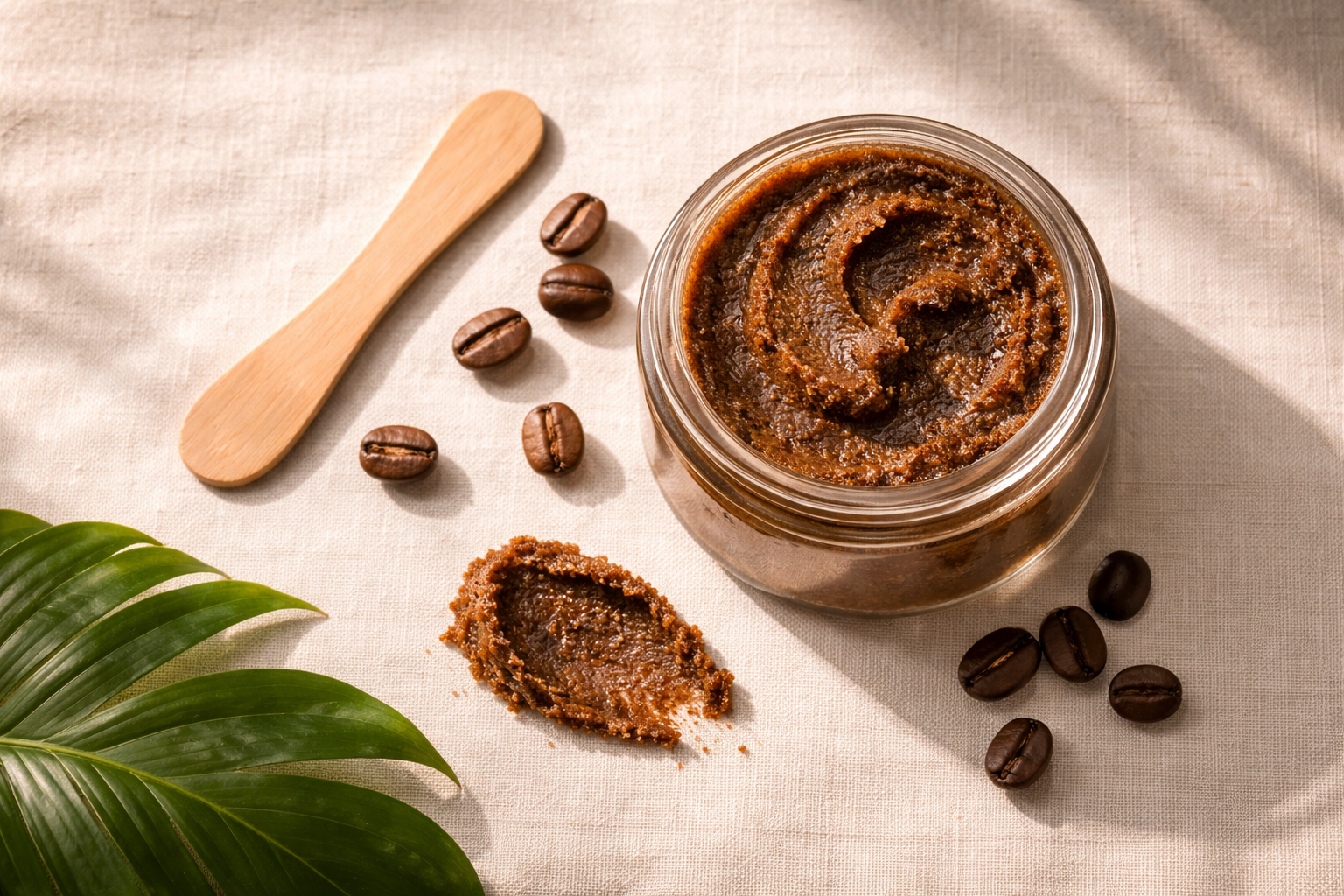
Texture is creamy and emulsified — closer to a thick lotion with coffee grounds suspended in it than the drier, sugar-scrub style products. This means it rinses reasonably cleanly and doesn’t leave a layer of grit in the shower. The butter content means skin feels immediately soft after rinsing without needing a separate moisturizer step – a genuine practical advantage.
Application: on damp skin under the shower, massage in circular motions for 30–60 seconds, and rinse thoroughly. The emulsified base means you need to rinse properly – if you rush, there’s a faint residue. At 2–3 times per week, a 200ml jar will typically last 6–8 weeks for a standard body routine.
Body Polish vs. Lip Scrub experience: the lip scrub is a completely different texture – firmer, almost stick-like, with finer granules. You slide it back and forth on damp lips for about 30 seconds and wipe it off. The menthol cooling makes it feel more active than it is, but the result is genuinely smooth lips without irritation if you don’t overdo it.
The Competition
Frank Body Original Coffee Scrub (Australia) – probably the most widely known international coffee scrub reference. Drier, coarser texture than Cocoon’s emulsified formula. Frank Body is oil-based with a dry sugar/salt component alongside coffee grounds – messier to use, stronger exfoliation, no built-in emollient finish. Priced similarly internationally (~$20–25 USD). The two products take different approaches: Frank Body is a more traditional scrub; Cocoon is a creamier, more moisturizing experience.
Generic pharmacy coffee scrubs in Vietnam – widely available at Watsons and Guardian for ~100,000–150,000 VND (~$4–6 USD). They work mechanically in the same way. What they typically lack: the emollient base quality, the regional ingredient story, and the formulation elegance. If you just want exfoliation and don’t care about anything else, a local drugstore option delivers the same mechanical result.
DIY coffee scrub – technically possible and far cheaper. Standard approach: used coffee grounds, coconut or olive oil, and sugar. What you lose: emulsion stability (it separates), microbial safety (wet scrubs with no preservatives go off quickly), and particle size consistency. If you’re going to make it, use fresh and discard after a week. Not really a recommendation – the hygiene variables are annoying enough that the convenience of a commercial product is worth something.
Bottom line: Cocoon wins on experience quality and formulation elegance. It loses on price relative to functional exfoliation. If you’re in Vietnam at local retail prices (~250,000–300,000 VND for the 200ml), it’s excellent value. At US storefront prices ($23–34 USD), you’re paying for a premium experience – not a dramatically superior exfoliant.
Who Should Buy It
Good fit:
- Someone who wants body care with a genuine ingredient origin story and a product that feels considered rather than generic
- Anyone new to Vietnamese skincare looking for a low-risk, pleasant first experience – easy to enjoy, difficult to get wrong
- Someone who uses body scrubs regularly and wants an emollient-rich formula that doesn’t require a separate moisturizer after
Less good fit:
- Anyone targeting breakout-prone areas (chest, back, shoulders) – the coconut oil content may be worth monitoring
- Anyone with synthetic fragrance sensitivity – the Parfum is present and noticeable
- Anyone expecting clinical exfoliation results (texture improvement, hyperpigmentation) – for that, a BHA or well-formulated AHA lotion is a more consistent tool
- Anyone who read “cellulite treatment” in the marketing – that’s not what this is
Where to Buy and What to Pay
Inside Vietnam (best value and lowest risk):
- Watsons, Guardian, and Vincom/Aeon mall flagship stores
- Local retail price: approximately 250,000–300,000 VND (~$10–12 USD) for the 200ml body polish; the lip scrub is typically under 100,000 VND (~$4 USD)
Outside Vietnam:
- cocoonoriginal.com – official US storefront. Body Polish: $23.55 (sale) / $33.50 (regular). Lip Scrub: $13.01. Ships to the US, Canada, Australia, selected Asian markets. No direct EU shipping
- Amazon – Cocoon Original Official Store listing only. Third-party sellers are unverified
- Shopee/Lazada – official brand storefront with verified badge only
Europe: no direct shipping. Forwarding services or Vietnamese diaspora group buys are the realistic options.
Red flags: significant discount below standard retail pricing, seller history under 12 months, packaging photos that don’t match current product design.
FAQ
Is the Cocoon coffee body polish good for the face? No. The Body Polish uses Coconut Oil as a primary emollient and contains coarser coffee grounds – both too occlusive and too abrasive for most facial skin. Cocoon makes a separate Face Polish (150ml) specifically formulated for facial use, with a different oil profile and finer particles. Use that instead.
Does the coffee scrub reduce cellulite? No – not in any lasting way. There’s a temporary improvement in appearance after use due to microcirculation stimulation, but it fades within hours. The marketing language around this is optimistic relative to the actual evidence.
How often should I use it? 2–3 times per week is the recommended frequency. Daily use of physical scrubs in humid climates can compromise the skin barrier – especially on areas already experiencing heat-related irritation.
Is the Cocoon lip scrub worth buying separately? Yes, if you want a simple lip scrub with a clean formula. The anhydrous base (no water, no preservatives, short ingredient list) is genuinely well-suited to lip care. At ~$4 USD locally or $13 USD via the US storefront, it’s a straightforward product that does what it says without unnecessary complexity.