Building a skincare routine for tropical weather requires different logic than standard guides suggest – the assumptions baked into most routines are calibrated for European winters, not for 35°C heat at 80% humidity.
Tropical weather doesn’t just make skincare uncomfortable. It changes what works. Products that perform beautifully in London or Seoul can pill, migrate, congest, and sting in tropical conditions. The solution isn’t finding better products in the same category – it’s rethinking which categories you actually need.
This guide builds a practical routine for hot, humid climates: what each step does, what to skip, and which products – Korean, Japanese, and Vietnamese – hold up in real tropical conditions.
Fast track:
- Already know the basics? → The full routine
- Confused about moisturizer in humidity? → The humidity paradox
- SPF specifically → Best Sunscreens for Humid Weather
- Vietnamese product context → Vietnamese Skincare: The Complete Guide
- Three Asian skincare philosophies compared → Asian Skincare Routine
Why Your Skincare Routine Fails in Tropical Weather
Before building the routine, it’s worth understanding the specific failure modes that tropical conditions introduce.
Layering breaks down. K-beauty’s layering logic – toner, essence, serum, moisturizer, SPF – assumes each layer fully absorbs before the next goes on. In high humidity, absorption slows. Products stack rather than absorb, and the whole structure migrates when you sweat.
Occlusion works against you. In cold, dry climates, sealing moisture in is the goal. In tropical heat, your skin is already surrounded by ambient moisture – occlusive layers trap heat, block sweat, and create the conditions for congestion and breakouts.
SPF compliance collapses. A sunscreen that feels acceptable once becomes intolerable at midday reapplication in 35 °C heat. Most people in tropical climates aren’t under-applying SPF because they don’t care – they’re under-applying because the formula makes compliance physically unpleasant.
Air-conditioning creates a paradox. Outdoors: humid, warm, sebum-stimulating. Indoors: cool, dry, dehydrating. Your skin cycles between the two multiple times a day. This is why “my skin is oily but also tight” is a common complaint in tropical urban environments – it’s not contradictory, it’s the AC-humidity cycle.
The routine below is designed around these specific conditions, not around generic “sensitive skin” or “combination skin” categories.
The Humidity Paradox: What You Actually Need to Moisturize
The most counterintuitive truth about tropical skincare: you still need hydration, but you probably don’t need a traditional moisturizer.
Hydration (water content in the skin) and occlusion (sealing the skin surface) are different things. In a dry climate, you need both – humectants to draw water in occlusives to keep it there. In a humid tropical climate, ambient moisture reduces your need for heavy occlusives significantly. What you still need is humectants (hyaluronic acid, glycerin, niacinamide) to help the skin hold water efficiently.
The practical implication: in tropical weather, a well-formulated hydrating toner or essence often replaces the need for a separate moisturizer in the daytime routine. Your skin doesn’t need a cream to seal in moisture it’s already surrounded by – it needs help using that moisture effectively.
At night, when you’re in air-conditioning for hours, a light gel-cream becomes appropriate again. But the heavy cream that K-beauty recommends as a final seal? That’s for Seoul winters, not Hanoi summers.
The Routine
Morning Routine
Step 1 – Cleanse (1 product)
Use a gentle, low-foam gel or foam cleanser. Your goal in the morning is removing overnight sebum and whatever your skin produced while you slept – not deep-cleaning.
What to avoid: high-stripping sulfate cleansers that leave skin tight. Tight skin after cleansing triggers compensatory sebum production – the opposite of what you want in a humid climate.
Vietnamese option: Cocoon Winter Melon Cleanser – gel texture, niacinamide, non-stripping. K-beauty option: COSRX Low pH Good Morning Gel Cleanser – the category standard for a reason.
Step 2 – Hydrating Toner or Essence (1 product)
This is your hydration delivery step. A watery toner with humectants (glycerin, hyaluronic acid, panthenol) applied to damp skin after cleansing. Pat in with hands rather than wiping with a cotton pad – you’re adding, not removing.
In tropical weather, this step often replaces the need for a separate moisturiser in the morning. If your skin feels balanced after this step and SPF, you don’t need to add a cream.
Vietnamese option: Cocoon Hau Giang Lotus Soothing Toner – fragrance-free, centella, fungal acne-safe, genuinely lightweight. K-beauty option: Klairs Supple Preparation Unscented Toner – the fragrance-free benchmark in this category.
Step 3 – Targeted Treatment (optional, 1 product maximum)
If you have a specific concern – post-acne marks, oil control, brightening – this is where one targeted serum goes. One. Not three.
The logic for limiting to one active in tropical weather: stacking multiple actives increases the risk of irritation, and tropical heat already stresses the barrier. More activities is not better.
For oil control/pores: Cocoon Winter Melon Serum N7 (7% niacinamide) – lower concentration than N15, appropriate for daily use in a routine with other steps. For brightening: Cocoon Hung Yen Turmeric Toner – ascorbyl glucoside, gentler than a full serum, appropriate as a toner-serum hybrid. For barrier support/soothing: any centella-focused product – Skin1004 Madagascar Centella Ampoule if you want maximum centella concentration internationally.
Skip if: your skin is currently reactive, you’re in a particularly humid season, or you’ve recently introduced other new products. The treatment step is the most optional part of a tropical routine.
Step 4 – SPF (non-negotiable)
The most important step in any tropical routine. Vietnam’s UV index regularly reaches 9–11 (extreme) from March to October. No other skincare decision you make has more impact on long-term skin health than daily, adequate SPF.
Three criteria that matter more than SPF number in tropical weather: texture you’ll actually reapply at noon, finish that doesn’t pill under sweat, and non-comedogenic formula that won’t congest pores that are already heat-stressed.
Vietnamese option: Cocoon Winter Melon Sun Fluid SPF50+ – 7 premium UV filters, tested at HelioScreen France, water-resistant for 80 minutes, gel texture. $32–47 USD internationally; significantly cheaper at local Vietnamese retail.
K-beauty option: Beauty of Joseon Relief Sun SPF50+ PA++++ – the daily comfort baseline. Dewy finish; works best for normal to combination skin.
Japanese option: ANESSA Perfect UV Skincare Milk – for outdoor days, high activity, or rainy season commuting when durability matters more than elegance.
Full SPF breakdown: Best Sunscreens for Humid Weather
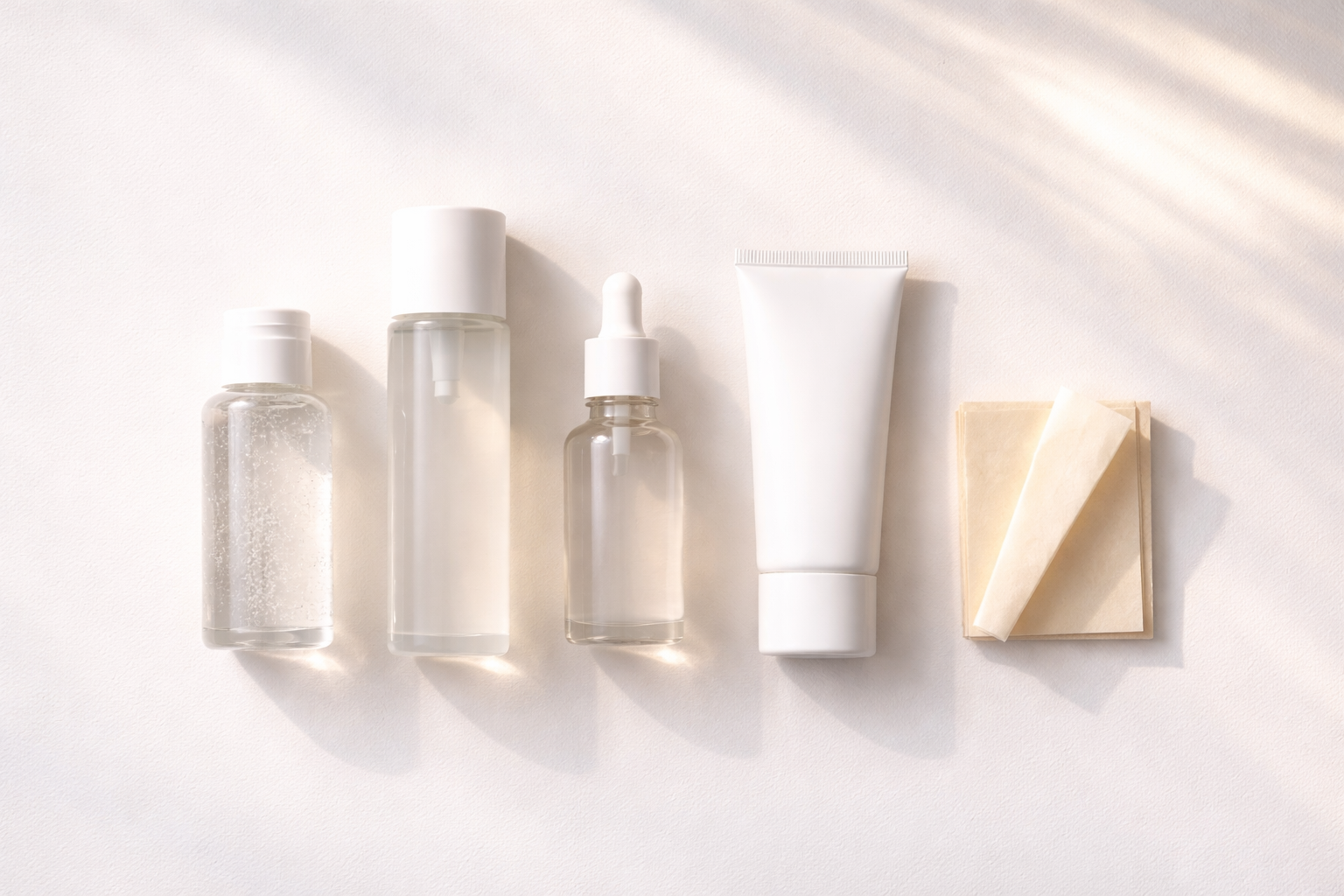
Evening Routine
Step 1 – Double Cleanse (2 products, or 1 if no SPF/makeup)
If you’ve worn SPF – and you should have – double cleansing is worth it. An oil-based cleanser first to dissolve SPF and sebum; a water-based cleanser second to remove residue.
If you genuinely didn’t apply SPF or wear any makeup, a single gentle cleanser is sufficient.
Oil cleanser: Banila Co Clean It Zero (balm format, rinses cleanly), or any massage-and-emulsify style oil cleanser. Water cleanser: same as morning – low-pH, gentle, gel format.
Step 2 – Hydrating Toner
Same product as in the morning. Damp skin after cleansing, pat in with hands.
Step 3 – Treatment (if using actives)
Evening is the better time for most actives – you’re not adding photosensitizing ingredients before sun exposure, and overnight recovery supports the repair process.
If you’re using a vitamin C serum (Cocoon Hung Yen Turmeric Brightening Serum), retinol, or AHA – evening is the right time. Still limited to one active. In tropical climates, every-other-night rotation is more sustainable than daily use, especially when you’re starting out.
Step 4 – Moisturizer (light, gel-cream format)
At night in air-conditioning, a light moisturizer is appropriate – you’re not in the ambient humidity that makes daytime moisturizer optional. A gel-cream or water-cream texture provides enough occlusion to support overnight recovery without creating the congestion that heavier creams cause.
What to avoid: petroleum-heavy balms, thick shea butter creams, and anything marketed as “intensive moisture” or “night repair cream” – these are formulated for dry climates and will likely congest tropical skin.
K-beauty option: COSRX Oil-Free Ultra Moisturizing Lotion – water-based, lightweight, and non-comedogenic.
Vietnamese option: Cocoon Winter Melon Gel Cream – oil-free, niacinamide, lightweight gel texture.
Adapting for Skin Type
Oily skin: skip the moisturizer step entirely in the morning. Your SPF is doing enough. At night, use the lightest possible gel moisturizer or skip again if your skin feels balanced. Focus on niacinamide to regulate sebum rather than trying to strip oil with harsh cleansers – stripping triggers rebound production.
Dry skin in a humid climate: the paradox is real. You’re likely dehydrated from AC cycling even if the ambient humidity is high. Add a second hydrating toner layer (pat in two rounds) rather than reaching for a heavy cream. At night, your light gel-cream is important – don’t skip it.
Sensitive or reactive skin: strip the routine to three steps maximum: cleanse, lotus/centella toner, SPF. Introduce anything else only after your skin has been stable for two weeks. Heat increases skin reactivity – less is more than usual.
Combination skin: treat zones differently. T-zone: treat as oily. Cheeks and jaw: treat as normal-dry. In practice, this usually means applying moisturiser only to drier areas at night and letting SPF serve as the sole topical layer on the T-zone in the morning.
What to Skip in Tropical Weather
Heavy occlusive creams as a daytime step – petrolatum, thick shea, balm-format products. These work in dry climates; in humidity they sit on top, trap heat, and clog.
Sheet masks daily – the essence is fine, but the occlusive mask layer in high humidity creates a steam effect that can over-hydrate the barrier and trigger congestion. Once or twice a week maximum, and remove if your skin starts feeling itchy or hot.
Multiple actives at once – niacinamide + vitamin C + retinol in the same routine stresses the barrier in any climate. In tropical heat, where the barrier is already working harder, this is asking for a reaction.
Alcohol-heavy toners – traditional astringent toners with denatured alcohol are designed for aggressive oil removal. They over-strip in tropical climates, trigger rebound oiliness, and compromise the barrier you’re trying to support.
Abrasive physical scrubs more than twice a week – physical exfoliation in a humid climate is appropriate, but frequency matters. Skin that’s already heat-stressed and slightly inflamed from constant UV exposure doesn’t need daily mechanical abrasion.
Reapplication: The Step Most People Skip
SPF reapplication at midday is the single highest-impact change most tropical climate routines are missing. UV protection degrades over time, and sweat accelerates this – in tropical outdoor conditions, two hours is the outer limit for meaningful protection.
The compliance barrier: most sunscreens are unpleasant to reapply over makeup or over sweaty skin. The solution is texture, not willpower – a watery essence or thin fluid SPF reapplies cleanly in a way that thick cream SPF doesn’t. This is the practical reason to prioritise finish and texture in SPF selection above all other variables.
Reapplication method: blot sweat first with a tissue, apply a thin, even layer of SPF, and let it set for 60 seconds before touching. If you wear makeup, use SPF setting spray (not a substitute for real SPF, but better than nothing for midday touch-ups), or use a makeup brush to gently press thin-textured SPF over foundation.
FAQ
Do I need sunscreen if I’m mostly indoors in the tropics? Yes – UVA penetrates glass and causes cumulative skin aging and hyperpigmentation regardless of whether you’re in direct sunlight. If you’re near windows, you’re getting UVA exposure. SPF is non-negotiable even in predominantly indoor environments.
Why does my skin feel oily an hour after cleansing in humidity? Usually over-stripping from cleansing. High-foam, high-sulfate cleansers remove the protective lipid layer from the skin surface, triggering sebaceous glands to compensate with increased oil production. Switch to a gentler, low-pH cleanser, and the cycle usually breaks within 2–3 weeks.
Is double cleansing necessary in tropical weather? Only if you’ve worn SPF or makeup. If you use SPF daily – which you should – double cleansing in the evening is genuinely more effective at removing it than a single cleanser. If it’s a rest day with no SPF, a single gentle cleanser is sufficient.
How many steps do I actually need in a tropical climate? Morning minimum: cleanser + SPF. That’s two steps. Everything else is optimization. The most common mistake is adding steps rather than improving the two that matter most.