You already know K-beauty. Vietnamese skincare is not that – and that’s precisely the point. It operates on a different logic: hot and humid first, ingredient storytelling second, and value third. The result is a growing ecosystem of local brands built for wearability in 35°C heat, not for a ten-step evening ritual in Seoul.
This guide covers what “Vietnamese skincare” actually means (the definition matters more than you’d think), what makes the market worth watching, how it compares to what you already know, which brands to try first – and how to buy without getting burned by fakes.
Fast track: If you’re here for brands specifically, jump straight to 7 Best Vietnamese Skincare Brands You Need to Know in 2026.
Choose your path:
- K-beauty fan? → Vietnam vs. K-Beauty → Brands to Watch → Starter Routine
- In Vietnam right now? → Quick Buying Tips → Where To Buy & Fakes
What “Vietnamese Skincare” Actually Means
The phrase “Vietnamese skincare” is used loosely enough to mean three entirely different things – and confusing them leads to bad buying decisions.
The Three Categories (Don’t Mix These Up)
Vietnamese brands are owned by Vietnamese companies and built around a Vietnamese brand identity. The product’s DNA – ingredients, storytelling, positioning – is rooted in Vietnam. Cocoon is the clearest example: vegan certifications from PETA and the Leaping Bunny program, ingredients named after specific Vietnamese regions (Dak Lak coffee, Hung Yen turmeric, An Giang lotus), and a brand narrative built explicitly around local nature.
Made in Vietnam means the product is manufactured in Vietnam, but the brand owner may be foreign. Vietnam has become a contract manufacturing hub for ASEAN cosmetics – a “Made in Vietnam” label tells you where it was made, not who made it or what values the brand holds.
Popular in Vietnam is the widest and most misleading category. Korean brands like Innisfree and The Face Shop have dominated Vietnam’s imported cosmetics market for years – Korean products account for roughly 30% of Vietnam’s cosmetics imports. These are loved by Vietnamese consumers, but they are not Vietnamese skincare.
What This Changes For You
Lists titled “best Vietnamese skincare” often blend all three, which explains why you’ll see Innisfree alongside Cocoon and Vedette. The fake risk also splits by category: counterfeits cluster around popular, high-demand imports more than niche local brands – but the channel always matters.
Why Vietnam Is Worth Watching
Vietnam’s cosmetics market was valued at approximately $2.5 billion in 2024, with 90% of products being imported. The interesting signal isn’t market size – it’s who is building for this market and why.
Tropical-First Formulation (Climate → Texture → Compliance)
Vietnam sits squarely in a hot, humid tropical climate. Ho Chi Minh City averages above 80% relative humidity for much of the year. For skincare, this has a direct consequence: heavy textures don’t work. Vietnamese brands that survive understand this – “sương sương” (Vietnamese beauty slang for light, mist-like) has become a genuine quality benchmark in local consumer conversations. The counterpart, “ô dề” (overly heavy, overdone), is what fails. Formulas built for Vietnam’s climate tend to be gel-based, fast-absorbing, and texture-forward in a way that translates well to anyone who finds K-beauty’s heavier steps uncomfortable in warm weather.
Ingredient Stories You’ll See Everywhere
Vietnamese brands lean heavily into local ingredient narratives. Cocoon’s product lines are organized by Vietnamese region: Dak Lak coffee, Hung Yen turmeric, An Giang lotus, and Ben Tre coconut. This storytelling is genuinely rooted in place. The honest read: some ingredients have real functional logic (caffeine, centella); others are primarily narrative. Read Vietnamese ingredient claims the same way you’d read any brand’s: interesting when evidence-backed, skeptical when it’s just “natural = better”.
Vietnamese coffee skincare: why Dak Lak coffee is the next big ingredient
Discovery Retail + Social Commerce
Vietnam’s beauty market moves fast through TikTok, Shopee Live, and Zalo. A product can go viral within days – which is exciting for discovery, but it means fake sellers operate in the same spaces. Vietnamese authorities identified nearly 5,000 counterfeit cosmetics incidents in 2024, and multiple fake production networks have been caught selling through Shopee and TikTok at scale. Speed of discovery ≠ safety of purchase.
Accessible Entry Point for Experimentation
If you’re used to K-beauty pricing, Vietnamese local brands offer a genuinely low cost of entry. Cocoon’s core products sit at roughly $20–40 internationally.
Vietnam vs. K-Beauty vs. J-Beauty
This is not a ranking. What follows is a practical translation for someone who already speaks K-beauty.
Texture and Finish
K-beauty popularized glass skin – dewy, plump, bouncy – which often involves layering watery essences and a sealing final step. In humid climates, the layering works; the heavy occlusive finish is often where it breaks down. Vietnamese products tend toward the middle register: enough hydration, fast absorption, and finishes that hold through humidity. What to avoid in daily humid-climate use: heavy cream as a daytime step, oil-heavy serums without a setting step, and anything that takes more than 60 seconds to absorb.
SPF Culture
SPF compliance is high in Vietnam, driven by both K-beauty influence and genuine UV-awareness. Japanese (Anessa, Biore) and Korean watery gels dominate pharmacy shelves. Vietnamese local brands are building seriously into this space – Cocoon’s Winter Melon Sunscreen SPF 50+ PA++++ is one of the brand’s top-rated products. The actual differentiator in tropical climates isn’t SPF number: it’s whether you’ll reapply. A comfortable, non-pilling formula you’ll wear again at noon beats a “perfect” SPF 50 you’ll skip.
Best Sunscreen for Humid Weather: What Actually Works in Tropical Heat
Actives vs. Soothing Basics
Vietnamese brands are historically strongest in soothing/barrier (centella, botanicals) and slowest to develop actives. This is changing: Skinetiq’s Candid brand launched with clinical-grade retinol as an explicit play for the actives segment. If you’re used to K-beauty’s actives range, the locally made options are newer and fewer – but the gap is narrowing.
The Ingredient Map
Rather than chasing trendier ingredients, start with what your skin actually needs – then filter for humidity-compatible textures.
Barrier & Soothing
This is where Vietnamese botanical brands are most developed. Centella asiatica (rau má), beta-glucan, and simple aloe-based formulas are the workhorses. In humid climates, good soothing products should be gel or lightweight lotion – avoid occlusive balms unless used as a targeted sleep mask.
Oil Control & Breakouts
What matters more than the active ingredient is the vehicle – the base formula it’s delivered in. A niacinamide serum in a heavy, silicone-rich base can make humidity acne worse even if niacinamide itself is helpful. Look for water-based, non-occlusive textures and SPF that says non-comedogenic.
Brightening Without Overdoing It
Brightening actives increase sun sensitivity. In a high-UV environment, you cannot pursue brightening without daily SPF – you’ll make the situation worse. Consistency + SPF is the formula, not any single ingredient.
Hydration That Doesn’t Feel Heavy
Hydration (hyaluronic acid, water content) is different from occlusion (petrolatum, thick silicones). In humidity, you still need hydration – air-conditioning cycling dries the skin – but not occlusion. Gel-type moisturizers and water-cream textures do the job without the suffocating finish.
Local Ingredient Hook: Coffee as the Best Example
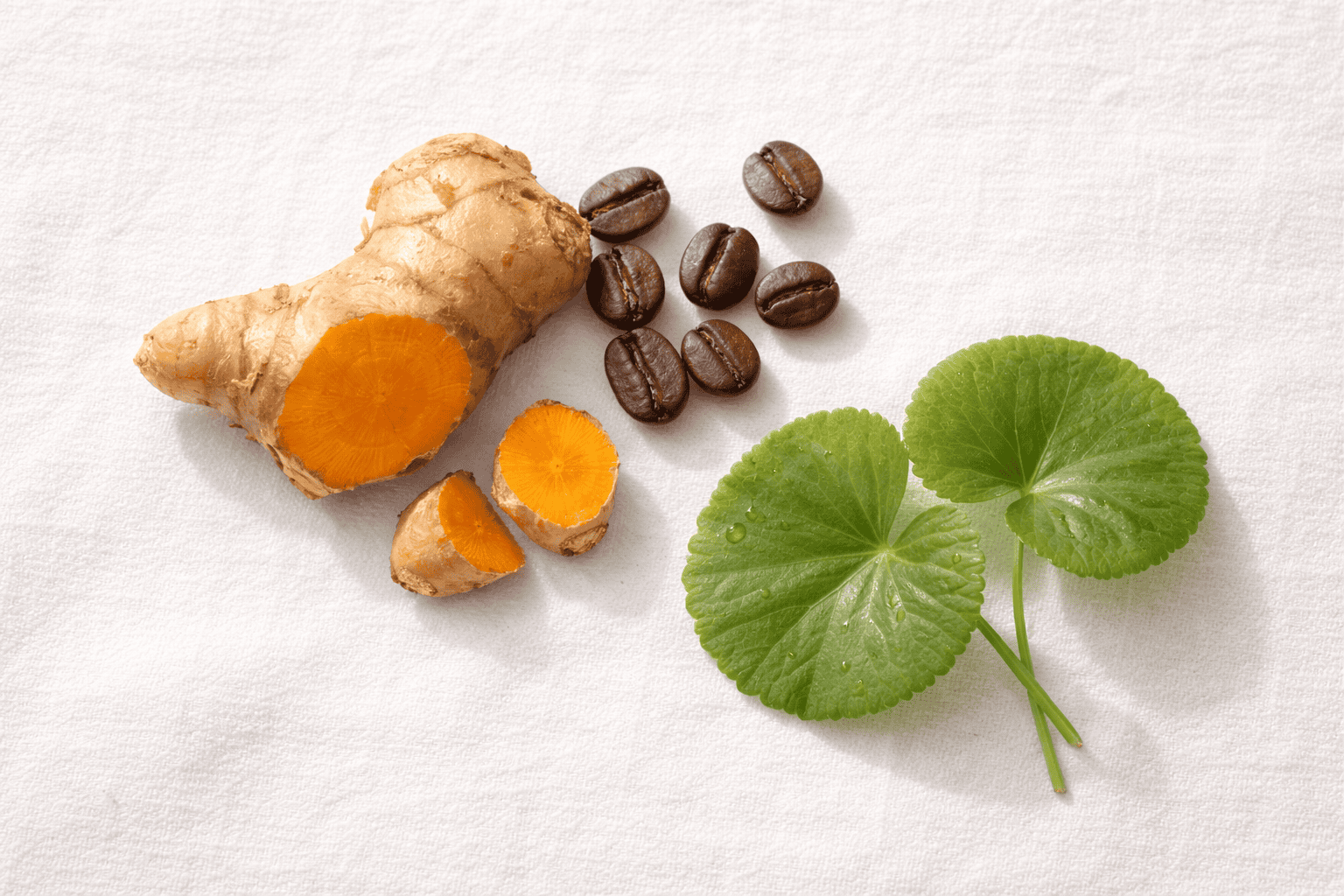
Dak Lak coffee is Vietnam’s most grounded ingredient story. Cocoon’s Dak Lak Coffee line uses coffee oil – not just grounds – supplying caffeine and linoleic acid alongside physical exfoliation. The physical exfoliation works, the caffeine has antioxidant evidence, and the origin story is genuine. What it isn’t: a transformative miracle ingredient uniquely superior to any other well-formulated exfoliant. It’s a good product with a great story – both things can be true.
Vietnamese coffee skincare explained
Quick definitions:
- “Dermatologically tested” – a dermatologist reviewed or patch-tested the formula. A safety baseline, not an efficacy claim.
- “Non-comedogenic” – designed not to clog pores. A meaningful signal for oily/acne-prone skin, not a guarantee.
- “Natural” – no regulated definition in Vietnamese (or most global) cosmetics. Check the actual INCI list.
A K-Beauty-Friendly Starter Routine for Tropical Weather
Four steps. One sentence each. The full guide is in: How to build a Vietnamese skincare routine for tropical weather
Step 1 – Cleanse: A gel or low-foam cleanser that removes sunscreen without stripping the barrier.
Step 2 – Pick one treatment goal: Acne/oil control, soothing, or brightening – not all three at once.
Step 3 – Moisturize by texture: Gel-cream or light lotion in the day; you can go slightly richer at night if using actives.
Step 4 – SPF you’ll actually reapply: Minimum SPF 30, ideally SPF 50+ PA++++, in a texture comfortable enough to reapply at noon.
Best Sunscreen for Humid Weather: What Actually Works in Tropical Heat
Brands to Watch
This is a snapshot of the landscape, not a ranking. For full profiles, prices, and where to buy each brand, see the 7 best Vietnamese skincare brands to know in 2026.
Vegan/Botanical-Led
Cocoon – Vietnam’s most internationally visible brand, the first locally certified by both PETA and the Leaping Bunny program, with product lines organized by Vietnamese region (Dak Lak coffee, Hung Yen turmeric, Winter Melon, An Giang lotus). The most logical first entry point for most readers. Start with the Winter Melon Sunscreen or Hau Giang Lotus Toner.
Cocoon Vietnam: everything you need to know
Cỏ Mềm Homelab – founded in 2015 by pharmacist Trịnh Đặng Thuận Thảo (Master’s in Industrial Pharmacy, Université Louis Pasteur Strasbourg) is a stripped-back herbal brand with minimal preservatives and no synthetic fragrances; it is primarily a domestic discovery.
Vedette – a long-standing, supermarket-accessible brand (founded in 1998) at the affordable tier, reliable for daily basics with a natural extract focus.
Derm-Style Basics
Candid (by Skinetiq) – the most interesting new entrant: science-forward, clinical actives (retinol, peptides), mid-premium pricing, 75% acquired by India’s Marico Group in February 2026 at an equity valuation of approximately $40 million. Worth watching if you’re active-literate; note that formulation is done in Korea, not locally.
Value Basics
Thorakao – founded 1957, Vietnam’s oldest surviving cosmetics brand, widely distributed in domestic pharmacies; reliable for cleansers and daily essentials without complexity.
In Vietnam Right Now? Quick Buying Tips
- Official brand stores, flagship stores in Vincom/Aeon malls, and Watsons/Guardian chains are the lowest-risk channels.
- On Shopee and Lazada, only buy from verified official brand storefronts – check for the official store badge, not just the listing.
- TikTok Live deals carry the highest risk and are difficult to verify.
- Always check the expiry date and batch code before purchase.
Where to Buy + How to Avoid Fakes
Lowest-Risk Channels
Official brand websites (Cocoon ships internationally via cocoonoriginal.com), authorized retailers (Watsons, Guardian, mall flagship stores), and verified official storefronts within Shopee Mall or Lazada Official Store.
The One Rule
For daily-use products that go on your face every day – cleansers, moisturizers, sunscreens – only buy from low-risk channels. The counterfeit cosmetics problem in Vietnam is real and documented: fake production networks have been caught selling at scale through e-commerce platforms. When in doubt, buy official.
Full guide: Where to buy Vietnamese skincare and avoid fakes
FAQ
Where can I buy Vietnamese skincare outside Vietnam? Cocoon (cocoonoriginal.com, Amazon) is the most globally accessible option. Some smaller brands ship from Vietnam via Shopee; Vietnamese diaspora communities also share group-buy and forwarding services.
How do I spot counterfeit Vietnamese skincare online? Price significantly below retail, no seller history, packaging that looks off compared to official brand photos, missing or suspiciously applied batch codes. When in doubt, buy official.
What Vietnamese brand should I try first as a beginner? Cocoon, without hesitation, is the most internationally available and the most thoroughly certified, and the range is clearly mapped to skin goals.
Are Vietnamese sunscreens good for humid weather? Local brands are building seriously in this space, but Japanese and Korean SPFs still dominate Vietnam’s pharmacy shelves for good reason. Vietnamese options are worth trying; the competition is stiff.
Best Sunscreen for Humid Weather: What Actually Works in Tropical Heat
What local ingredient trend is actually worth paying attention to? Dak Lak coffee – it has a real place of origin and functional ingredient logic and has been popularized by Cocoon in a way that’s honest about what it does.
Vietnamese coffee skincare explained
Can I build a full tropical routine with Vietnamese products? Yes, but you’ll likely mix and match. Vietnamese brands are strongest in cleansers, toners, and soothing treatments. For high-performance actives, K-beauty or clinical imports are still often the better option until the local market matures further.
Next Reads
- 7 best Vietnamese skincare brands to know in 2026
- Cocoon Vietnam: everything you need to know
- Best Sunscreen for Humid Weather: What Actually Works in Tropical Heat
- Vietnamese coffee skincare: why Dak Lak coffee is the next big ingredient
- How to build a Vietnamese skincare routine for tropical weather
- Where to buy Vietnamese skincare and avoid fakes