Cocoon is the most internationally visible Vietnamese skincare brand – but most English-language coverage stops at “vegan, cruelty-free, local ingredients.” That’s the beginning of the story, not the whole thing.
This guide goes deeper: how the brand actually works, what each product line does (and doesn’t do), which products are worth your money, and what to know before you buy from outside Vietnam.
Fast track:
- Already know Cocoon? Jump to → Which products to try first
- Curious about the ingredient lines? → The five product families
- Buying from outside Vietnam? → Where to buy safely
What Cocoon Actually Is
Cocoon is a 100% vegan skincare and haircare brand founded in 2013 by Nature Story Cosmetic Co., based in Ho Chi Minh City. The brand’s organizing idea is straightforward: take ingredients from specific Vietnamese regions, name the products after their origin, and build formulas around those ingredients rather than using them as window dressing.
That last part matters. A lot of “natural” brands list exotic botanicals in the third-to-last position on an INCI list. Cocoon’s approach is different – the regional ingredient is the product’s identity and, in most cases, the functional core.
Certifications – What They Actually Mean
Cocoon holds three certifications that are genuinely meaningful, not marketing noise:
Leaping Bunny (Cruelty-Free International) – the strictest cruelty-free standard globally. Not just “we don’t test on animals” – every ingredient supplier in the chain is audited. This is unusual for any Vietnamese domestic brand.
PETA Beauty Without Bunnies – a second, independent cruelty-free verification. Redundant with Leaping Bunny in terms of substance, but signals the brand is serious about the positioning rather than just checking one box.
The Vegan Society – confirms no animal-derived ingredients across the range. This rules out common cosmetic ingredients like beeswax, carmine, lanolin, silk, and snail filtrate. For a Vietnamese brand competing against K-beauty (which uses snail filtrate extensively), this is a deliberate positioning choice.
What the certifications don’t tell you: whether the formulas are effective or whether the texture works for your skin in a humid climate. The product lines answer those questions.
The Five Product Families
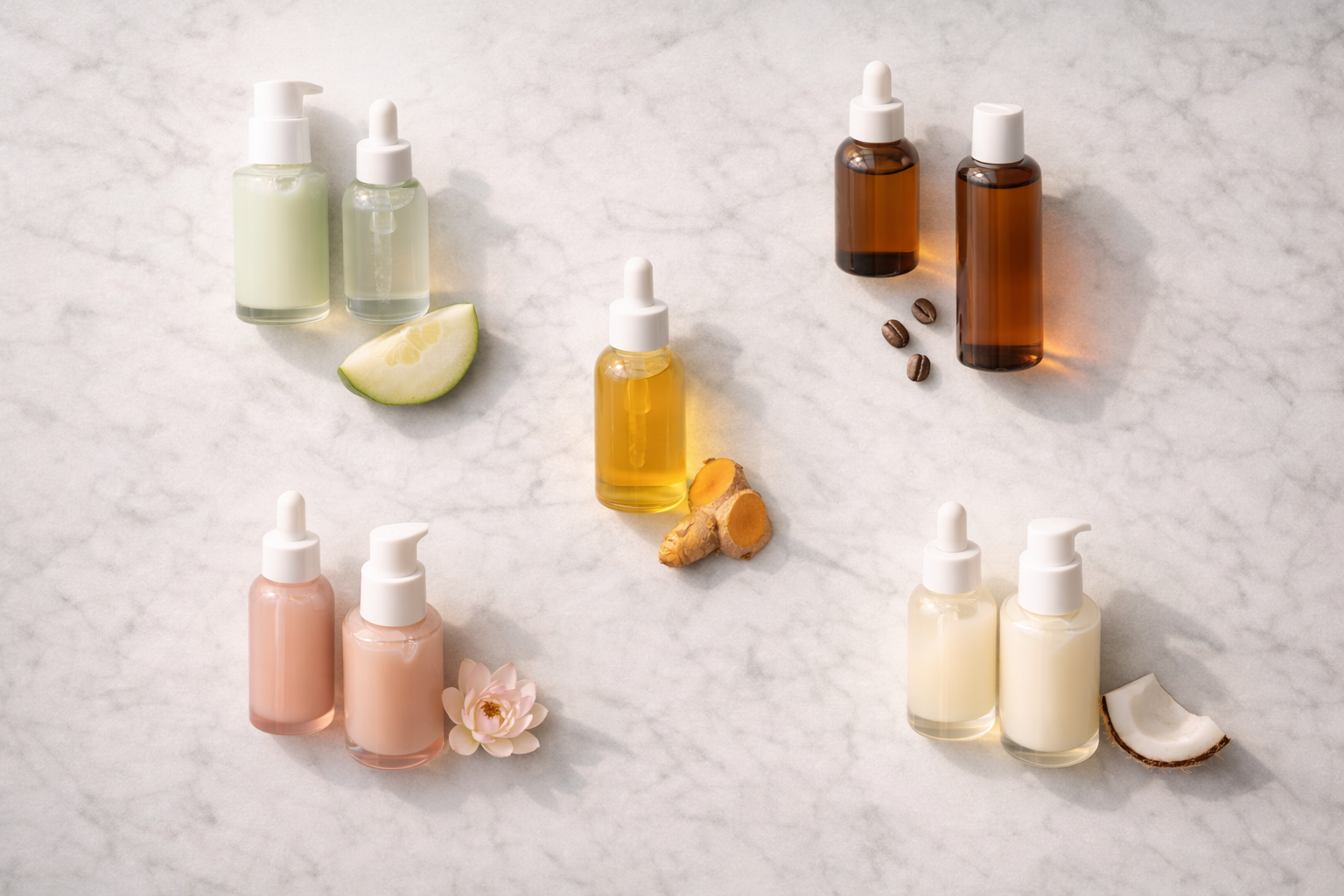
Cocoon organizes its range by Vietnamese region and key ingredient. Each family covers multiple product formats – cleanser, toner, serum, mask, and body care – built around the same core ingredient story.
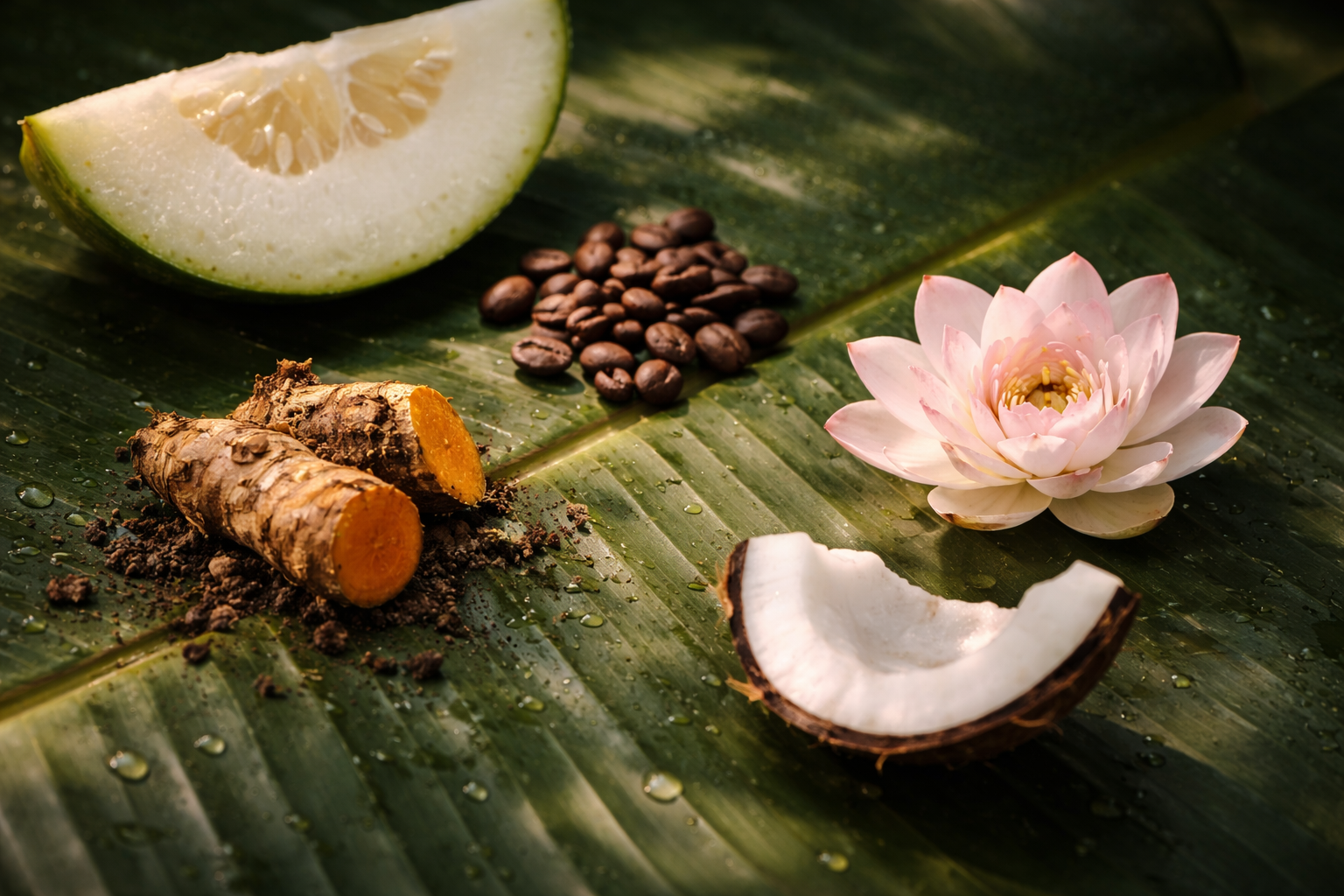
Winter Melon (Bí Đao) – Oil Control and Daily SPF
The ingredient: Winter melon (bí đao), is a common Vietnamese vegetable – mild, cooling, and high in water content. In skincare, Cocoon uses it primarily for its sebum-regulating and soothing properties. The Winter Melon line also includes niacinamide in several products, which does most of the functional heavy lifting for oil control.
The line: Cleanser, toner, micellar water, sunscreen, and a serum with 15% niacinamide and 4% NAG (N-acetyl glucosamine, a brightening compound that works synergistically with niacinamide).
Who it’s for: Oily and combination skin, anyone dealing with humidity-related congestion. The texture across this line is consistently lightweight and fast-absorbing.
Best product in the line: Cocoon offers two SPF options in this line. The original Winter Melon Sunscreen SPF 50+ PA++++ is periodically out of stock on the US storefront. The current in-stock flagship is the Winter Melon Sun Fluid, featuring 7 premium UV filters (Tinosorb M, Tinosorb A2B, and Uvinul A Plus, among others), tested at HelioScreen France, water-resistant for 80 minutes, and eye-friendly certified. Both share a lightweight gel texture that doesn’t pill under makeup.
Honest limitation: The niacinamide serum (15%) is high-concentration. If you’re new to niacinamide or have reactive skin, start with the toner (lower concentration) before going straight to the serum.
Dak Lak Coffee – Physical Exfoliation and Body Care
The ingredient: Dak Lak province in Vietnam’s Central Highlands produces some of Southeast Asia’s most recognised coffee. Cocoon sources coffee oil (not just grounds) from Dak Lak farms – this distinction matters. Coffee grounds provide physical exfoliation; coffee oil provides caffeine, linoleic acid, and antioxidant properties. The line uses both.
The line: Body polish (the brand’s internationally most recognised product), lip scrub, body butter with coffee oil and cocoa butter, face polish.
Who it’s for: Anyone who wants effective physical exfoliation with a genuine ingredient story. The body scrub is the entry point most international buyers try first – and for good reason. The aroma is genuine coffee, not synthetic fragrance.
Best product in the line: Dak Lak Coffee Body Polish. It works as a physical exfoliant, the coffee oil leaves skin feeling smooth rather than stripped, and the scent is distinctly Vietnamese rather than generically “spa.” At roughly 30–40 USD, it’s one of the brand’s most accessible products internationally.
Honest limitation: Physical exfoliation is physical exfoliation. The coffee grounds don’t do anything that a good apricot scrub or sugar scrub wouldn’t do mechanically. What’s genuinely different is the coffee oil content and the ingredient provenance. If you care about origin, this delivers. If you just want exfoliation, there are cheaper options.
Vietnamese coffee skincare: why Dak Lak coffee is the next big ingredient
Hung Yen Turmeric – Brightening and Vitamin C
The ingredient: Hung Yen province is known for turmeric cultivation. Cocoon uses turmeric extract (not raw turmeric, which would stain) combined with a 22% vitamin C derivative (ascorbyl glucoside) in the hero product of this line.
The line: Brightening serum (the vitamin C + turmeric combination), toner, face mask.
Who it’s for: Anyone targeting uneven skin tone, post-acne marks, or general brightening. The vitamin C derivative used (ascorbyl glucoside) is more stable than pure L-ascorbic acid but slower-acting – appropriate for everyday use rather than aggressive treatment.
Best product in the line: The Turmeric Vitamin C Brightening Serum. The 22% ascorbyl glucoside concentration is genuinely high. Combined with turmeric extract, the formulation makes functional sense – turmeric has documented antioxidant properties that complement vitamin C’s brightening mechanism.
Honest limitation: Any brightening active – vitamin C, niacinamide, turmeric – increases photosensitivity. In Vietnam’s UV environment, using this serum without daily SPF 50+ will make pigmentation worse. The serum is only as useful as the SPF you pair it with.
An Giang Lotus (Hau Giang / Sen) – Soothing and Hydration
The ingredient: Lotus (sen) is deeply embedded in Vietnamese culture – and it’s not a decorative addition here. Lotus extract has documented soothing and antioxidant properties. Cocoon’s lotus line draws from An Giang province in the Mekong Delta, one of Vietnam’s primary lotus-growing regions.
The line: Toner, face mist, soothing mask, serum.
Who it’s for: Sensitive and reactive skin, anyone who runs hot in humid climates and needs a soothing step rather than active treatment. The Lotus Toner is consistently the brand’s most popular product on SkinSort by user count.
Best product in the line: Hau Giang Lotus Soothing Toner. Fragrance-free, fungal acne-safe, low irritant risk. One of the rare Cocoon products suitable for genuinely sensitive or compromised skin. The ingredient list is short and clean – a good sign.
Honest limitation: This is the most “quiet” Cocoon line – no dramatic actives, no bold ingredient story. That’s exactly what makes it useful. Not everything needs to brighten or exfoliate. Occasionally you need something that just works without causing problems.
Ben Tre Coconut – Lip and Hair Care
The ingredient: Ben Tre province in the Mekong Delta is Vietnam’s coconut capital. Cocoon uses Ben Tre coconut oil across lip balms, hair masks, and body care.
The line: Lip balm (the brand’s most basic product), hair mask, and body care.
Who it’s for: Lip care and hair treatment – this line overlaps less with skin routine than the others.
Best product in the line: Ben Tre Coconut Oil Lip Balm. Simple, effective, genuinely moisturising. At approximately $3–5 USD, it’s the lowest-stakes entry point into the brand.
Honest limitation: This line is where Cocoon is most straightforwardly a “natural ingredient” brand without functional complexity. Coconut oil on lips is effective because coconut oil is occlusive – not because of anything Cocoon-specific. Buy it for the origin story and the price, not because it’s uniquely superior to other lip balms.
Which Products to Try First
If you’re new to Cocoon and don’t know where to start, the decision tree is simple:
For oily or acne-prone skin in humid climates: → Winter Melon Sun Fluid (or Sunscreen SPF 50+ if back in stock) as your daily SPF → Winter Melon Cleanser for morning and evening.
For uneven skin tone or post-acne marks: → Hung Yen Turmeric Brightening Serum (evening) → Winter Melon Sun Fluid (morning, non-negotiable).
For sensitive or reactive skin: → Hau Giang Lotus Soothing Toner → Nothing else from Cocoon until you know your skin tolerates the brand.
For a first purchase with no specific skin goal: → Dak Lak Coffee Body Polish – lowest stakes, most distinctive, genuinely enjoyable to use.
Skip if you’re expecting: → High-strength clinical actives (retinoids, AHAs at meaningful percentages) – this is not Cocoon’s territory → Minimalist ingredient lists – most Cocoon products have 20–40+ ingredients → Fragrance-free across the board – some lines use essential oils; check individual INCI lists.
Cocoon vs. K-Beauty SPF
The Winter Melon Sunscreen gets compared to Korean SPFs constantly – Biore UV Aqua Rich, Anessa Perfect UV, Beauty of Joseon Relief Sun. Here’s the honest read:
Where it competes: Texture. The Winter Melon Sunscreen (and the newer Sun Fluid) is gel-cream, fast-absorbing, non-pilling under makeup. It performs comparably to watery Korean gel sunscreens in terms of wearability. The Sun Fluid’s filter stack (Tinosorb M, Tinosorb A2B, and Uvinul A Plus) is genuinely competitive with premium Korean and Japanese SPFs on UV coverage.
Where it doesn’t: Price internationally. Via cocoonoriginal.com both SPFs sit at $30–40 – which is the same price bracket as Anessa Perfect UV or Beauty of Joseon Relief Sun. The price advantage only exists if you’re buying inside Vietnam.
Bottom line: For people buying from Vietnam or through group-buy networks at Vietnamese retail prices, Cocoon SPF is excellent value. For international buyers paying US storefront prices, you’re paying premium-adjacent money for a product that competes on texture and ingredient story, not on price. That’s still a legitimate reason to buy – just be clear-eyed about it.
Where to Buy Safely
Cocoon’s counterfeit problem is real – the brand’s popularity makes it a target on Shopee and Lazada.
Inside Vietnam (lowest risk): Watsons, Guardian, and brand flagship stores in Vincom and Aeon malls. These are the safest channels. Always check the expiry date and batch code before purchasing – even in legitimate stores.
Outside Vietnam:
- cocoonoriginal.com – Cocoon’s official US storefront, operated by HVUS LLC. Verified legitimate.
- Amazon – look specifically for the “Cocoon Original Official Store” listing. Third-party sellers on Amazon are unverified.
- Shopee/Lazada – only from the brand’s verified official storefront with the official store badge. Not from individual listings, regardless of price.
Red Flags When Buying Online:
- Price significantly below official retail (more than 20–30% cheaper is suspicious).
- Seller with no history or reviews.
- Product photos that don’t match Cocoon’s current packaging (the brand has updated packaging several times).
- No visible batch code or suspicious batch code placement.
For the full counterfeit guide: Where to buy Vietnamese skincare and avoid fakes
FAQ
Is Cocoon actually manufactured in Vietnam? Yes – Cocoon’s production is Vietnam-based, unlike some Vietnamese-branded competitors who manufacture in Korea. This is relevant if ingredient origin and local supply chain matter to you.
Are Cocoon products safe during pregnancy? The brand has marketed some products as suitable for pregnant women, particularly the simpler lines (Lotus, Coconut). However, “brand says it’s safe” is not a medical clearance. If you’re pregnant, check individual INCI lists and consult your doctor before introducing any new skincare.
Does Cocoon ship to the US/Europe? Not directly through the official website. Options: cocoonoriginal.com ships within the US; for European buyers, the realistic options are Vietnamese diaspora group-buy networks, international forwarding services (ship to a US address, then forward to Europe), or resellers. Verify any reseller carefully – check packaging against official product photos before buying.
Is the 22% vitamin C serum too strong for beginners? The formula uses ascorbyl glucoside, not pure L-ascorbic acid. Ascorbyl glucoside is significantly gentler and slower-acting. It’s more appropriate for everyday use and less likely to cause irritation than a 15–20% L-ascorbic acid formula. Still, patch-test first if your skin is reactive.
How does Cocoon compare to Innisfree? Different positioning entirely. Innisfree is Korean, with K-beauty formulation logic and a broad product range including actives. Cocoon is Vietnamese, botanical-first, weaker in actives, and stronger in the ingredient provenance story. If you want Korean skincare in Vietnam, Innisfree is still a better actives option. If you want Vietnamese skincare, Cocoon is the clearest starting point.