In Vietnam, winter melon is what you drink to cool down – bí đao tea, sold on every corner. In skincare, it is sold as an oil-control ingredient. Only one of those claims is fully earned.
Winter melon skincare has become shorthand for lightweight, oil-controlling products built for hot, humid skin – and the most prominent example, Cocoon’s Bí Đao line, has made the ingredient one of the best-known botanicals in Vietnamese skincare. But the honest version of what winter melon does, and what the actives formulated alongside it do, is more interesting than the marketing. This is a follow-up to our coverage of the products themselves: a look at the ingredient on its terms.
Fast track:
- The vegetable behind the line → What bí đao is
- What the evidence shows → Winter melon skincare benefits
- The oil-control question → Does it really control oil?
- Why it suits the tropics → The climate fit
- Why Cocoon built a line → The Cocoon case
- Realistic use → How to actually use it
- Related ingredients → Vietnamese Skincare Ingredients Glossary
The Vegetable Behind the Line
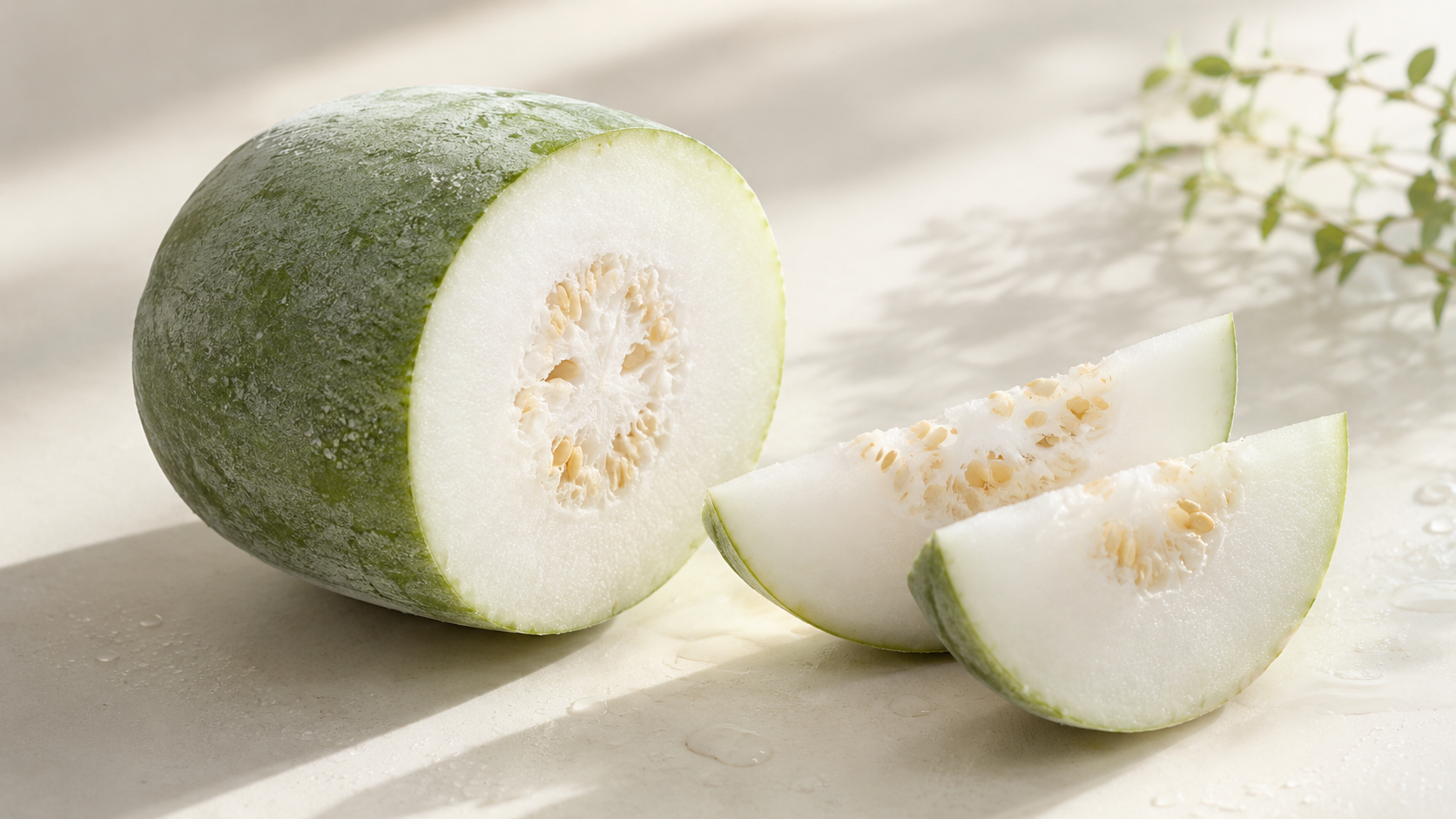
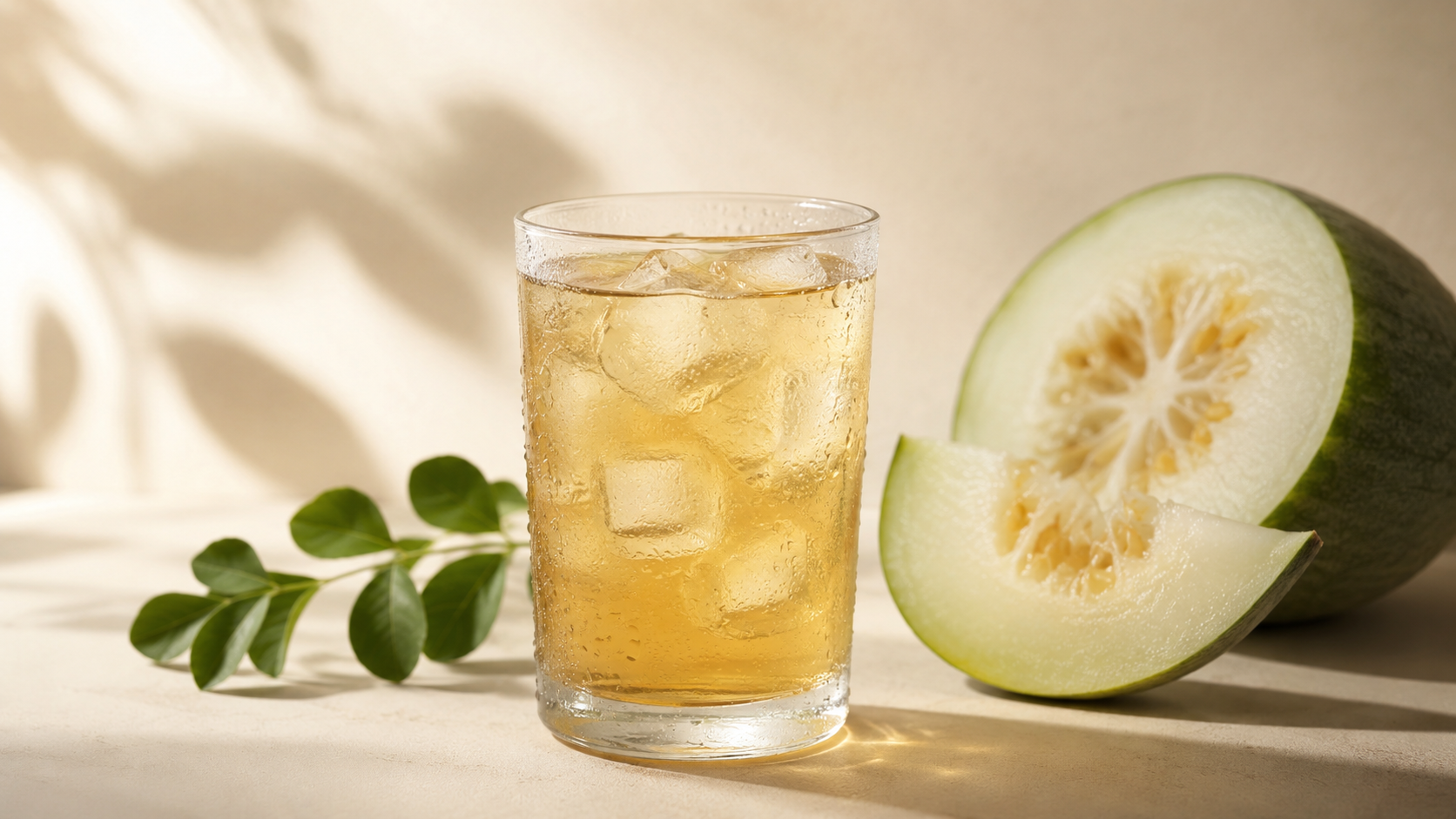
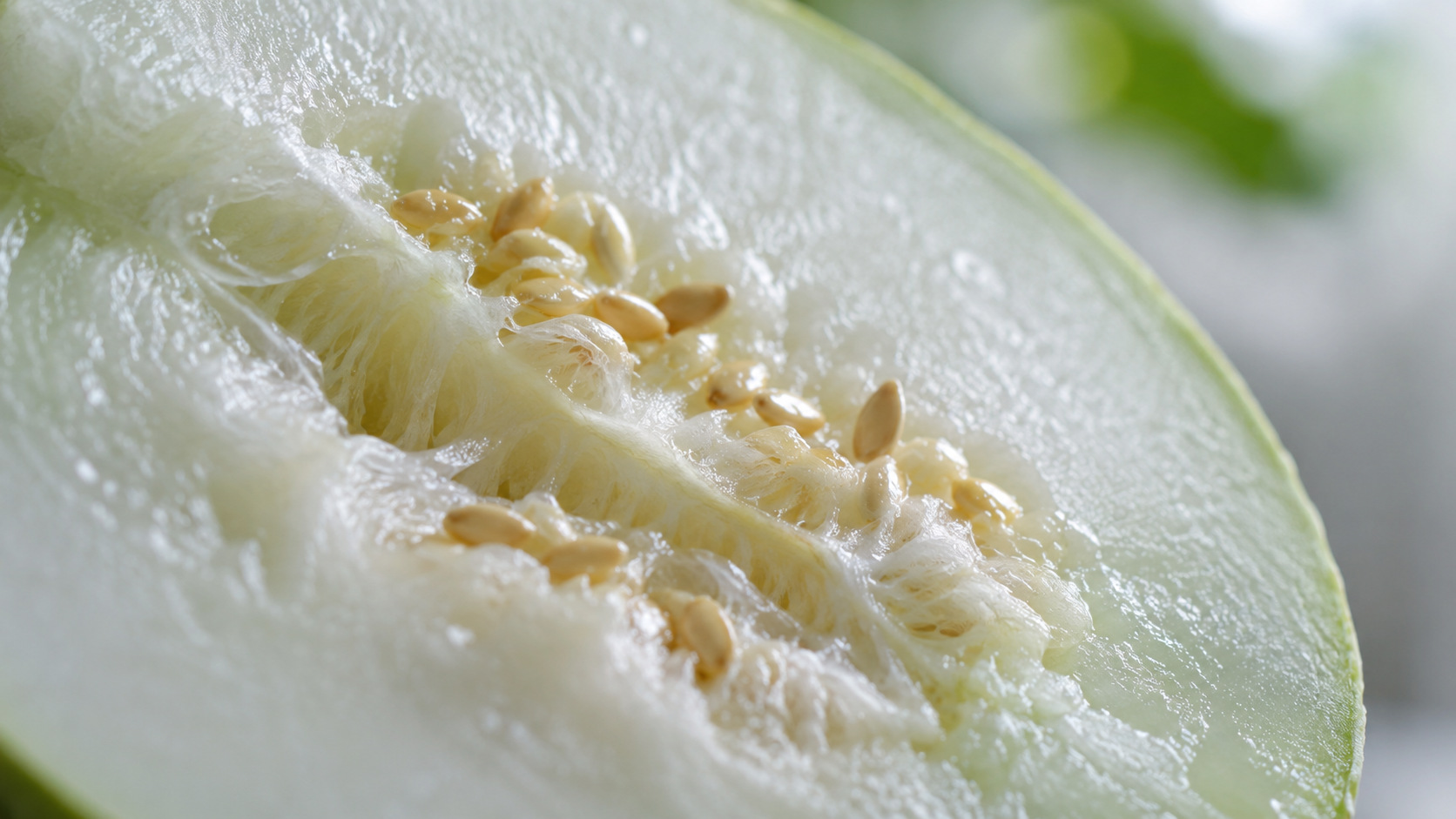
Bí đao – Benincasa hispida, known in English as winter melon, wax gourd, or ash gourd – is one of the most ordinary vegetables in the Vietnamese kitchen. It is roughly ninety-six percent water, mild in flavor, and most familiar to Vietnamese consumers not as a skincare ingredient but as a drink: nước bí đao, winter melon tea, consumed to cool the body in the heat. That cultural starting point matters because it is exactly what the ingredient carries into skincare.
In traditional Chinese and Vietnamese medicine, winter melon is classified as cooling – used to “clear heat,” reduce inflammation, and act as a gentle diuretic. Its measurable composition backs part of that reputation: alongside its high water content, it contains amino acids, soothing polysaccharides and mucilage, B and C vitamins, minerals including zinc, flavonoids, and the triterpenes alunsenol and multiflorenol, which carry antioxidant activity. It is a cooling food first and a skincare active second – and the cooling identity is the more substantiated of the two.
Winter Melon Skincare Benefits, Graded
Antioxidant – moderate, in-vitro. Winter melon’s seed oil, triterpenes, and phenolic compounds show free-radical-scavenging activity in laboratory testing. The mechanism is real and reasonably documented in vitro; topical clinical confirmation specific to skin is limited.
Soothing and anti-inflammatory – reasonable. This is among its better-supported roles. The polysaccharides and mucilage are demulcent – genuinely soothing – and the anti-inflammatory activity has both in-vitro support and a long traditional record. For calming heat-stressed or irritated skin, the rationale holds.
Cooling and light hydration – compositional and traditional. With ninety-six percent water and a refreshing feel, winter melon delivers a light, cooling sensation and surface hydration. This is more about texture and comfort than a powerful active effect, but in a hot climate, that is not a trivial benefit.
Oil control – the headline claim, and the weakest. Covered in full below.
Brightening and anti-aging – overstated. These appear mostly on ingredient-supplier marketing pages and rest on in-vitro data at best. They should not lead any honest account of the ingredient.
Does Winter Melon Actually Control Oil?
This is the claim the whole category is built on, and it deserves a direct answer. Winter melon is traditionally regarded as cooling and mildly astringent, which is where the oil-control reputation comes from – but there is little robust clinical evidence that winter melon extract itself meaningfully reduces sebum.
In real products, the oil control comes mostly from what is formulated alongside it. Look at the ingredient list of Cocoon’s Winter Melon toner: niacinamide sits second, right after water, ahead of the winter melon extract itself – and niacinamide has genuine, well-documented sebum-regulating evidence. The formula also leans on zinc PCA and tea tree oil, both with real oil-and-acne rationale. Winter melon provides the cooling, soothing, brand-defining layer; niacinamide and its co-actives do the measurable work. This is consistent with what we found reviewing Cocoon’s full range, where niacinamide does most of the functional heavy lifting for oil control across the line.
None of this makes winter melon a bad ingredient – it makes it a supporting one. The honest framing is that the oil control you feel from a “winter melon” product is largely niacinamide, and the winter melon is the soothing, cooling, culturally resonant carrier around it.
Why It Suits the Tropics
The strongest case for winter melon is climatic, not pharmacological. In Vietnam’s heat and humidity, heavy occlusive ingredients fail – they trap sweat and sebum and feel greasy on skin that is already overproducing oil. Winter melon’s profile is the opposite: high-water, lightweight, cooling, and soothing. It is the kind of ingredient humid-climate skin actually tolerates, and it pairs naturally with the lightweight textures that work in the tropics.
That is the real through-line. Winter melon is less a potent corrective active and more a climate-appropriate base – one that calms heat-stressed, oily, or congested skin and feels good to use when the weather is working against you. For where it sits among other local botanicals, including the centella it is frequently formulated beside, see the glossary.
Why Cocoon Built a Line Around It
Given that the active heavy lifting comes from niacinamide, why anchor an entire line on the melon? Three honest reasons. First, cultural resonance: bí đao is instantly familiar to Vietnamese consumers as a cooling ingredient, which makes it an effective and trusted story. Second, climate fit: it is genuinely well-suited to oily skin in humidity. Third, it is a clean carrier for the actives that do the work.
Cocoon’s Winter Melon line spans a cleanser, a toner (around 170,000–195,000 VND for 140ml), micellar water, sunscreen – including the Winter Melon Sun Fluid reviewed here – and a high-strength 15% niacinamide serum. The winter melon is the identity; the niacinamide is the engine. That is not a cynical strategy – it is a sensible, climate-smart one with real local meaning, and it explains why an unremarkable vegetable became a flagship skincare ingredient.
How to Actually Use Winter Melon Skincare
Treat winter melon products as gentle, cooling, oil-friendly options well-suited to humid climates and oily or combination skin – not as standalone treatments. Their realistic benefits are soothing, light hydration, a refreshing feel, antioxidant support, and, through their co-formulated actives, real help with oil and breakouts. They suit heat-stressed, oily, or mildly congested skin particularly well.
Set expectations at the ingredient’s actual level. A winter melon toner is a comfortable, climate-appropriate base – not a clinical oil-control active on its own. Buy it for the lightness, the soothing cooling feel, and the well-built supporting formula, and it earns its place in a tropical routine.
FAQ
What does winter melon do for skin? It cools, soothes, provides light hydration, and offers antioxidant support. In products marketed for oil control, the sebum-regulating effect comes largely from co-formulated actives like niacinamide rather than winter melon itself.
Is winter melon good for oily skin? Yes, as a light, cooling, soothing base, it suits oily and combination skin well – especially in humid climates. Just be aware that the measurable oil control in these products is mostly driven by niacinamide, zinc, and tea tree.
Does winter melon actually reduce oil? It has a traditional reputation as cooling and astringent, but there is little direct clinical evidence that winter melon extract alone significantly reduces sebum. The oil-control results come mainly from the actives formulated with it.
Is winter melon good for acne? It is supportive rather than corrective – soothing and cooling, and usually paired with tea tree and niacinamide that target acne more directly. It is not a standalone acne treatment.
Why does Cocoon use winter melon? For its cultural familiarity as a cooling ingredient, its genuine fit for oily skin in a hot, humid climate, and its role as a clean carrier story for the niacinamide-led actives that do the functional work.