Ask someone what an “Asian skincare routine” looks like, and they’ll probably describe the Korean 10-step. Which makes sense – K-beauty has dominated the global conversation for the better part of a decade. But Korea is one country. Asia is a continent.
Japanese skincare operates on entirely different logic. Vietnamese skincare operates on different logic again. And if you’re building a routine for humid tropical weather, Singapore, the Philippines, or anywhere that doesn’t resemble a Seoul spring – the Korean model is only part of what’s worth knowing.
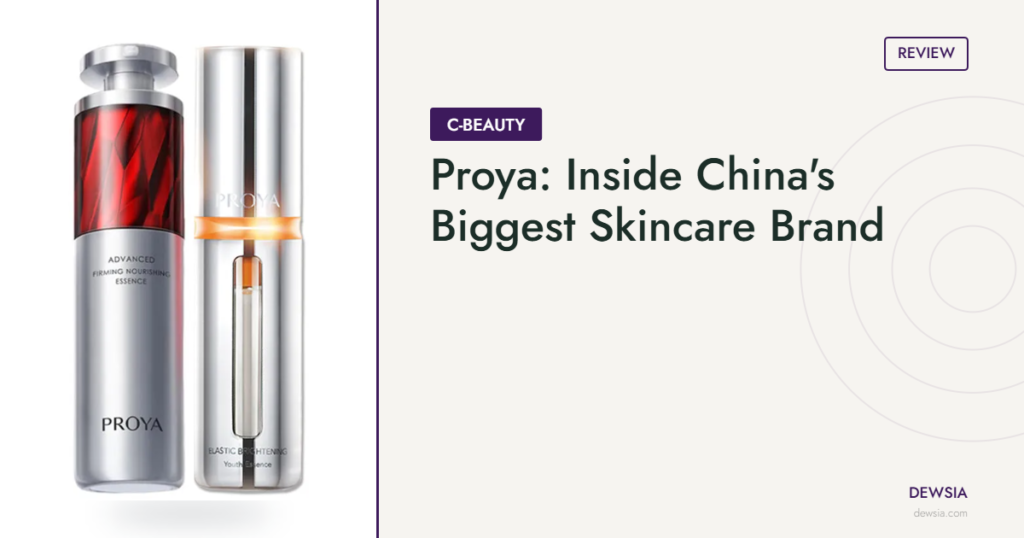
This guide maps three distinct Asian skincare philosophies as they actually exist: what each one optimizes for, where it works best, and how to pick what suits your climate and skin. This is not a ranking. Each tradition has genuine strengths. The goal is to help you choose rather than to declare one superior. China’s emerging beauty market – from TCM-rooted botanicals to fast-growing brands like Proya and Florasis – deserves its own dedicated guide and will be covered separately.
Fast track:
- Know K-beauty already? → Japanese minimalism and Vietnamese tropical-first
- Building a routine for humid weather? → Which philosophy suits tropical climates
- Vietnam context → Vietnamese Skincare: The Complete Guide
- SPF specifically → Best Sunscreens for Humid Weather
What “Asian Skincare” Actually Means
The phrase gets used loosely enough to mean almost anything. For the purposes of this guide, “Asian skincare” refers to the organized philosophy or approach behind how products are used – not just individual products that happen to be made in Asia.
Three traditions have developed the most coherent and internationally transferable frameworks:
- Korean (K-beauty): Layering logic, glass skin ideal, hydration as a foundation
- Japanese (J-beauty): Minimalism, texture-first, long-term barrier focus
- Vietnamese (V-beauty): Tropical-first formulation, regional botanicals, practical compliance over ritual
None of these is monolithic. Vietnamese consumers use Korean products. Japanese women follow simplified K-beauty routines. The philosophies are frameworks, not national rules. But the frameworks are distinct enough to be useful as a starting point.
Korean Skincare: Layering Logic and the Hydration Stack
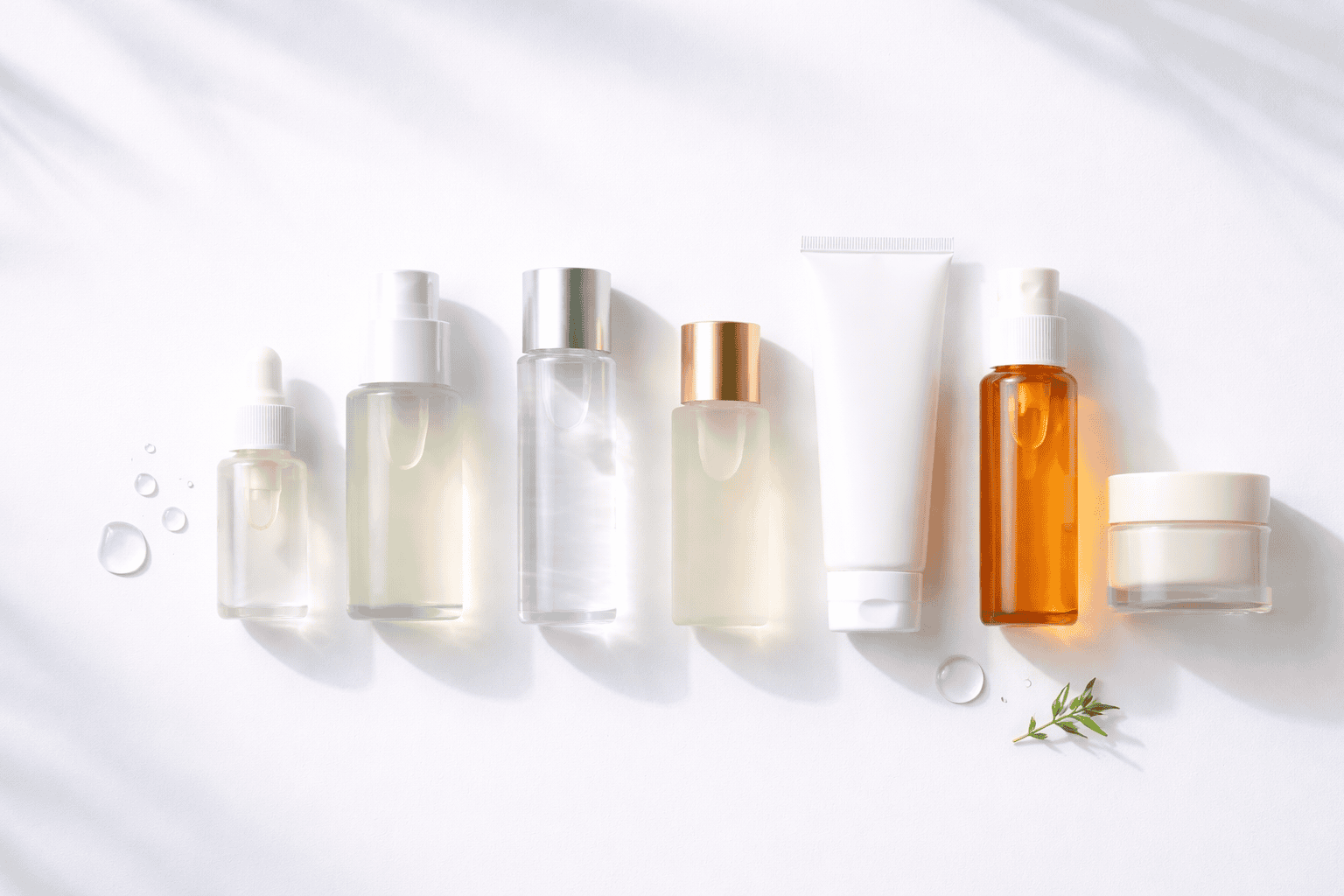
Korean skincare’s global success was built on a specific insight: skin absorbs more when it’s already hydrated. Layering thin, watery products in sequence – each one slightly more concentrated than the last – became the structural logic behind the famous 10-step routine.
The 10 steps themselves are not mandatory. Most Korean dermatologists and the Korean consumers who invented the approach don’t follow all ten daily. What the 10-step model actually provides is a menu: a complete map of what’s available and in what order, from which you choose what your skin needs.
The Core Logic
Cleansing (oil + water): Double cleansing separates two tasks that a single product handles imperfectly. An oil-based cleanser dissolves SPF, sebum, and makeup – all oil-soluble debris. A water-based cleanser removes water-soluble impurities. The result is a genuinely clean surface without stripping.
Layering sequence (thinnest to thickest): Toner → essence → serum/ampoule → eye cream → moisturizer → SPF. Each layer is applied before the previous one fully dries. The purpose is progressive absorption: watery formulas sink in fastest and prepare the surface for slightly richer ones.
Actives as targeted treatment: Vitamin C, niacinamide, retinol, AHAs, and BHAs are deployed as targeted steps within the routine, not the foundation of it. K-beauty philosophy treats barrier support as the prerequisite for actives – not the afterthought.
Glass skin as an outcome, not a goal in itself: The “glass skin” aesthetic – smooth, dewy, translucent – emerged as a natural result of consistent barrier health and hydration, not from chasing the aesthetic directly. This distinction matters.
Where K-beauty Excels
Layering logic works particularly well for dry climates, air-conditioned environments, and people whose primary concern is dehydration, uneven texture, or post-inflammatory hyperpigmentation. The K-beauty actives market is also the most developed globally – if you want retinoids, vitamin C derivatives, or peptides at accessible price points, Korea leads.
Where It’s Harder
In high humidity, the layering sequence can become counterproductive. Multiple watery layers may not fully absorb before SPF goes on, creating a mobile stack that migrates in heat. The heavier occlusive finishes that work in Korean winters work less well in 35 °C tropical summers. And the 10-step ritual assumes time and interest in a daily routine that not everyone has.
Japanese Skincare: Minimalism and the Long Game
Japanese skincare is older, quieter, and less globally marketed than K-beauty – which makes it easy to underestimate. The underlying philosophy is almost the inverse of the Korean approach: fewer products, higher quality, longer commitment.
The Core Logic
Cleanse once, gently: Japanese cleansing culture prioritizes removing what needs removing without disrupting what should stay. Foaming cleansers are popular for their thorough but gentle action. Double cleansing exists in Japan but is less universally applied than in K-beauty.
Lotion (not what you think): In Japanese skincare, “lotion” refers to a hydrating toner applied immediately after cleansing – a preparatory step to restore water content before anything else goes on. This is conceptually similar to the K-beauty first toner but executed differently: lighter, faster, often applied by hand patting rather than with a cotton pad.
One treatment, done well: Rather than layering five actives across three product categories, Japanese skincare typically centers on one treatment product – a well-formulated serum or a milky emulsion – and commits to it consistently. The philosophy trusts slow accumulative results over dramatic short-term effects.
Sun protection as non-negotiable: Japan produces some of the world’s most technically advanced sunscreens. SPF compliance culture in Japan is extremely high, and the innovation in filter technology (Tinosorb, Uvinul-class filters approved in Japan decades before the US) reflects a genuine cultural priority around UV protection and anti-aging.
Where J-beauty Excels
Minimalism suits people who find multi-step routines unsustainable – the best routine is one you’ll actually follow. Japanese formulation quality is consistently high at all price points. And the long-game philosophy – barrier health over years, not glass skin in two weeks – produces genuinely durable results. Japanese SPF technology specifically is world-class.
Where It’s Harder
Japanese skincare is less internationally visible, which means finding authentic products outside Japan requires more effort and sourcing care. The minimalist framework also offers less guidance for people dealing with active skin concerns (acne, hyperpigmentation) that benefit from targeted actives.
Vietnamese Skincare: Tropical-First and the Compliance Problem
Vietnamese skincare doesn’t have the global brand recognition of K-beauty or the historical prestige of J-beauty. What it does have is something more specific: formulas built for actual tropical weather by people who live in it year-round.
The Core Logic
Climate is the starting constraint, not texture preference: Vietnamese skincare products are formulated for a climate that averages above 80% humidity and 30 °C+ for much of the year. The texture imperative – lightweight, fast-absorbing, non-occlusive – is not an aesthetic choice. It’s a functional requirement. A product that performs in Hanoi in July performs anywhere.
Regional ingredients with genuine functional logic: Vietnamese brands organize products around local botanical ingredients – Dak Lak coffee, An Giang lotus, Hung Yen turmeric, and winter melon (bí đao). The ingredient storytelling is genuine: these are specific origins, not generic “natural” claims. Some have real functional evidence (caffeine, centella, vitamin C derivatives); others are primarily narrative. The honest read: interesting when evidence-backed, skeptical when it’s just “natural = better”.
Compliance over ritual: Vietnamese skincare culture is practical. SPF compliance is high in Vietnam – not because of an elaborate routine culture, but because UV awareness and sun-avoidance culture are deeply embedded. The product that gets used daily beats the one that’s theoretically superior but too heavy to apply twice. This is the “sương sương” (light, mist-like) standard: if it feels like too much, it will be skipped.
Vegan-first and cruelty-free as a genuine differentiator: The leading Vietnamese export brand, Cocoon, holds Leaping Bunny, PETA, and Vegan Society certifications – unusual for any domestic brand in Southeast Asia and a deliberate positioning away from K-beauty’s extensive use of snail filtrate, animal-derived ingredients, and non-certified cruelty-free claims.
Where V-beauty Excels
Tropical climate formulation is the core strength. If you’re in a humid environment, Vietnamese brands are engineering products for conditions that Korean and Japanese brands are often not primarily targeting. The entry price point is also lower – inside Vietnam, local brands offer a genuine value proposition. And the ethical certifications are more stringent and independently verified than most competitors.
Where It’s Harder
The active range is still developing. If you want clinical-grade retinol, high-percentage vitamin C, or a comprehensive AHA/BHA line, Vietnamese brands have fewer options than Korean equivalents – though this is changing. International availability is limited: Cocoon ships to the US and some Asian markets, but European buyers face genuine sourcing challenges.
For a deeper profile of Vietnam’s most internationally accessible brand: Cocoon Vietnam: Everything You Need to Know
The Three Philosophies Side by Side
| Korean | Japanese | Vietnamese | |
| Core logic | Layering stack | Minimalism, long game | Tropical compliance |
| Steps | Up to 10 (customizable) | 3–5 typically | 3–5, texture-first |
| Actives | Comprehensive range | One treatment, done well | Growing, not yet leading |
| SPF culture | High | Very high, technically advanced | High, UV-awareness driven |
| Best climate fit | Temperate to dry; AC environments | Temperate to cool | Tropical, humid year-round |
| Best for | Dehydration, hyperpigmentation, customisation | Simplicity, barrier health, long-term | Humid compliance, ethical sourcing |
| International access | Excellent | Good (Japan direct, importers) | Limited (US only officially) |
Which Philosophy Suits Tropical Climates?
The honest answer: all three traditions have something to offer in a tropical climate. The question is which elements to borrow and which to skip.
From K-beauty: Double cleansing is highly effective in tropical weather – sweat, SPF, and pollution-heavy environments benefit from separating the two cleansing tasks. K-beauty actives (niacinamide, centella-based serums, and lightweight vitamin C) are well-suited to humid skin concerns. Skip or simplify the heavy occlusive moisturizer step; in humid climates, a gel-cream or water-cream is usually enough.
From J-beauty: The minimalism principle translates well – fewer products that fully absorb beat more products that layer without setting. Japanese SPF is technically excellent for tropical use, particularly the newer fluid formats that don’t rely on heavy film-formers. The lotion (hydrating toner) step is effective in AC-heavy environments where the skin is paradoxically dehydrated despite the outdoor humidity.
From V-beauty: Texture-first formulation logic applies universally in tropical climates. Any product – regardless of origin – that passes the “does it fully absorb in this weather?” test is more likely to get reapplied. Vietnamese botanical lines, particularly centella and winter melon formulations, are well-calibrated for tropical skin concerns.
What to deprioritize in any tradition: Heavy occlusive creams as daytime layers, oil-heavy serums without a setting step, and anything that takes more than 60 seconds to absorb. In humidity, these don’t fail – they migrate.
For building a full routine around these principles: How to Build a Vietnamese Skincare Routine for Tropical Weather
Building Your Routine: A Decision Framework
The choice between K-beauty, J-beauty, and V-beauty is not either/or. Most effective routines borrow across traditions. The decision framework is simpler than the product options suggest:
Start with your climate constraint. Tropical/humid → texture is non-negotiable. Prioritize fast-absorbing formats at every step, including SPF. Temperate/AC-heavy → layering works better. K-beauty’s stack logic is more applicable.
Then your primary concern. Hydration → K-beauty layering is purpose-built for this. Simplicity + consistency → J-beauty minimalism is the sustainable approach. Tropical compliance + ingredient origin → V-beauty fills this specifically. Actives (acne, pigmentation, anti-aging) → K-beauty has the broadest and most accessible range.
Then your routine tolerance. Five steps maximum? Japanese minimalism or a simplified K-beauty approach. Happy to layer? K-beauty’s sequence gives you the most targeted control. Want one product per step? V-beauty’s botanical lines are designed for that.
SPF always lasts in the morning, always non-negotiable. All three traditions agree on this. Best Sunscreens for Humid Weather
FAQ
Is the Korean 10-step routine actually necessary? No. The 10-step is a menu, not a prescription. Most Korean skincare consumers don’t follow all ten steps daily. The value of the framework is knowing what’s available and in what order – then choosing what your skin actually needs. A 4-step Korean-influenced routine (double cleanse, essence, moisturizer, SPF) is still K-beauty in its logic.
Is Japanese skincare better than Korean skincare? They’re optimized for different things. Japanese skincare leads on minimalism, texture quality, and SPF technology. Korean skincare leads in active range, layering variety, and global availability. Neither is objectively better. Most effective routines borrow from both.
Can you mix products from different traditions? Yes – and most people do. A Japanese SPF, a Korean niacinamide serum, and a Vietnamese lotus toner is a perfectly coherent routine. The logic that matters is application order (thinnest to thickest) and not overloading on active ingredients, not country of origin.
What is Vietnamese skincare best for compared to K-beauty? Humid-climate texture compliance and ethical sourcing are where Vietnamese brands have a clear edge. If you want certified vegan and cruelty-free products designed for tropical weather, Cocoon specifically is a better fit than most K-beauty alternatives. For actives range and international availability, K-beauty still leads.
How is J-beauty different from K-beauty in practice? The most practical difference is steps and pace. K-beauty uses more products layered quickly; J-beauty uses fewer products applied carefully. K-beauty values visible short-term results; J-beauty values slow accumulation over years. In a humid climate, J-beauty’s minimalism often survives the weather better than K-beauty’s full stack.