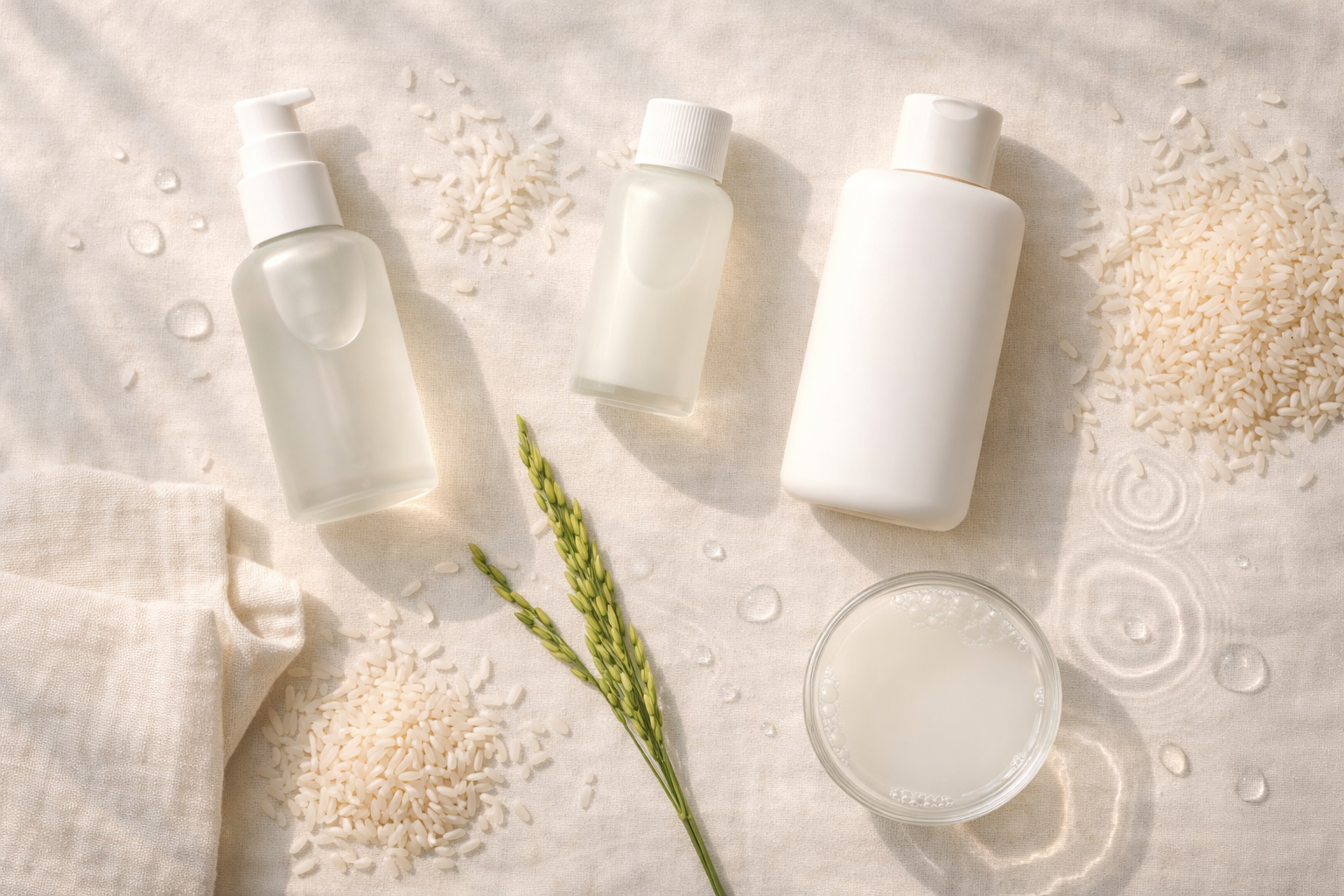
Rice water has been used in Asian beauty rituals for over a thousand years. Women in Heian-era Japan (794–1185 AD) rinsed their hair and skin in leftover rice water. Vietnamese women have used it as a facial rinse and hair treatment for generations. Korean beauty brands now list it as a hero ingredient on product labels. The question worth asking honestly is, does the evidence support the tradition?
The answer is more interesting than a simple yes or no.
Fast track:
- What’s actually in rice water → The active compounds
- What the science says → The evidence
- Fermented vs. plain – does it matter? → Fermentation
- Vietnamese context → Rice in V-beauty
- Which products to try → Recommendations
What’s Actually in Rice Water
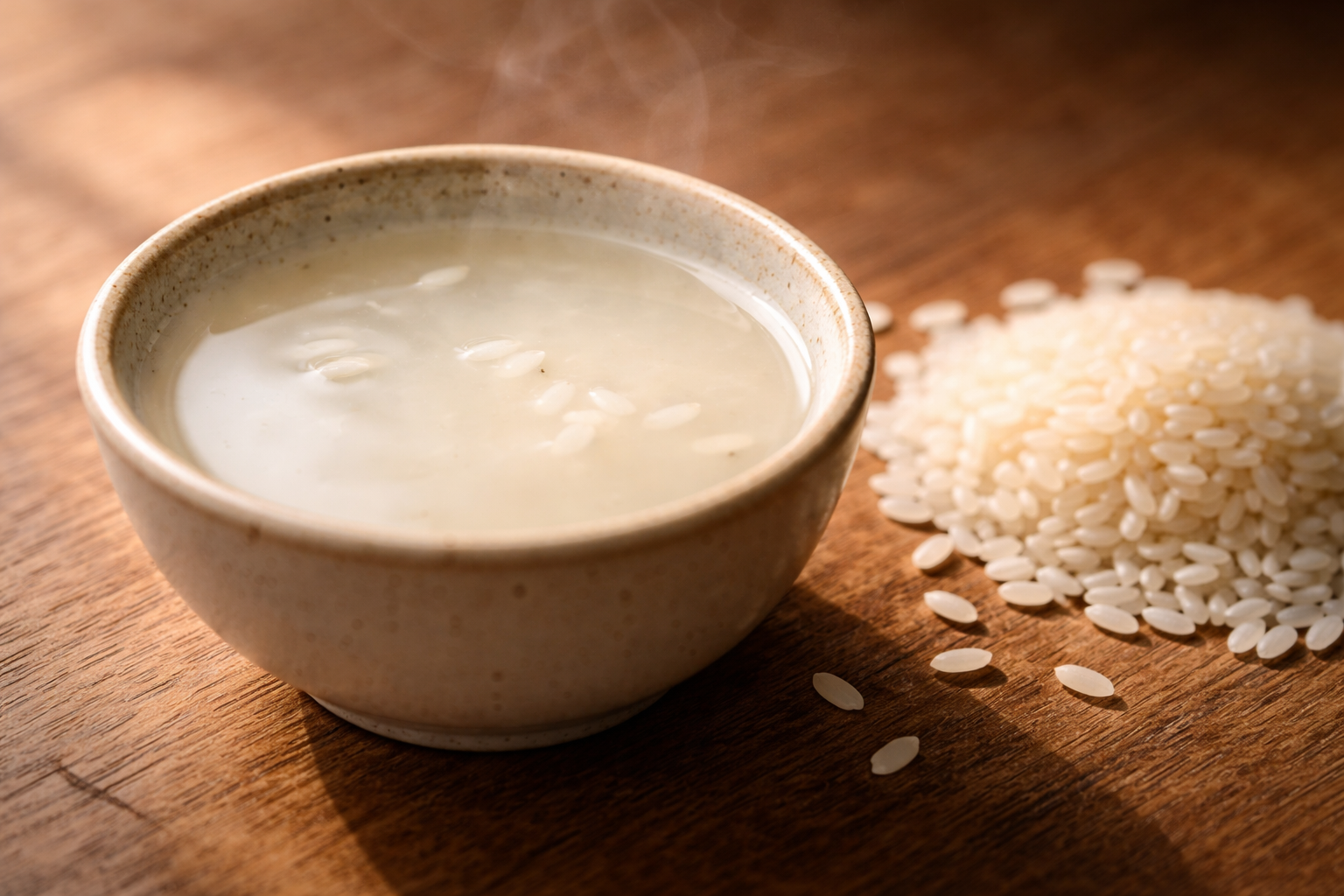
Rice water – the liquid left after soaking, rinsing, or boiling rice – is not a single compound. It’s a mixture of several biologically active components:
Inositol – a carbohydrate that penetrates the hair shaft and skin surface. A 2001 study found that a 1–2% inositol moisturizer reduced wrinkle size by 12.4% and increased elasticity by 17% over 7 weeks – though that study tested isolated inositol, not rice water specifically.
Ferulic acid – an antioxidant found in the bran layer of rice. Ferulic acid has documented UV-protective and anti-inflammatory properties. It’s the same compound that gives ferulic acid serums (like SkinCeuticals C E Ferulic) their antioxidant activity.
Amino acids – rice water contains multiple free amino acids that act as natural humectants, drawing moisture to the skin surface. These contribute to the softening and hydrating effects reported by consistent users.
Vitamins B, C, and E – present in modest concentrations. The vitamin content provides antioxidant activity but is not at the concentrations of a dedicated vitamin C serum or niacinamide treatment.
Starch – the primary component of rice water by volume. Starch has been shown to improve skin barrier function and reduce transepidermal water loss (TEWL). A 2002 study found that bathing in rice starch water improved barrier function in people with atopic eczema and SLS-damaged skin.
Gamma oryzanol – found in rice bran specifically, with documented tyrosinase-inhibiting (melanin-reducing) and antioxidant properties.
What the Evidence Actually Says
The honest read: rice water has meaningful evidence for some benefits, thin evidence for others, and some claims that aren’t scientifically supported at all.
Well-supported:
Hydration and barrier support – the strongest category. A 2018 study developed a topical gel containing 96% rice water and found it produced measurable skin hydration improvements over 28 days. Rice starch specifically has clinical evidence for improving skin barrier function. This is the most reliable benefit and the one most relevant to daily skincare use.
Antioxidant activity – well documented in vitro. The 2018 study confirmed rice water’s antioxidant activity comparable to ascorbic acid in cell-based assays, along with elastase inhibitory effects (elastase breaks down skin elastin – inhibiting it theoretically reduces wrinkle formation). The caveat: in vitro results don’t always translate directly to skin application at real-world concentrations.
Anti-inflammatory properties – the rice starch component has documented soothing effects, particularly for eczema-prone and SLS-irritated skin. The 2002 study found rice starch baths reduced irritation markers in both groups tested.
Less well-supported:
Brightening – plausible via gamma oryzanol’s tyrosinase inhibition, but the evidence for topical rice water specifically on pigmentation is thinner than for dedicated brightening actives like niacinamide or ascorbyl glucoside. The mechanism exists; the clinical evidence for rice water as a standalone brightening treatment is limited.
Anti-aging – the elastase inhibition finding from the 2018 study is interesting but based on a small sample. Medical News Today summarizes it fairly: “there is limited evidence that rice water may reduce or slow skin aging.” Possible; not proven at scale.
Not supported:
Claims that rice water removes dark spots “in days,” eliminates wrinkles, or equals the performance of clinically proven actives like retinol or AHAs are not supported by the evidence base. Rice water is a gentle multi-tasker – it’s not a clinical treatment.
Fermented Rice Water: Does It Actually Work Better?
Fermented rice water is where the evidence gets more intriguing.
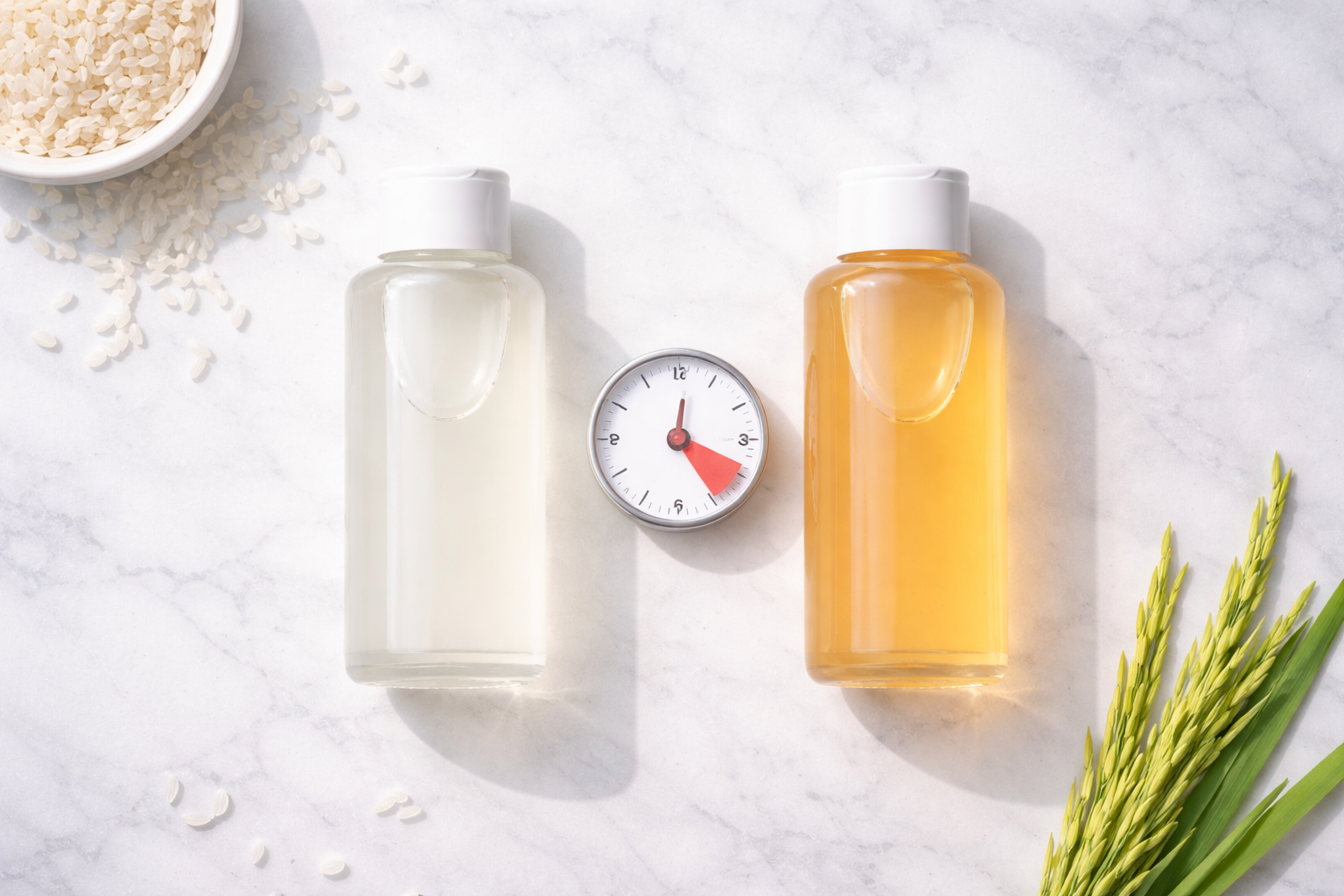
Fermentation – the process of allowing rice water to culture for 24–48 hours or longer with controlled microorganisms – significantly changes the compound profile. A 2025 review published in Cosmetics (MDPI) confirmed that rice fermentation products (RFPs) show enhanced bioactivity across hydration, antioxidation, anti-inflammation, brightening, and anti-aging effects compared to plain rice water.
The fermentation process amplifies production of organic acids, amino acids, polyphenols, polysaccharides, and vitamins. The resulting liquid has higher concentrations of the active compounds that make plain rice water useful – at levels that produce more consistent cosmetic effects.
This is why fermented rice water appears specifically in higher-end Asian skincare products rather than plain rice water. The SKin1004 Madagascar Centella Ampoule, Beauty of Joseon’s sunscreen and toner lines, and Anua’s Rice Line all use fermented rice extracts. They’re not using the fermented version for branding – the enhanced bioactivity is real and documented.
Practical implication: if you’re buying a rice water skincare product and want the better-evidenced version, look for “fermented rice water” or “saccharomyces ferment filtrate” on the INCI list. Plain rice water has benefits; fermented rice water has more of them.
Rice in Vietnamese Skincare
Rice is as central to Vietnamese daily life as it is to Japanese or Korean culture – possibly more so. Vietnam is one of the world’s largest rice exporters, and rice cultivation has shaped Vietnamese agriculture, diet, and tradition for millennia.
Vietnamese women have traditionally used rice water (nước vo gạo) as a skin rinse, hair treatment, and gentle cleanser. This practice predates any K-beauty or J-beauty influence – it’s an independent parallel tradition rooted in the same agricultural reality.
In contemporary Vietnamese skincare, rice appears less prominently than in Korean beauty marketing. The brands that have built the most international recognition – Cocoon, Herbario – focus on other local botanicals: coffee, turmeric, lotus, centella. Rice remains more of a traditional home remedy than a branded hero ingredient in the current Vietnamese skincare market.
Where you’ll find it: Some Vietnamese pharmacy brands use rice water or rice extract in moisturisers and toners at modest concentrations. It’s present, but not yet the brand anchor that coffee or turmeric has become for Vietnamese brands targeting international buyers.
For international buyers: the most accessible quality rice water skincare comes currently from Korean brands that have invested in fermented rice formulations. Vietnamese-origin rice water products are available locally but not yet well-distributed internationally.
How to Use Rice Water in Your Routine
Whether using a commercial product or making it at home, rice water fits into a specific position in a routine.
When: After cleansing, before heavier serums or moisturizers. As a toner step, applied to damp skin and patted in with hands.
How: Press into skin with palms rather than wiping with a cotton pad – you’re adding hydration, not removing residue.
Frequency: Daily use is appropriate. Unlike AHAs or retinol, rice water has no over-use ceiling for most people. It’s a gentle hydrating and barrier-supporting ingredient, not an exfoliant.
Pairs well with: niacinamide (complementary brightening mechanisms), hyaluronic acid (layered hydration), centella (barrier support), SPF (the antioxidant activity is more useful when you’re also protecting from UV).
DIY rice water: Soak uncooked rice in room-temperature water for 30–60 minutes, strain, and use the liquid as a toner. Refrigerate and use within one week – rice water without preservatives grows bacteria quickly. Fermented DIY rice water requires 24–48 hours at room temperature before refrigerating; the smell is noticeably sour.
Commercial products are safer than DIY for most people – not because rice water is dangerous, but because preservative systems and formulation pH make commercial products more stable and consistent.
Product Recommendations
Korean – Best Fermented Rice Products Internationally
Beauty of Joseon Relief Sun SPF50+ PA++++ Contains 30% rice seed water (Oryza Sativa Seed Extract) as the base ingredient alongside probiotics. The rice water contributes to the lightweight, hydrating texture that makes this sunscreen unusually comfortable for daily wear. Available widely via Korean beauty retailers.
Anua Rice 70 Glow Milky Toner: A dedicated rice-first toner with 70% rice extract, ceramides, and hyaluronic acid. The 2024 launch of the Rice Line by Anua positions rice as a brightening and barrier ingredient – a more concentrated application than most rice water toners.
Skin1004 Madagascar Centella Ampoule: Contains saccharomyces ferment filtrate (fermented rice derivative) alongside centella. A good example of rice fermentation used as a functional supporting ingredient rather than a hero claim.
Vietnamese Context
As noted above, Vietnamese brands have not yet built a strongly branded international rice water line. For readers in Vietnam, local rice water toners and moisturizers are available at pharmacy chains at accessible price points – look for “nước gạo” (rice water) or “chiết xuất gạo” (rice extract) on Vietnamese-language labels.
For the broader Vietnamese skincare product context: Best Vietnamese Skincare Products by Skin Type
FAQ
Is rice water safe for all skin types? Generally yes. Rice water is one of the lower-risk skincare ingredients – it’s gentle, non-irritating for most people, and has no known comedogenic or sensitizing compounds at normal use concentrations. People with rice allergies should avoid it. If you have very reactive skin, patch test first.
Can I use rice water every day? Yes. It has no rotation requirement or over-use ceiling. Daily toner or essence use is standard for commercial rice water products.
Is homemade rice water as good as commercial products? For fresh, short-term use – comparable for hydration and basic barrier support. Commercial products typically use fermented rice water with enhanced bioactivity, plus preservative systems that make them stable for months rather than days. If you want the more evidence-backed fermented version consistently, commercial products are more reliable.
Why do Korean brands use rice water more than Vietnamese brands? The Korean beauty industry has industrialized ingredient marketing very effectively – fermented rice became a “K-beauty hero ingredient” partly because of aggressive brand storytelling (SK-II’s Pitera, which is a rice ferment, built a multi-billion dollar brand on it). Vietnamese brands have focused on other local ingredients with fewer internationally established competitors. Both traditions using rice water are real; the marketing infrastructure differs.