Acne in a tropical climate is a specific problem. Heat increases sebum production, humidity slows evaporation, and sweat creates constant moisture on the skin surface – conditions that favor P. acnes growth and pore congestion. Most acne advice is written for temperate climates. Most Vietnamese skincare brands are not.
This guide covers the Vietnamese and locally available products that work for acne-prone skin in hot, humid conditions. What the active ingredients actually do, how they compare to Korean equivalents, and what you can buy in Vietnam right now with verified prices.
Fast track:
- Pharmacy option (budget, targeted) → Decumar
- Cocoon actives for oily/acne skin → Cocoon Winter Melon
- Herbario botanical approach → Herbario Centella & Fish Mint
- Building a full routine → The routine
- Where to buy → Vietnamese Skincare: The Complete Guide
Why Tropical Acne Is Different
The same acne mechanisms apply everywhere – excess sebum, P. acnes bacteria, follicular hyperkeratinization, and inflammation. What changes in tropical climates is the severity of the triggers.
Heat and humidity amplify sebum production. Sebaceous glands respond to temperature – warmer skin produces more sebum. At 35 °C and 85% humidity, oily skin produces significantly more sebum than the same skin in a temperate climate. Products formulated for moderate oil production can become inadequate.
Sweat creates a biofilm. Sweat mixes with sebum on the skin surface, creating a warm, slightly acidic environment that supports bacterial growth. SPF and makeup applied over this film can occlude pores more rapidly than in dry conditions.
Air conditioning creates cycling stress. Moving between humid outdoor heat and dry, cold indoor air multiple times daily stresses the skin barrier. A compromised barrier responds with inflammation – which worsens acne and slows healing.
The practical implication: acne-prone skin in Vietnam benefits from lightweight, non-occlusive, antibacterial-supportive formulations. Heavy creams, thick serums, and occlusive SPFs – however effective in cold climates – frequently make tropical acne worse.
What the Ingredients Need to Do
Effective acne management requires addressing multiple mechanisms simultaneously:
Reduce bacteria: P. acnes (Cutibacterium acnes) is the primary bacterial driver of inflammatory acne. Antibacterial actives – benzoyl peroxide, salicylic acid, tea tree, niacinamide, centella – reduce bacterial load.
Reduce inflammation: Inflammatory acne (papules, pustules, nodules) is driven by the immune response to P. acnes and to the breakdown of comedones. Anti-inflammatory actives reduce redness, swelling, and post-inflammatory hyperpigmentation.
Control sebum: Sebum excess feeds the acne cycle. Niacinamide, zinc, and certain botanical actives (fish mint, winter melon) reduce sebaceous activity.
Fade post-inflammatory hyperpigmentation: Vietnamese skin tones – and darker skin tones generally – are more prone to PIH than lighter skin. Brightening actives (niacinamide, ascorbyl glucoside, and alpha arbutin) prevent and fade the dark marks that persist after acne clears.
Maintain barrier integrity: Aggressive acne treatments can compromise the skin barrier, causing dryness, sensitivity, and, paradoxically, more breakouts. Barrier-supporting ingredients (centella, ceramides, and panthenol) prevent over-stripping.
Decumar: The Pharmacy Brand Built for Acne
Decumar is not a beauty brand. It’s a pharmaceutical cosmetics brand founded in 2014 by CVI Pharma (a subsidiary of Mediplantex), formulated specifically for acne-prone skin around a single hero ingredient: nano-curcumin.
The Nano THC technology:
Nano THC stands for nano-tetrahydrocurcumin – a colourless metabolite of curcumin (the active compound in turmeric) produced through nano-encapsulation technology. The nano form has 7,500 times greater solubility and penetration than standard curcumin extract, allowing it to reach the dermis layer rather than sitting on the skin surface.
The functional profile: antibacterial (inhibits P. acnes), anti-inflammatory (reduces cytokine activity around acne lesions), antioxidant, and melanin-reducing (fades post-acne marks). Unlike raw turmeric, Nano THC is colourless – no yellow staining.
The Decumar range for acne:
Decumar Anti-Acne Nano THC Gel (20 g): The core treatment product. Clear gel formulation, applied directly to active breakouts or across affected areas. Contains Nano THC alongside neem leaf extract (antibacterial), red onion extract (prevents depressed scarring), lemon myrtle leaf extract (sebum control), and centella asiatica (barrier repair and soothing). Apply 3–4 times daily to active lesions, 1–2 times daily as a preventative layer.
Decumar Advanced Moisturizing Gel: A daily moisturizer formulated for acne-prone skin – non-comedogenic, lightweight gel texture, Nano THC as the hero alongside niacinamide. Designed to hydrate without triggering breakouts.
Decumar Oil Control Sunscreen SPF50+: A hybrid physical and chemical sunscreen with Nano THC and lemon balm leaf extract – documented oil control alongside UV protection. At approximately 130,000 VND (~$5 USD), it is the most affordable acne-safe SPF available in Vietnam.
Verified local pricing (Pharmacity, Hanoi, 2026):
- Decumar Acne Gel 20 g: ~105,000 VND (~$4.10 USD)
- Decumar Advanced Moisturizing Gel: ~89,000 VND (~$3.50 USD)
- Decumar Sunscreen SPF50+: ~130,000 VND (~$5.10 USD)
Where to buy: Pharmacity and Long Châu pharmacy chains – not Guardian or beauty retailers. Decumar is widely available in pharmacies nationwide. Shopee Official Store (Decumar Official Store badge) for online purchasing. No international storefront – eBay resellers exist but without brand verification.
Honest limitations: Decumar is a pharmacy-grade functional product, not a prestige skincare brand. The packaging is clinical, the formulas are basic, and the brand does not market internationally. The efficacy of Nano THC is well-supported by the science behind curcumin delivery systems, but large-scale randomized clinical trials specifically on Decumar’s formulations are not publicly available. At these price points, the risk of trying is minimal.
Cocoon Winter Melon: Actives for Daily Management
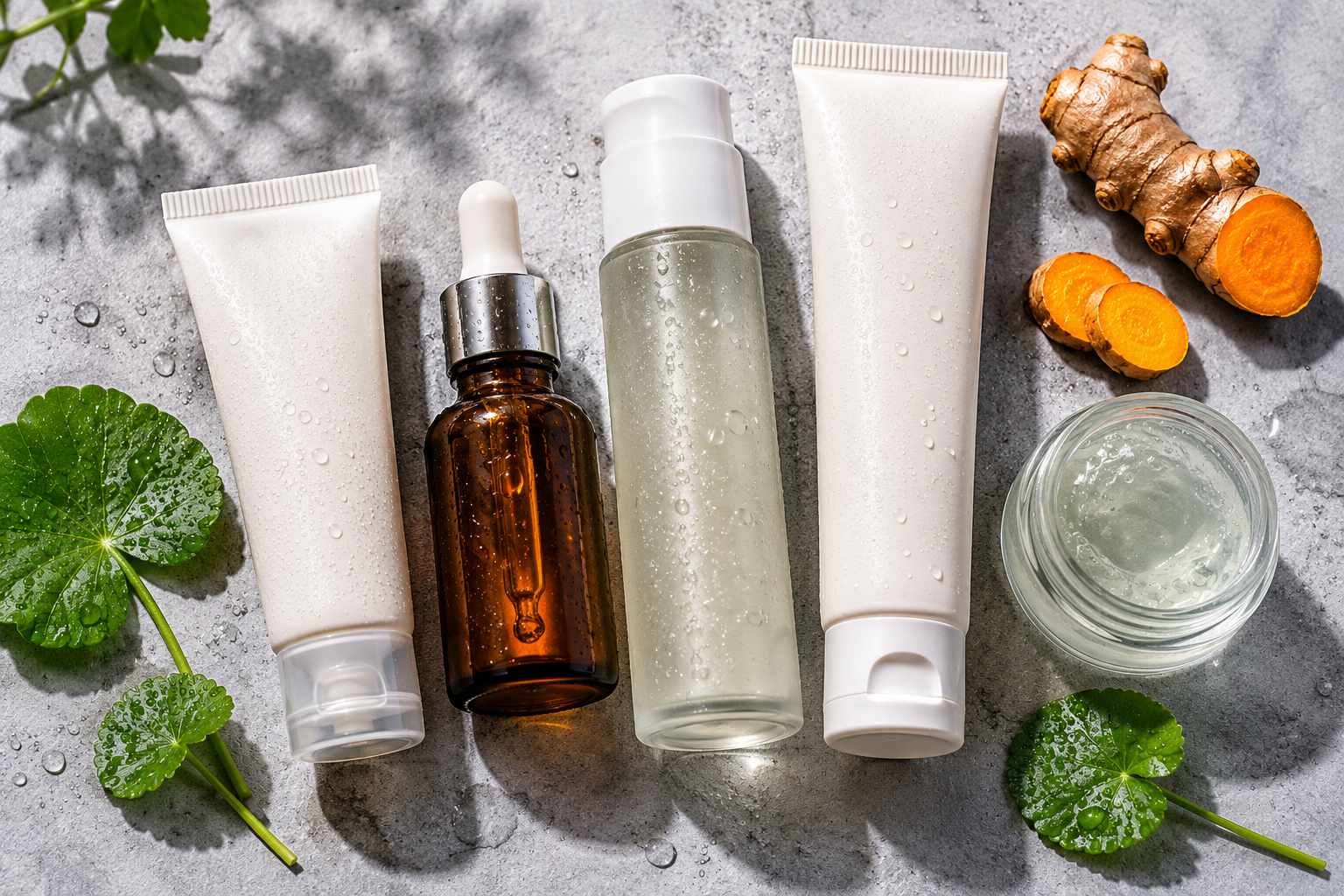
Cocoon’s Winter Melon line is not specifically an acne line – it’s an oil-control and clarifying range. For acne-prone skin that needs daily management rather than active treatment, it covers the key bases.
Cocoon Winter Melon Serum N15:
15% niacinamide combined with 4% NAG (N-acetyl glucosamine). This is the highest niacinamide concentration in Cocoon’s range and the most targeted product for oily and acne-prone skin.
Niacinamide at 10–15% concentration has well-documented clinical evidence for reducing sebum excretion (published studies show up to 19% reduction), fading post-inflammatory hyperpigmentation, reducing pore appearance, and anti-inflammatory activity. The addition of NAG enhances the brightening effect – NAG inhibits the transfer of melanosomes to keratinocytes, addressing PIH through a different mechanism than niacinamide alone.
Honest limitation: 15% niacinamide is a high concentration. For reactive skin or anyone new to niacinamide, start with the N7 serum (7%) or the Winter Melon Toner before moving to N15. Reactions to high-concentration niacinamide are uncommon but exist – typically redness and flushing.
Cocoon Winter Melon Face Mask: Centella asiatica, winter melon extract, niacinamide, and tea tree. Use 1–2 times per week as a targeted oil-control and soothing mask. At 132,000 VND locally, it’s a low-stakes add-on to an acne routine.
Cocoon Winter Melon Sun Fluid SPF50+: Seven UV filters tested at HelioScreen France, gel texture, water-resistant for 80 minutes. For acne-prone skin, the texture is critical – this formula absorbs without leaving the heavy film that occludes pores. At 280,000–320,000 VND locally (~$11–13 USD), it’s a more expensive option than Decumar’s SPF but more widely available internationally.
For the full Cocoon brand overview: Cocoon Vietnam: Everything You Need to Know
Herbario Centella & Fish Mint: The Botanical Approach
Herbario’s centella and fish mint line addresses acne through a different mechanism than the actives-led approaches above – botanical anti-inflammatory and sebum-regulating ingredients rather than clinical compounds.
The ingredient pairing:
Centella asiatica (rau má) – anti-inflammatory, barrier repair, documented wound healing. Reduces redness around active breakouts and supports healing of damaged skin. See Centella Asiatica in Vietnamese Skincare for the full evidence breakdown.
Fish mint (diếp cá / Houttuynia cordata) – Vietnamese herb with approximately 80% water content and traditional antibacterial and sebum-regulating properties. Less clinically studied than centella but a genuine traditional acne remedy with a plausible functional mechanism.
The combination of anti-inflammatory (centella) + antibacterial and sebum control (fish mint) + niacinamide (in the serum formulation) covers the core acne management requirements with a botanical formulation philosophy.
Key product: Herbario Centella & Fish Mint Serum – niacinamide at position 2 in the INCI (high concentration), centella and fish mint extract, and allantoin for soothing.
Honest limitation: Lavandula Angustifolia Flower Oil is present in Herbario serums. For fragrance-reactive skin, this is a concern. Patch test before committing to full use.
Pricing: ~212,500 VND (~$8.40 USD) via Shopee Official Store.
How Vietnamese Acne Products Compare to Korean Alternatives
The most commonly referenced Korean acne products in Vietnam are COSRX and Some By Mi – both available through Shopee and Lazada, and Some By Mi in Guardian Hanoi.
COSRX Salicylic Acid Daily Gentle Cleanser and Snail Mucin Essence are the K-beauty benchmark for acne-prone skin. Salicylic acid (BHA) is one of the most evidence-backed acne actives available – it penetrates pores, dissolves the keratin plugs that form comedones, and reduces P. acnes. COSRX’s BHA-based products are harder to replicate with botanical formulations.
The honest comparison:
Vietnamese brands (Decumar, Cocoon N15, Herbario) are strongest for inflammatory acne and post-inflammatory hyperpigmentation, daily oil control, acne-safe SPF at accessible prices, and barrier-supportive formulas that work in tropical heat.
Korean brands available in Vietnam are stronger for BHA-based comedone clearing (salicylic acid penetrates pores in a way that no Vietnamese product currently matches), retinoid access (Candid by Skinetiq is the only Vietnamese brand developing this category), and a wider actives range overall.
The practical approach for most acne-prone skin in Vietnam: use Decumar or Cocoon N15 for daily management and PIH, and supplement with a BHA cleanser or exfoliant from Korean brands available on Shopee if comedonal acne (blackheads, whiteheads) is a primary concern. SPF from Decumar or Cocoon – both are specifically formulated for oily/acne-prone skin and outperform most Korean SPFs in this specific category at local prices.
A Practical Routine for Acne-Prone Skin in Vietnam
Morning:
- Cleanser – Decumar Clean Gel Cleanser (81,000 VND) or Cocoon Winter Melon Cleanser. Low-foam, non-stripping, and suited for daily use in humid conditions.
- Serum – Cocoon N15 Niacinamide Serum or Herbario Centella & Fish Mint Serum. One or the other – not both simultaneously. Start with N7 if new to niacinamide.
- SPF – Decumar Oil Control Sunscreen SPF50+ (130,000 VND) for budget, Cocoon Winter Melon Sun Fluid (280,000–320,000 VND) for a more premium option. Non-negotiable – UV exposure worsens PIH significantly.
Evening:
- Double cleanse if wearing SPF – oil cleanser first, then gel cleanser.
- Treatment – Decumar Anti-Acne Nano THC Gel applied to active lesions. Or Cocoon N15 serum if focusing on PIH rather than active breakouts.
- Light moisturizer – Decumar Advanced Gel or any non-comedogenic gel moisturizer.
1–2 times per week:
- Cocoon Winter Melon Face Mask – oil control and soothing.
What to avoid:
- Heavy occlusive creams as a daytime layer – congesting in tropical heat
- Alcohol-heavy toners – strip barrier, trigger compensatory sebum
- Layering multiple actives without acclimatisation – niacinamide + AHA + retinoid simultaneously increases irritation risk without proportional benefit
FAQ
Is Decumar effective for acne? For inflammatory acne and post-inflammatory hyperpigmentation, yes – the Nano THC technology has a well-supported mechanism (antibacterial, anti-inflammatory, melanin-reducing), and the price makes low-risk trialing straightforward. The Nano THC has nano-molecule size that penetrates deeply into the dermis to maximize antibacterial, anti-inflammatory, and melanin-reduction effects. It is not a clinical-grade prescription treatment – for severe cystic acne, dermatologist consultation is appropriate.
Can I use Cocoon N15 niacinamide every day? Yes, for most skin types. 15% niacinamide is a high concentration for daily use – if your skin is currently reactive or you’re new to actives, start every other day or use the N7 version first. Introduce it gradually alongside your existing routine rather than switching everything at once.
Is COSRX available in Hanoi? Not in Guardian Hanoi – COSRX is primarily available in Watsons Ho Chi Minh City. In Hanoi, purchase COSRX through Shopee or Lazada official brand storefronts.
Do Vietnamese acne products work for darker skin tones? Yes – and they address a specific concern more directly. Post-inflammatory hyperpigmentation is more pronounced in medium to deep skin tones. Decumar’s Nano THC, Cocoon’s niacinamide, and Herbario’s centella all have documented melanin-reducing or anti-PIH mechanisms, making them particularly relevant for skin tones prone to long-lasting dark marks after acne clears.
Should I see a dermatologist? For mild to moderate acne – whiteheads, blackheads, occasional papules – the products in this guide are appropriate starting points. For moderate to severe inflammatory acne, nodular or cystic acne, or acne that has left significant scarring, a Vietnamese dermatologist can prescribe topical and oral treatments not available over the counter. The products here work best as maintenance and preventative care, not as substitutes for medical treatment of severe acne.