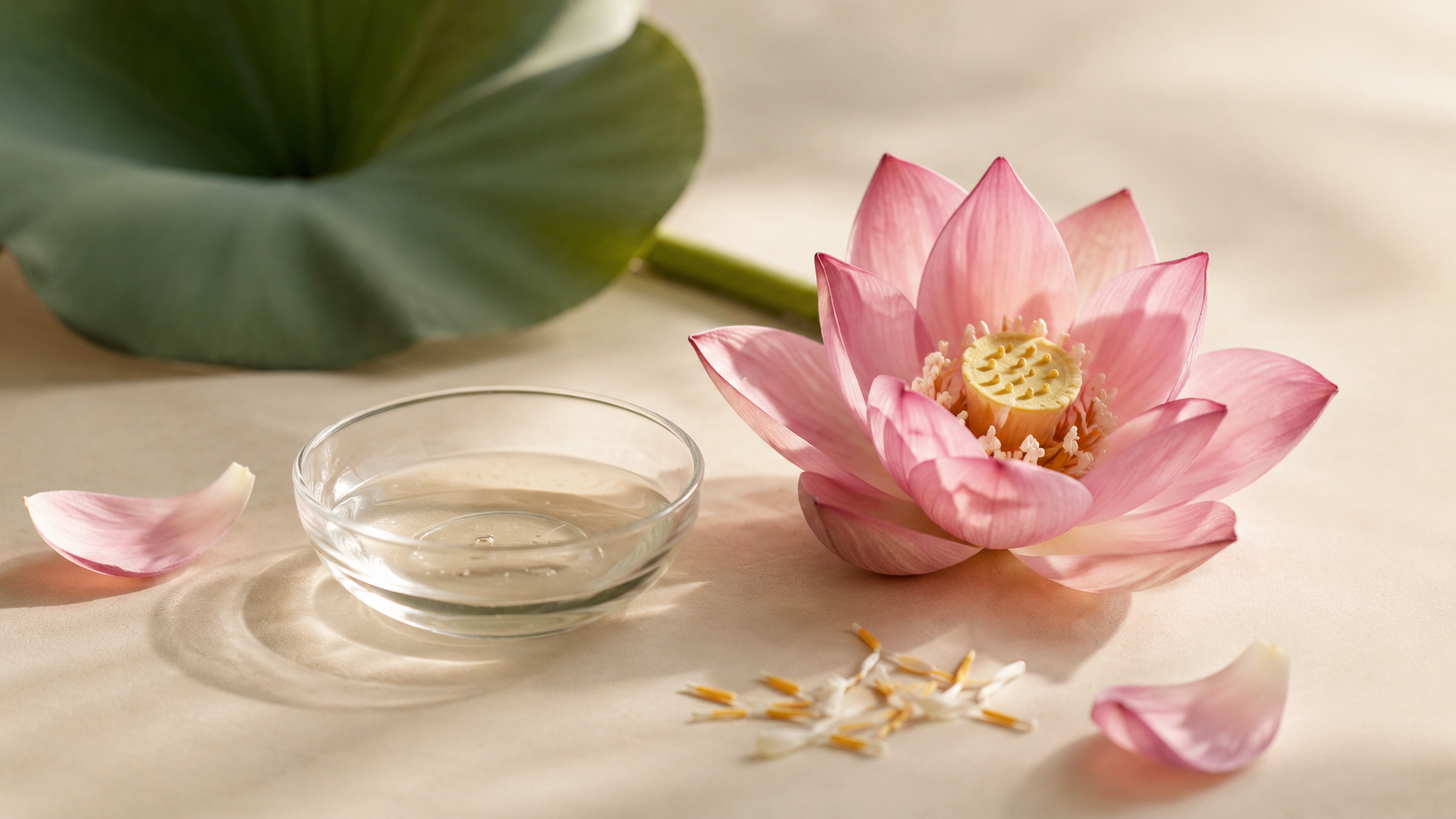
Vietnam puts the lotus on its temples, its tea, and its national identity. It also puts it in skincare – and unlike most national-symbol botanicals, this one has evidence behind the marketing.
The lotus skincare benefits most often advertised – brightening, antioxidant protection, soothing – turn out to be better supported than the flower’s heavy symbolism would suggest. Though the gap between what lotus does in a laboratory and what it does in your toner is wider than most brands admit. Lotus is a real cosmetic ingredient with a real, if preliminary, evidence base. It is also frequently decorative – a pretty name on a label doing very little. This guide separates the two.
Fast track:
- More than a symbol → Why lotus is worth examining
- What’s actually in it → The active compounds
- The benefits, graded → Lotus skincare benefits by evidence
- The clinical reality → The brightening study and its caveats
- Lotus in V-beauty → Vietnamese lotus skincare
- Realistic use → How to actually use it
- Related ingredients → Centella Asiatica in Vietnamese Skincare
More Than a National Symbol
The lotus – sen in Vietnamese, Nelumbo nucifera botanically – is Vietnam’s national flower, a Buddhist emblem, and a culinary staple, from lotus tea to the seeds eaten at Tết. That cultural saturation is exactly why it appears so often in skincare and exactly why it should be approached with suspicion: ingredients carrying this much symbolic weight are usually added for the story, not the science.
Lotus is the unusual case where the story and the science partly overlap. Across the published literature, lotus extracts show measurable antioxidant, anti-inflammatory, and tyrosinase-inhibiting activity – the last of which underpins its reputation as a brightening agent. It is not a miracle ingredient, and most of the evidence sits at the in-vitro stage, but it is meaningfully more substantiated than the average heritage botanical. The honest framing is not “ancient secret” but “plausible supporting active with one encouraging human trial”.
What’s Actually in Lotus
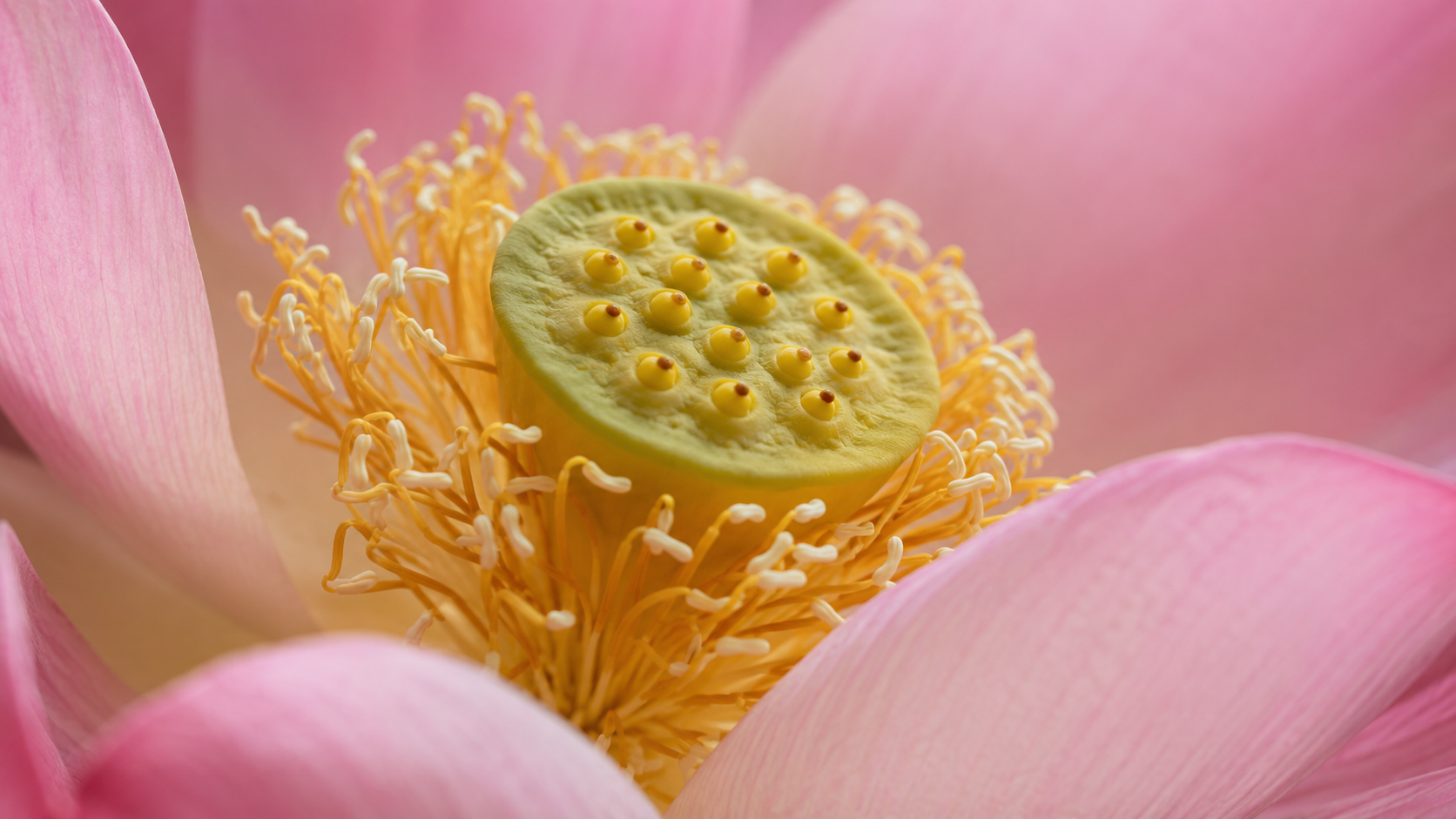
The first thing to understand is that “lotus” on an ingredient list is ambiguous. The plant is used whole – flower, petal, stamen, leaf, seed, and rhizome – and the parts are not interchangeable. The flower and stamen are richest in the antioxidant flavonoids (quercetin and kaempferol glycosides) and polyphenols that drive most of the cosmetic activity; stamen extracts in particular show the strongest tyrosinase and collagenase inhibition in testing. The leaf carries different compounds, including the alkaloid nuciferine, and is more often associated with astringent, oil-control claims.
This matters because a product can list “lotus extract” and mean very different things. A stamen-derived antioxidant fraction and a leaf-derived astringent are both “lotus,” with different profiles and different evidence. The label rarely tells you which you are getting.
Lotus Skincare Benefits, Graded by Evidence
Antioxidant protection – the best-supported claim. Lotus flower and stamen extracts are consistently high in polyphenols and flavonoids and demonstrate strong free-radical-scavenging activity in vitro. The mechanism is solid, and the in-vitro data is robust; what is missing, as with most antioxidants, is large-scale human outcome data. Treat this as well-founded but not clinically quantified.
Brightening – real, with caveats. This is the claim behind the article’s title. Lotus extracts inhibit tyrosinase, the enzyme that drives melanin production, in cell and molecular studies, and a small human trial has supported a brightening effect (covered in detail below). In dermatological terms, “brightening” here means reducing hyperpigmentation and evening skin tone – not bleaching. The evidence is genuine but preliminary.
Anti-inflammatory and soothing – moderate. Lotus has documented anti-inflammatory activity in vitro and a long traditional record of soothing use. This is a reasonable, if modestly evidenced, claim.
Anti-aging – promising but unproven on skin. Lotus stamen extracts inhibit collagenase in vitro, which is mechanistically relevant to preventing collagen breakdown. But this has not translated into demonstrated wrinkle or firmness outcomes in human trials. It is a laboratory finding, not a proven result.
Oil control – mostly traditional. The astringent, sebum-regulating claims attached to lotus leaf rest largely on traditional use and marketing rather than controlled evidence. Plausible, weakly supported.
The Brightening Study – and Its Caveats
The strongest single piece of evidence is a 2023 study published in Plants (and indexed on PMC) testing a lotus extract’s skin-whitening effect. It confirmed tyrosinase inhibition and reduced melanin in cell models, validated the pathway at the genetic level, and then ran a clinical trial in 21 volunteers. Cosmetics containing the extract produced a significant brightening effect visible from the sixth week of use.
The caveats are as important as the result. First, the study did not test the lotus flower – it tested a callus extract, a lab-cultured, biotechnologically derived material chosen for consistency, which is not what sits in a typical lotus toner. Second, 21 participants is a small sample. Third, the lotus was a Korean cultivar, not Vietnamese. And fourth, the six-week timeline is a reminder that any effect is gradual, not immediate. The honest reading: this is real, encouraging, mechanism-backed evidence for a specific lotus-derived ingredient – not proof that every product with “lotus” on the label will brighten your skin.
Vietnamese Lotus Skincare
Lotus is one of the ingredients where Vietnamese sourcing is substantive rather than cosmetic. Vietnam cultivates lotus extensively – the Mekong Delta provinces of An Giang and Đồng Tháp are major growing regions – so a Vietnamese brand building a lotus line is drawing on a genuine domestic crop, not importing a marketing concept. At Dewsia, we use the term V-beauty for Vietnamese skincare, and lotus sits comfortably in its strongest tradition: locally grown botanicals with at least some evidence behind them.
The most prominent example is Cocoon’s lotus range, built around the An Giang lotus. As with most consumer products, these use flower or seed extracts at cosmetic concentrations – pleasant, lightly antioxidant, gently brightening – rather than the concentrated callus extract from the clinical study. That is not a criticism; it is the normal gap between research material and a retail formula. For a Vietnamese botanical with a deeper repair-and-barrier evidence base, centella asiatica remains the stronger performer – lotus and centella do different jobs.

How to Actually Use Lotus
Treat lotus as a supporting ingredient, not a hero active. Its realistic role is gentle antioxidant support, mild brightening, and soothing – benefits that accrue over weeks, layered alongside proven actives rather than replacing them. If your priority is correcting hyperpigmentation, lotus is a reasonable adjunct to vitamin C or niacinamide, not a substitute for them. If your skin is sensitive and reacts to stronger brighteners, a well-formulated lotus product is a gentler entry point.
Set expectations at the ingredient’s actual level. Lotus will not deliver retinol-grade results, and any product promising dramatic transformation from lotus alone is selling the symbol. Used for what it is – a gentle, antioxidant-rich, mildly brightening botanical with genuine Vietnamese provenance – it earns its place. For where it fits among other local ingredients, see the Vietnamese skincare ingredients glossary.
FAQ
What does lotus do for skin? Its best-supported benefits are antioxidant protection and gentle brightening (through tyrosinase inhibition), with secondary soothing and anti-inflammatory effects. Most evidence is in vitro, with one small clinical trial supporting brightening.
Does lotus actually brighten skin? There is preliminary clinical support – a 21-volunteer trial showed a brightening effect from a lotus-derived extract over six weeks. The effect is gradual and means evening tone and reducing hyperpigmentation, not bleaching, and the strongest data is for a specific lab-cultured extract rather than the flower itself.
Is lotus good for oily skin? Lotus leaf is traditionally used for its astringent, oil-controlling properties, but this rests more on tradition than controlled evidence. It is unlikely to harm oily skin and may help mildly, but it is not a dedicated oil-control treatment.
Is lotus better than centella for skincare? They do different things. Centella has a stronger evidence base for barrier repair and soothing; lotus is better positioned as an antioxidant and gentle brightener. Neither replaces the other.
Where does the lotus in skincare come from? It can be extracted from the flower, petal, stamen, leaf, seed, or a lab-cultured callus – and the part matters, since their compound profiles differ. Vietnamese brands typically use domestically grown lotus, often from the An Giang and Đồng Tháp regions.