The West discovered centella through Korea, gấc through California, and fish mint through Japan. All three are Vietnamese – and all three come from the same medical tradition almost no one names.
Traditional Vietnamese skincare is not a marketing phrase invented to ride the K-beauty wave. It is the visible surface of Thuốc Nam, the country’s indigenous system of herbal medicine, which has been organizing these plants into remedies for centuries. When a Vietnamese brand builds a line around centella, turmeric, or fish mint, it is drawing – knowingly or not – on a documented tradition with its texts, principles, and logic. This is the system behind the ingredient list and the reason “Vietnamese skincare” is a coherent category rather than a collection of botanicals that happen to share a country.
This is a reference piece: what Thuốc Nam is, the five herbs that connect it to the modern bottle, the two brands that best illustrate the tradition, and an honest accounting of where heritage ends and evidence begins.
Fast track:
- The system behind the ingredients → What Thuốc Nam is
- The five core herbs → Medicine to skincare
- Two brands built on it → Thorakao and Herbario
- Heritage versus proof → An honest accounting
- Why it matters now → The modern stakes
- Ingredient reference → Vietnamese Skincare Ingredients Glossary
What Traditional Vietnamese Skincare Actually Is
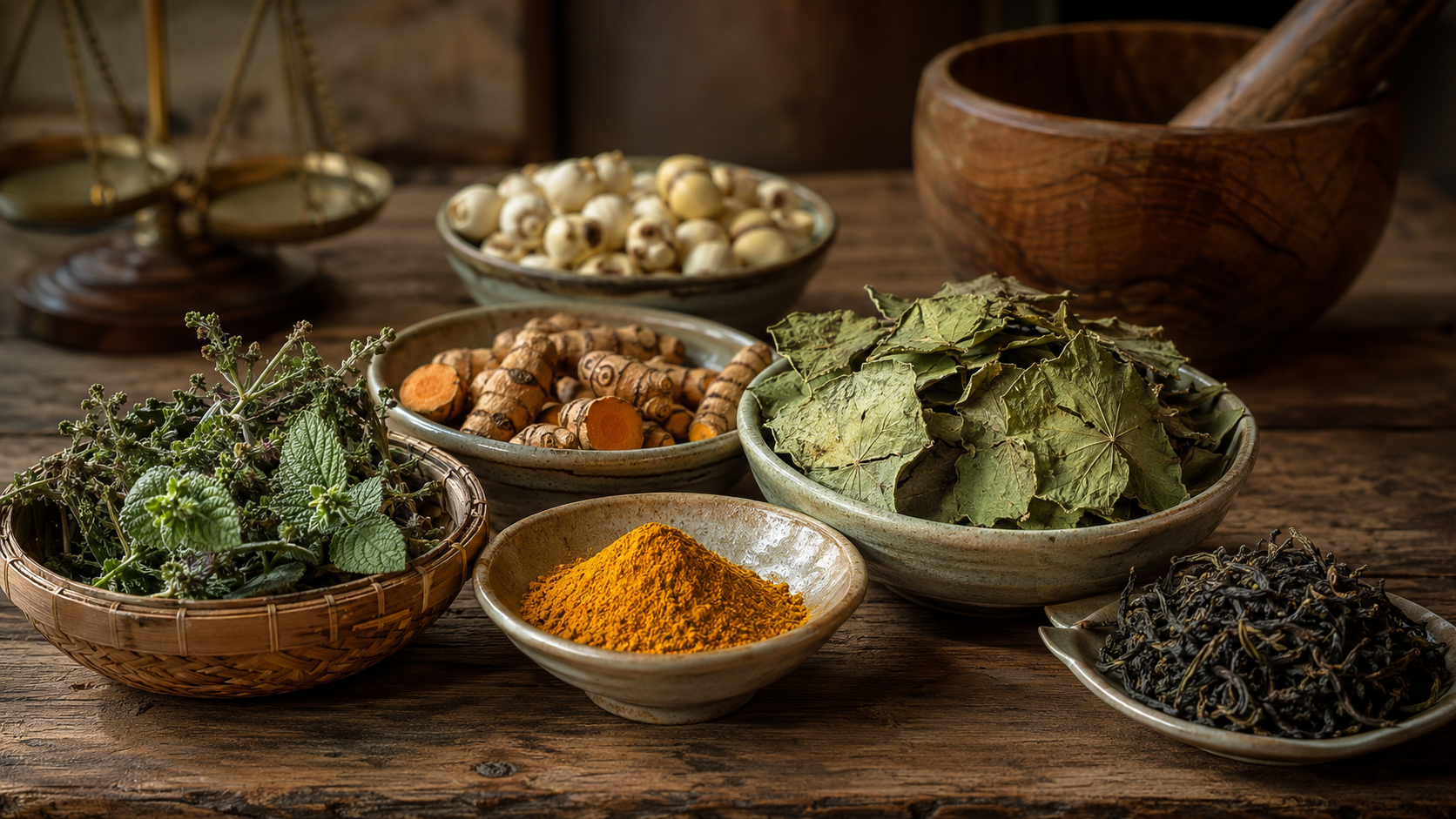
Vietnam has two parallel streams of traditional medicine, and the distinction matters. Thuốc Bắc – “Northern Medicine” – is the Chinese-derived tradition, with its elaborate formulas and imported materia medica. Thuốc Nam – “Southern Medicine” – is the indigenous one: native Vietnamese herbs, used fresh or simply dried, without the complex decoction that defines Chinese practice. It developed from folk knowledge across Vietnam’s ethnic groups and was shaped by the country’s tropical environment, which is why so much of it is oriented around cooling and clearing heat.
Its guiding principle was articulated in the fourteenth century by the physician Tuệ Tĩnh, whose eleven-volume Nam dược thần hiệu helped codify the tradition: Nam dược trị Nam nhân – Southern herbs to treat Southern people. The idea that local plants are best suited to local bodies and local climates is the philosophical core of Thuốc Nam, later expanded by the eighteenth-century physician Hải Thượng Lãn Ông. It is holistic, balance-oriented, and – crucially for skincare – built on accessible, everyday plants rather than rare or imported ones.
This is the part almost no English-language skincare writing names. Brands market “Vietnamese centella” or “Vietnamese turmeric” as ingredients; they rarely identify the system those ingredients belong to. Naming Thuốc Nam is what turns a scattered list of botanicals into a tradition with a logic – and that logic is the real subject of this article.
From Medicine to Skincare: The Five Core Herbs
Five ingredients carry the Thuốc Nam tradition most directly into modern skincare. Each began as a remedy and became a cosmetic active.
Centella (Rau Má)
Centella asiatica is the strongest bridge between Vietnamese tradition and global skincare. In Thuốc Nam it is a cooling, wound-healing herb, eaten and applied for inflammation and skin repair; in modern terms, its asiaticosides and madecassosides have the best evidence of any ingredient here for barrier repair and calming. The irony is that the world met it as Korean “cica” – the same plant, routed through K-beauty. Its full story is covered in centella asiatica in Vietnamese skincare.
Turmeric (Nghệ)
Turmeric is the Thuốc Nam ingredient most embedded in daily life – applied for scars, wounds, and brightening, a fixture of post-partum and post-acne care for generations. Its active, curcumin, carries genuine antioxidant and anti-inflammatory evidence, and Vietnamese formulation has since modernized it into nano-curcumin delivery systems. The tradition-to-technology arc is laid out in turmeric in skincare.
Fish Mint (Diếp Cá)
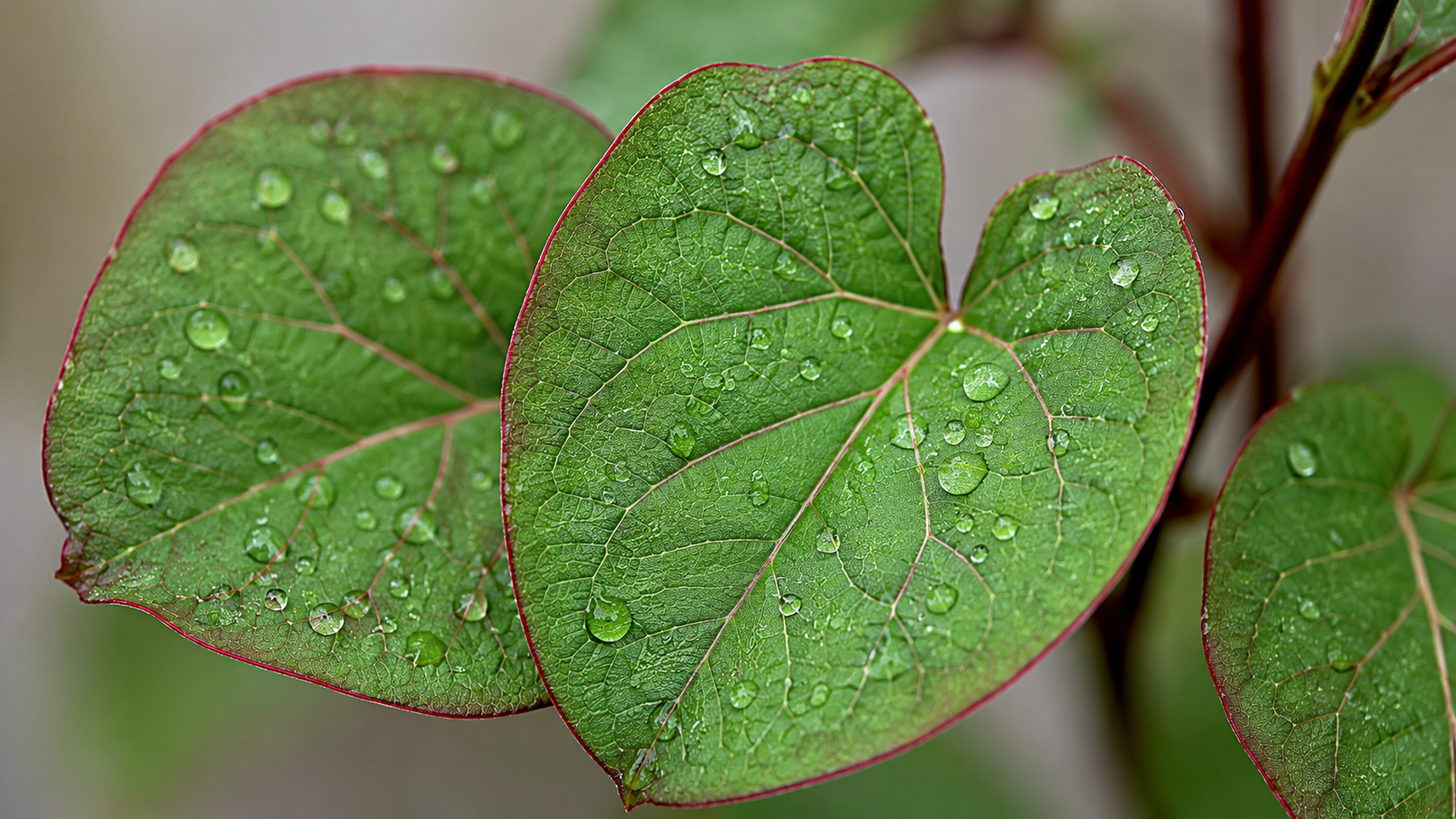
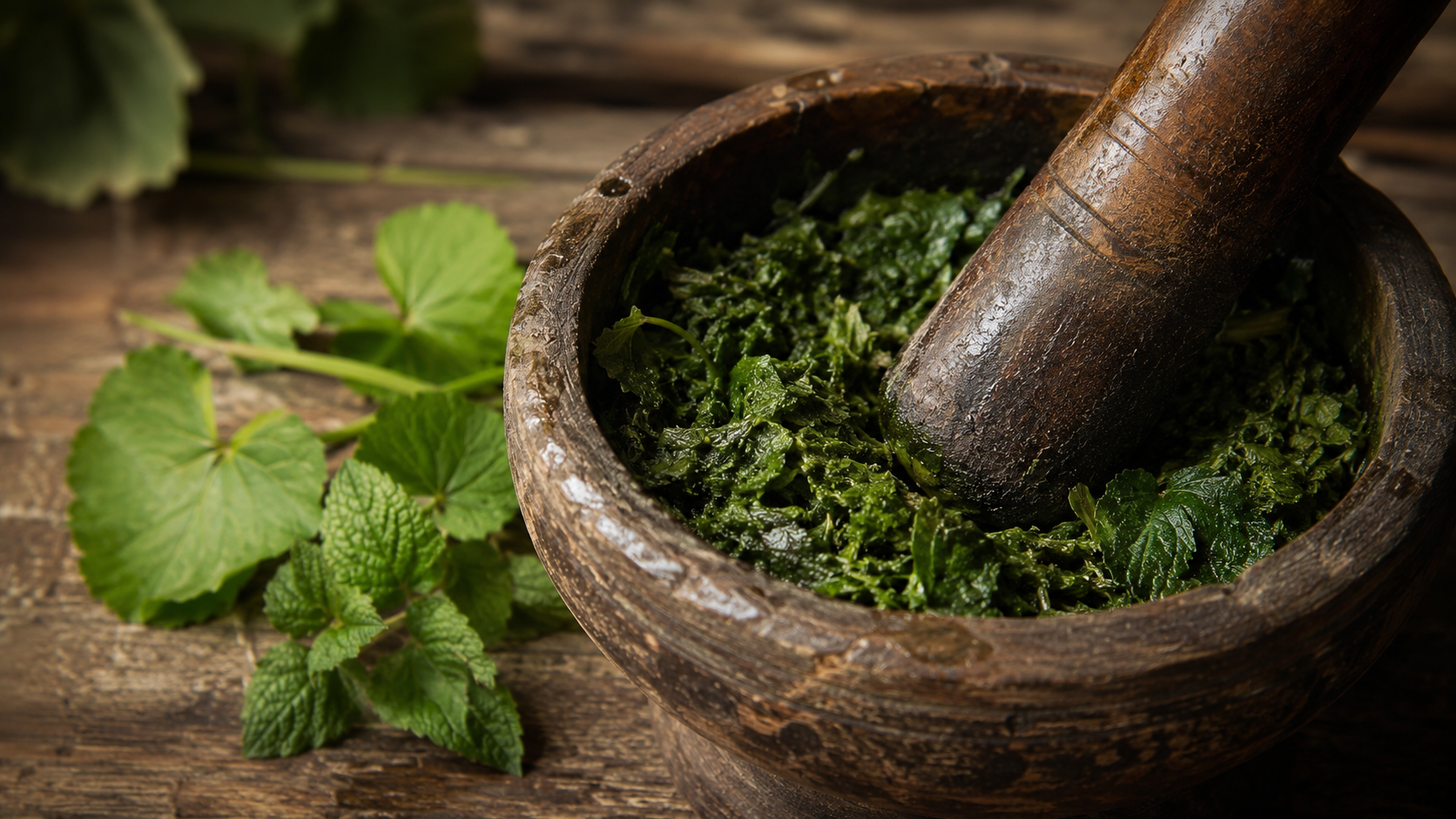
Fish mint – Houttuynia cordata, diếp cá in Vietnamese – is the most distinctly Southeast Asian of the group and, despite its name, not a true mint. In Thuốc Nam it is a cooling, heat-clearing herb, eaten raw and applied as a crushed-leaf poultice for acne and inflamed skin. Its flavonoids (quercetin, apigenin) and volatile oils give it antibacterial and anti-inflammatory activity that modern studies have substantiated – its anti-inflammatory action has been compared in mechanism to non-steroidal anti-inflammatories. It is also the clearest example of a Vietnamese herb validated abroad before at home: it is the dokudami of Japanese skincare and the heartleaf of Korean calming products. In Vietnam, it is the signature of Herbario’s centella-and-fish-mint formulations.
Lotus (Sen)
Vietnam’s national flower is a cooling, antioxidant herb in the tradition, used for heat and calm, and carries preliminary modern evidence for gentle brightening through tyrosinase inhibition. It is the ceremonial ingredient of the group – culturally weighty, cosmetically gentle – and a reminder that not every traditional herb needs to be a powerhouse to belong.
Shan Tea (Chè Shan Tuyết)
The outlier and the most place-specific. Shan Tuyết – “snow shan” tea – comes from ancient, often centuries-old tea trees growing wild in the northern highlands of Hà Giang and Yên Bái. Botanically it is Camellia sinensis, so its actives are the catechins and EGCG of green tea, with well-established antioxidant and anti-inflammatory credentials. What makes it a Thuốc Nam ingredient rather than generic green tea is provenance: a high-altitude, heritage Vietnamese terroir that brands are only beginning to draw on.
Two Brands Built on the Tradition
The clearest way to see Thuốc Nam become a product is through two brands that represent its opposite ends.
Thorakao – Continuity
Thorakao, founded in 1961, is the heritage case. It built a commercial cosmetics business on traditional herbal formulas – turmeric cream, gấc, soapberry, pomelo – decades before “clean beauty” or “botanical skincare” existed as marketing categories. It never left the tradition; it simply industrialized it. Its full history is covered in Thorakao: Vietnam’s oldest cosmetics brand.
Herbario – Revival
Herbario is the contemporary case: a newer brand that returns to Thuốc Nam herbs deliberately, with modern formulation and a pharmacopoeia-grounded approach, anchored by its centella-and-fish-mint pairing. Where Thorakao represents unbroken continuity, Herbario represents conscious revival – a brand choosing the tradition rather than inheriting it. Its approach is detailed in the Herbario brand profile.
Together they bracket the tradition: one that never stopped using these herbs and one that came back to them on purpose. Both are evidence that Thuốc Nam is not a museum piece but a living commercial foundation.
Tradition Versus Evidence: An Honest Accounting
A tradition is not a guarantee, and the most useful thing this article can do is grade the gap honestly. The Thuốc Nam herbs fall across a spectrum. Centella has genuinely strong modern evidence for barrier repair and soothing. Green tea catechins, the basis of shan tea, are among the best-studied antioxidants in skincare. Turmeric’s curcumin and fish mint’s anti-inflammatory and antibacterial actions have solid mechanistic and preliminary support, though stronger for the compounds than for finished products. Lotus sits at the preliminary end, with one small trial and a good deal of in-vitro promise.
The honest reading is that traditional use is neither proof nor noise. It is a credible hypothesis-generator – centuries of observation that modern research has partially validated and will continue to test. The value of the Thuốc Nam framework is not that every claim within it is clinically confirmed, but that it offers a coherent, climate-adapted logic: cooling herbs for a hot country, accessible native plants for everyday use, repair, and soothing over aggressive intervention. Several of those herbs have earned modern backing; others remain traditional. Treating “traditional” as automatically valid would be credulous; treating it as automatically worthless would ignore the evidence that has accumulated. The accurate position is in between, ingredient by ingredient.
Why It Matters Now
As Vietnamese skincare positions itself internationally, the tradition is its most defensible identity. K-beauty, J-beauty, and C-beauty each rest on a recognizable philosophy; Vietnamese skincare has tended to be framed as a set of ingredients rather than a system. Thuốc Nam is that missing system – the thing that makes “Vietnamese skincare” coherent rather than incidental. At Dewsia, we use the term V-beauty for Vietnamese skincare, and the herbal medicine tradition is its intellectual foundation.
There is also a reclamation argument. Vietnamese herbs are being adopted globally – centella through Korea, gấc through Western superfood brands, and fish mint through Japan – frequently without any credit to the tradition that identified and refined them. Naming Thuốc Nam is how that lineage gets reattached to its source. For the individual ingredients in detail, the Vietnamese skincare ingredients glossary is the companion reference to this piece.
FAQ
What is traditional Vietnamese skincare? It is skincare rooted in Thuốc Nam, Vietnam’s indigenous herbal medicine tradition, which uses native plants – often cooling, heat-clearing herbs suited to a tropical climate – applied fresh or simply prepared. Ingredients like centella, turmeric, fish mint, lotus, and shan tea all come from this system.
What’s the difference between Thuốc Nam and Chinese medicine? Thuốc Nam (“Southern Medicine”) relies on native Vietnamese herbs used in their fresh or dried state, without complex decoction. Thuốc Bắc (“Northern Medicine”) is the Chinese-derived tradition, with elaborate formulas and imported ingredients. Both are practiced in Vietnam, but only Thuốc Nam is indigenous.
Do traditional Vietnamese skincare ingredients actually work? It varies by ingredient. Centella and green tea (shan tea) have strong modern evidence; turmeric and fish mint have solid mechanistic support; lotus is more preliminary. Traditional use is a credible starting point, not automatic proof.
What is fish mint in skincare? Fish mint (Houttuynia cordata, or diếp cá) is a cooling Vietnamese herb with antibacterial and anti-inflammatory properties, traditionally used for acne and inflamed skin. It is also widely used in Japanese and Korean skincare under the names dokudami and heartleaf.
Which brands are built on traditional Vietnamese ingredients? Thorakao, founded in 1961, represents unbroken heritage use; Herbario represents a modern, deliberate revival built around centella and fish mint. Many contemporary Vietnamese brands draw on the same tradition to varying degrees.