Ask a Vietnamese woman in her 50s what her skincare routine looks like, and the answer will probably surprise you. Not because it’s complicated – because it isn’t. No 10-step sequence, no layered essences applied in precise order, no dedicated ampoule step. Vietnamese skincare at its core is lightweight, purposeful, and built around two non-negotiable priorities: sun protection and botanical ingredients that have been used for generations.
At Dewsia, we coined the term “V-beauty” to describe Vietnamese skincare as a distinct category – a shorthand that mirrors K-beauty and J-beauty. This gives Vietnamese skincare the editorial identity it deserves on its terms rather than as a footnote to Korean skincare. Vietnamese skincare is not a newer, tropical version of K-beauty. It’s a parallel tradition with different roots, different priorities, and different product philosophies that happen to be very well-suited to the conditions in which most of the world’s population actually lives.
This guide covers what a Vietnamese skincare routine actually looks like – the philosophy behind it, the steps, the ingredients, and how it differs from the Korean and Japanese approaches most Western consumers know.
Fast track:
- The philosophy → What drives Vietnamese skincare
- The actual steps → Morning and evening
- Key ingredients → What goes into Vietnamese products
- How it compares to K-beauty → Asian Skincare Routine: Korea, Japan and Vietnam Compared
- Building a tropical routine → Skincare Routine for Tropical Weather
The Philosophy: Sương Sương and the Lightweight Imperative
Vietnamese skincare is shaped by climate before anything else. Vietnam spans 15 degrees of latitude – from the subtropical north to the tropical south – with year-round humidity across most of the country. The average temperature in Ho Chi Minh City sits above 30°C every month of the year. Hanoi has cooler winters but still reaches 35°C+ through the long summer months.
In this environment, heavy creams, thick essences, and multi-layer routines create practical problems: they don’t absorb fully, they sit on the skin in humidity, and they congest pores already stressed by constant heat. Vietnamese skincare culture has evolved to prioritize what locals describe as “sương sương” – a term meaning light, mist-like, barely there. Products should feel like almost nothing. If it feels like too much, it will be skipped.
This is not a minimalism trend. It’s a functional response to climate conditions that have shaped how Vietnamese people think about skin since before modern cosmetics existed.
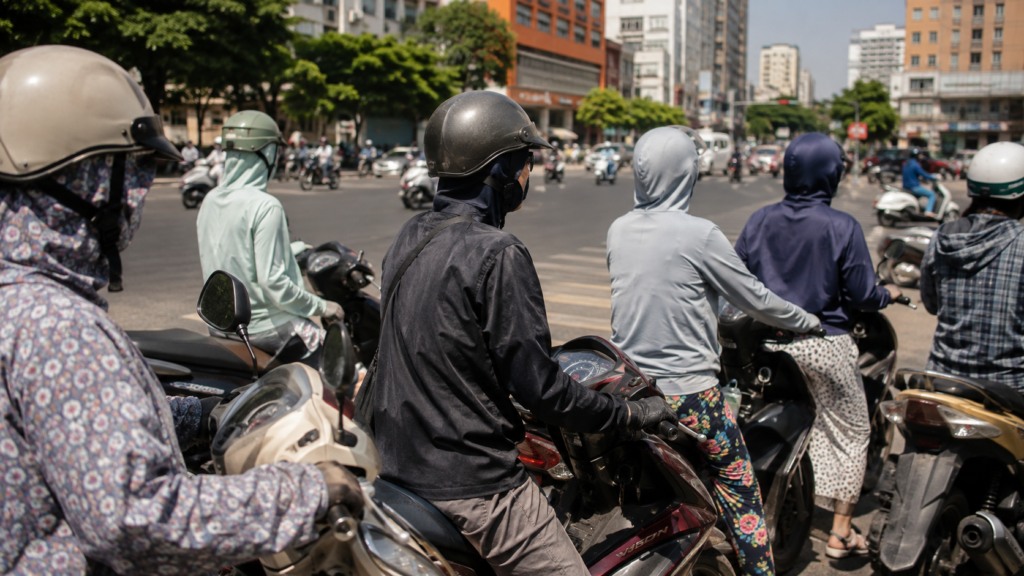
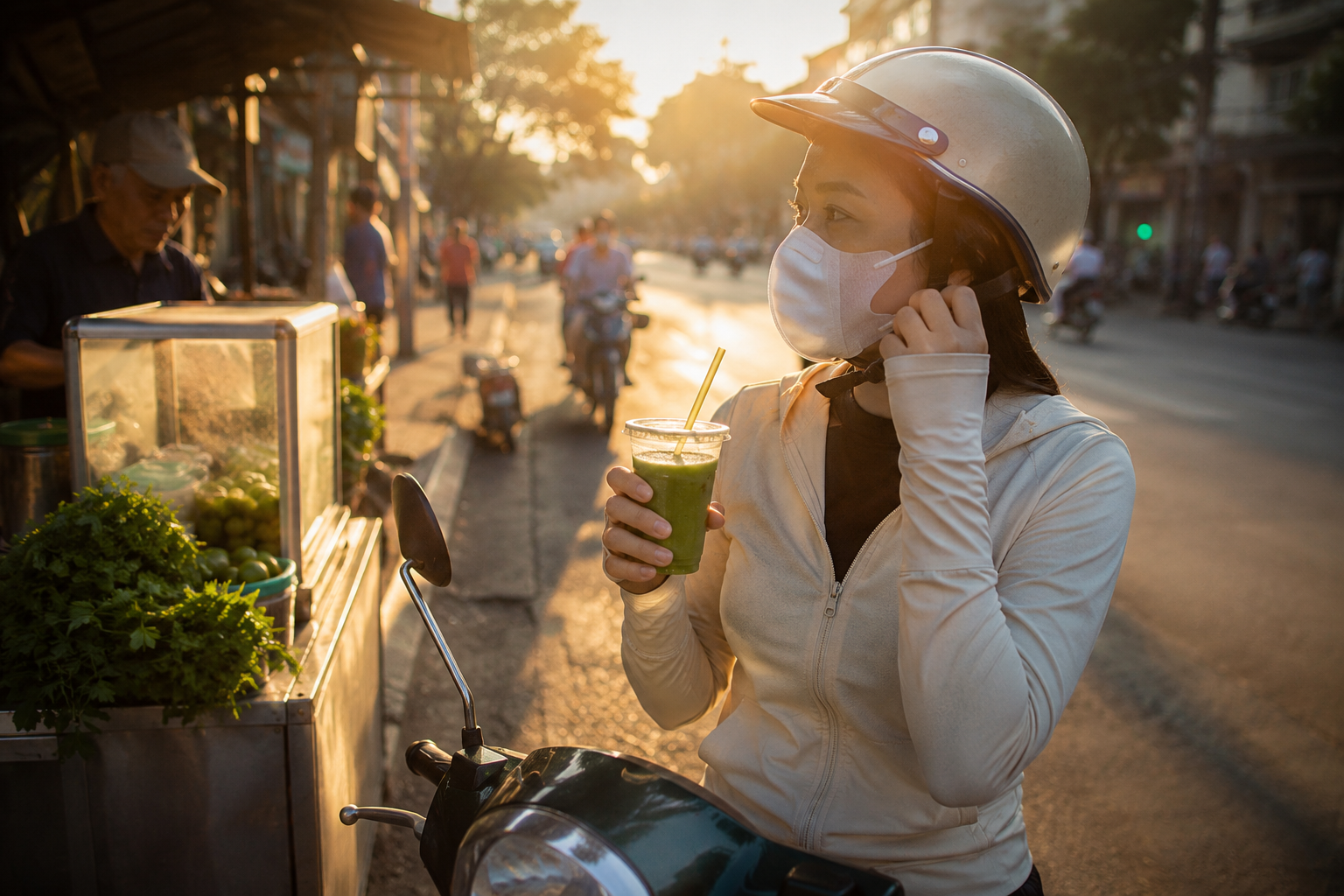
The second pillar: sun protection. UV awareness in Vietnam is deeply embedded in the culture – far more than in most Western countries. Fair skin (da trắng) is a traditional beauty ideal, and sun avoidance has been a daily habit for generations. This translates into extremely high SPF compliance: Vietnamese women apply sunscreen as a matter of course, reapply during the day, and use UV-protective clothing and accessories in a way that most Western consumers do not. The consequence is one of the most SPF-developed markets in Asia – local brands invest heavily in sunscreen formulation, and the product quality reflects it.
The third pillar: botanical tradition. Vietnamese traditional medicine (Thuốc Nam) has used local plants for skincare and healing for centuries. Centella asiatica (rau má) was a cooling health drink before it was a serum ingredient. Turmeric (nghệ) was used for wound healing and brightening before Cocoon built a product line around it. Rice water (nước vo gạo) was a household beauty ritual before fermented rice extract became a K-beauty ingredient. The botanicals in modern Vietnamese skincare products are not trend-driven additions – they are a continuation of existing cultural practice.
What a Vietnamese Skincare Routine Actually Looks Like
There is no single “Vietnamese skincare routine” in the way that the Korean 10-step has been codified and exported. What exists is a set of consistent priorities that show up across generations, product categories, and income levels.
Morning Routine
Step 1 – Cleanse
A gentle, low-foam cleanser. Morning cleansing in Vietnamese culture is lighter than evening – the goal is removing overnight sebum and preparing the skin surface, not deep-cleaning. High-foam, high-stripping cleansers are avoided because they disrupt the skin barrier in a climate where the barrier is already under constant heat stress.
Vietnamese products: Cocoon Winter Melon Cleanser (niacinamide, winter melon extract, gentle foam), Decumar Nano THC Cleanser (for acne-prone skin, pharmacy channel). Thorakao’s Cow’s Milk Cleanser occupies the traditional mass market position – affordable, gentle, and available in Guardian nationwide.
Step 2 – Toner or Essence (optional but common)
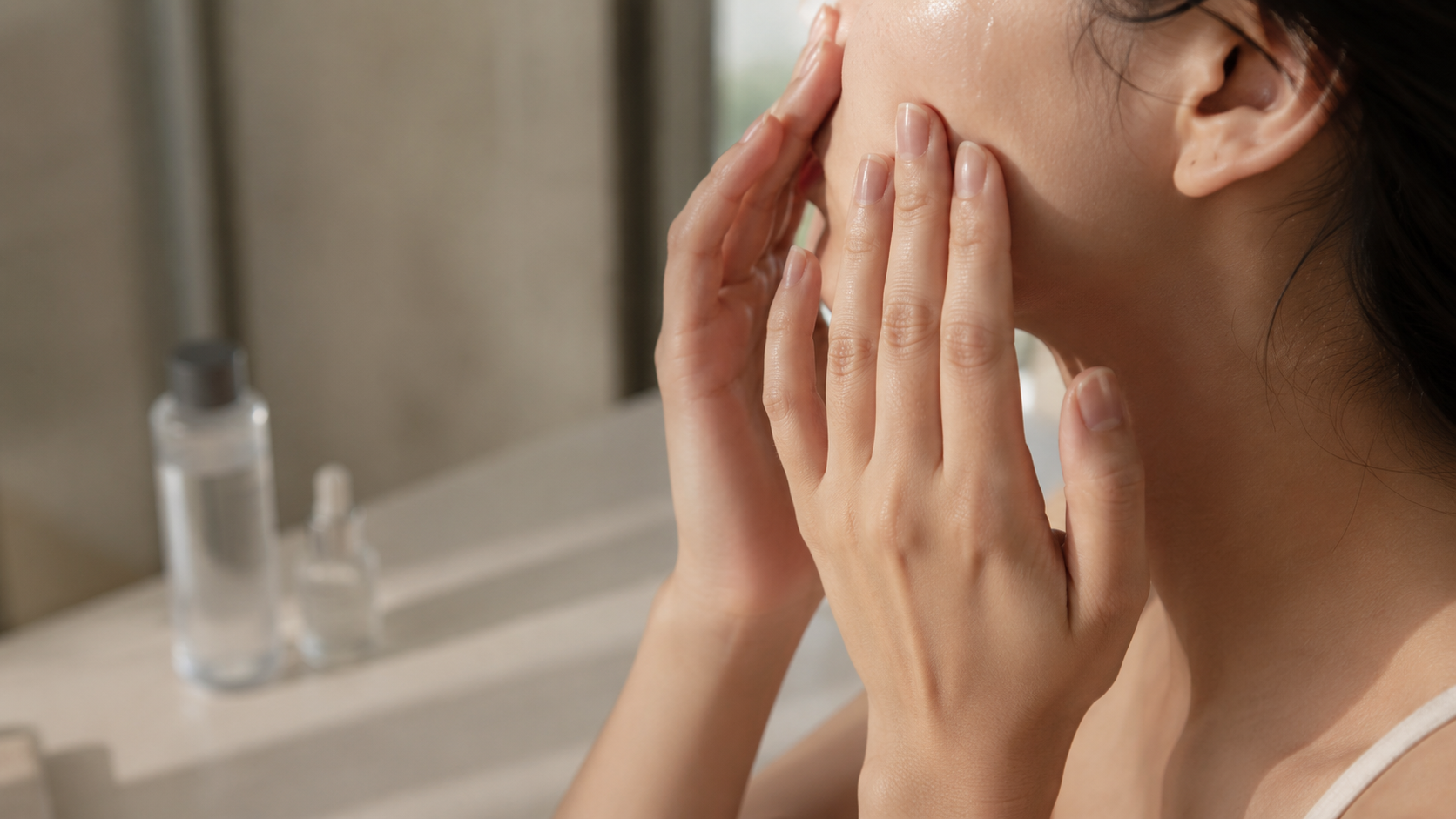
A lightweight hydrating step. Vietnamese toners are watery and fast-absorbing – closer to the Japanese lotion concept than to the alcohol-based astringent toners of Western skincare from earlier decades. Apply by patting into damp skin with hands.
This step is common but not universal. For oily skin, it’s often skipped in favor of going straight to SPF. For dry skin or air-conditioned environments, it provides the hydration layer that replaces the need for a heavier moisturiser.
Vietnamese products: Cocoon Hậu Giang Lotus Soothing Toner – fragrance-free, centella, lightweight. Herbario Butterfly Pea Toner for dry and normal skin. Sancha Shan Tea Soothing Toner for sensitive and reactive skin.
Step 3 – Targeted Treatment (when needed)
This step exists in Vietnamese routines, but it’s treated differently than in K-beauty. Rather than three or four actives layered in sequence, the Vietnamese approach is one functional product applied daily. Niacinamide for oily skin and brightening. A centella or botanical serum for barrier support and soothing. A brightening serum if PIH is a concern.
One product. Not a stack.
Vietnamese products: Cocoon N15 Niacinamide Serum (15% niacinamide + 4% NAG, oily and acne-prone skin). Herbario Centella & Fish Mint Serum (barrier support, oily skin). Herbario Boosted Serum with 2% bakuchiol (anti-aging, dry and normal skin). Cocoon Hưng Yên Turmeric Brightening Serum (PIH and brightening).
Step 4 – SPF
Non-negotiable. Applied every morning regardless of whether the day will be spent indoors or outdoors. This is the step that most distinguishes Vietnamese skincare culture from Western skincare culture – SPF is not an occasional beach product. It is a daily baseline.
The texture standard is strict: if the SPF feels heavy, sticky, or leaves a film, it won’t be reapplied at midday. Vietnamese brands have invested in SPF formulation with this compliance problem in mind.
Vietnamese products: Cocoon Winter Melon Sun Fluid SPF50+ (7 premium filters, gel texture, HelioScreen-tested). Decumar Oil Control Sunscreen SPF50+ (pharmacy, acne-prone skin, ~130,000 VND). Both are formulated specifically for tropical climate compliance.
For a broader SPF comparison including Korean and Japanese options: → Best Sunscreens for Humid Weather
Evening Routine
Step 1 – Double Cleanse
If SPF was worn during the day – and it should have been – double cleansing is standard practice in Vietnamese evening routines. An oil-based or balm cleanser dissolves SPF and sebum; a water-based cleanser removes residue. This is one of the K-beauty practices that has been fully adopted into Vietnamese skincare culture because it solves a real problem: water-based cleansers alone do not fully remove modern SPF formulations.
Step 2 – Toner or Essence
Same product as morning, same application. Damp skin after cleansing, patted in with hands. In air-conditioned environments where the skin dehydrates overnight, this step is more important in the evening than in the morning.
Step 3 – Treatment
Evening is the correct timing for actives that increase photosensitivity – vitamin C derivatives, retinol alternatives (bakuchiol), and AHAs. Vietnamese brands address these concerns:
Cocoon’s Hưng Yên Turmeric Brightening Serum (22% ascorbyl glucoside + turmeric) works best in the evening – the ascorbyl glucoside increases photosensitivity at meaningful concentrations, making morning application appropriate only when followed immediately by SPF. Herbario’s Boosted Serum with bakuchiol can be used morning or evening – bakuchiol does not photosensitize.
Step 4 – Light Moisturizer (when needed)
This step is more variable than Western skincare guides suggest. In genuinely humid conditions with no air conditioning, a toner or essence is often sufficient – ambient moisture reduces the need for occlusive sealing. In air-conditioned environments, a light gel-cream provides overnight barrier support without the congestion risk of heavier formulas.
Vietnamese brands in this category: Cocoon Winter Melon Gel Cream (oil-free, niacinamide, lightweight). Decumar Advanced Moisturizing Gel (pharmacy pricing, acne-prone skin). Herbario Centella & Fish Mint Gel (botanical, gentle, barrier-focused).
Weekly and Periodic Steps
Exfoliation (1–2 times per week)
Physical exfoliation is present in Vietnamese skincare tradition through products like Cocoon’s Đắk Lắk Coffee Body Polish – but for the face, the Vietnamese approach is gentler than many Western routines. A light AHA or a gentle scrub once or twice weekly rather than daily chemical exfoliation.
Face Mask (1–2 times per week)
Clay and sheet masks appear in Vietnamese routines primarily as targeted oil-control or soothing treatments. Cocoon Winter Melon Face Mask (centella, niacinamide, tea tree) is used 1–2 times weekly by oily skin types. Sheet masks are widely used but treated as a periodic addition, not a daily step.
The Ingredients That Define Vietnamese Skincare
Several ingredients appear consistently across Vietnamese skincare brands and products – not because they’re trendy but because they work in tropical conditions and have traditional roots in Vietnamese culture.
Centella asiatica (rau má) – barrier repair, anti-inflammatory, wound healing. Eaten and drunk as a daily health tonic before it was put in serums. The most evidence-backed botanical in Vietnamese skincare. → Full breakdown
Turmeric (nghệ) – brightening, anti-inflammatory, anti-acne. Used in Vietnamese households for wound care and post-partum skin recovery for generations. The Nano THC technology in Decumar represents the most clinically advanced application of this traditional ingredient. → Full breakdown
Niacinamide – oil control, pore refinement, brightening, barrier support. Not a traditional Vietnamese ingredient but adopted with particular intensity by Vietnamese brands – Cocoon’s N15 formula is among the highest-concentration consumer niacinamide serums available in Asia.
Winter melon (bí đao) – oil control, soothing, anti-inflammatory. A common Vietnamese vegetable repurposed as a skincare active. The polysaccharide and triterpene content supports its use in sebum-control formulations.
Lotus (hoa sen) – soothing, antioxidant, mild brightening. Vietnam’s national flower appears in skincare as a gentle, multi-functional botanical appropriate for sensitive skin types.
Rice water (nước vo gạo) – hydration, barrier support, gentle brightening. A domestic tradition before it became a K-beauty ingredient story. → Full breakdown
How Vietnamese Skincare Differs From K-Beauty
The comparison to K-beauty is inevitable given how dominant Korean skincare has become in the global conversation. The differences are substantive.
Steps: K-beauty’s 10-step sequence is a menu that Vietnamese skincare doesn’t share. Vietnamese routines run 3–5 steps consistently. This is not a sign of less development – it’s a different philosophy about how many layers skin can productively absorb in a tropical climate.
Layering logic: K-beauty layers products from thinnest to thickest to progressively build hydration. Vietnamese skincare avoids heavy layering because multiple products that don’t fully absorb create a mobile stack that migrates in heat and humidity.
Actives: K-beauty leads globally in actives variety and concentration – retinoids, comprehensive AHA/BHA ranges, and peptide formulations. Vietnamese brands are catching up (Candid by Skinetiq is developing clinical actives, and Cocoon’s N15 is high-concentration), but the category is less developed overall.
SPF: Vietnamese SPF culture is more consistent than Korean SPF culture – reapplication compliance is higher, and UV-protective behavior is more embedded. Vietnamese SPF formulations reflect this priority.
Botanicals: Both traditions use botanical ingredients extensively. Korean botanicals (centella, green tea, rice, and ginseng) are largely standardized extracts from regional cultivation. Vietnamese botanicals are more locally specific – Đắk Lắk coffee, Hưng Yên turmeric, An Giang lotus, and Bến Tre coconut – with traceable regional origins.
For the full three-way comparison: → Asian Skincare Routine: Korea, Japan and Vietnam Compared
FAQ
Is there a standard Vietnamese skincare routine? No codified sequence exists the way K-beauty’s 10-step has been documented and exported. What exists is a consistent set of priorities – lightweight textures, high SPF compliance, and botanical ingredients – that appear across generations and income levels. The specific products vary; the underlying philosophy is consistent.
How many steps do Vietnamese women actually use? Most Vietnamese daily routines run 3–5 steps: cleanser, optional toner, and SPF in the morning; double cleanse, toner, treatment, and optional moisturizer in the evening. More steps exist for targeted concerns (mask, exfoliation) but are periodic rather than daily.
Can I follow a Vietnamese skincare routine if I don’t live in a tropical climate? Yes – the lightweight texture philosophy and botanical ingredients work across climates. The specific SPF priority and the avoidance of heavy occlusives are most relevant in humid tropical conditions, but the overall approach is applicable anywhere. In cold, dry climates you may want to add a richer moisturizer than Vietnamese routines typically feature.
Is Vietnamese skincare suitable for non-Asian skin tones? The products are formulated for tropical conditions, not for a specific ethnicity. The brightening focus (niacinamide, ascorbyl glucoside, centella) addresses post-inflammatory hyperpigmentation concerns that are relevant across medium to deeper skin tones. SPF formulations use predominantly chemical filters with low white cast risk.
What’s the single most important Vietnamese skincare product to start with? Sunscreen. Specifically a lightweight, fast-absorbing SPF 50+ that you’ll actually reapply at midday. Everything else in the routine is optimization. The SPF habit is the core of Vietnamese skincare culture and the change with the greatest impact on long-term skin health.